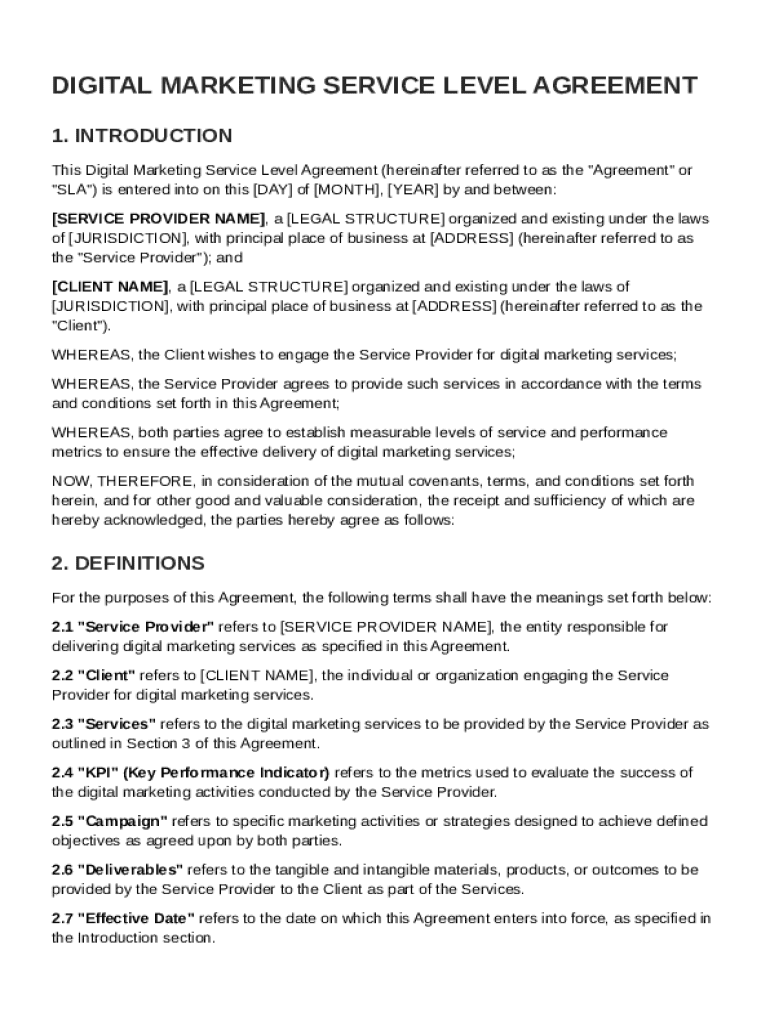







Definition and Meaning
A Digital Marketing Service Level Agreement (SLA) is a formal document that outlines the terms and conditions between a digital marketing service provider and its client. This agreement aims to define the scope of services, clarify expectations, and establish measurable service levels. It is a tool used to protect the interests of both parties by ensuring that the service provider delivers marketing services effectively and efficiently while meeting the client's specific needs and requirements.
Core Components
- Scope of Services: Details the range and type of digital marketing services offered, such as SEO, PPC, social media management, content creation, and email marketing.
- Performance Metrics: Includes measurable performance indicators like traffic growth, conversion rates, or engagement levels, which help in evaluating the success of the marketing efforts.
- Responsibilities: Specifies the roles and obligations of each party, ensuring clarity in execution and accountability.
Key Elements of the Digital Marketing Service Level Agreement Template
A comprehensive Digital Marketing SLA template should include several critical elements to ensure a detailed and clear agreement.
Services Provided
- SEO Services: Optimization of website content and structure to improve search engine rankings.
- Content Marketing: Creation and distribution of valuable, relevant content to attract and retain a target audience.
- Social Media Management: Managing and growing the client's social media presence.
Performance Metrics
- Traffic Targets: Expected increase in website visits and leads.
- Engagement Rates: Metrics for measuring interactions such as likes, shares, comments, and views.
- Conversion Goals: Targets for turning leads into customers.
Responsibilities and Obligations
- Provider Responsibilities: Outlining the duties of the service provider, such as delivering monthly reports and managing campaigns.
- Client Obligations: Specification of client responsibilities, including providing necessary materials and timely feedback.
Why Use the Digital Marketing Service Level Agreement Template
Establishing Expectations
The SLA ensures both parties have a mutual understanding of the project's goals and expectations, reducing the possibility of misunderstandings.
Legal Protection
Includes legal jargon to protect both parties in the case of disputes, focusing on confidentiality, amendments, liability, and termination conditions.
Performance Accountability
Defines clear metrics for evaluating performance, ensuring that the service provider delivers results and the client remains informed about the progress.
Efficient Amendments
The agreement facilitates smooth amendments and updates, which are essential in adapting to changing market trends and business needs.
Steps to Complete the Digital Marketing Service Level Agreement Template
Gathering Information
- Identify Services Needed: Determine which digital marketing services are required.
- Define Goals: Establish clear, measurable objectives that the digital marketing efforts aim to achieve.
Drafting the Agreement
- Use the Template: Begin with a standard SLA template tailored to the needs of digital marketing contexts.
- Customize Details: Include specific details regarding services, metrics, and responsibilities.
- Add Legal Provisions: Ensure all necessary legal clauses are present to protect both parties.
Finalizing and Signing
- Review and Revise: Both parties should review the document for completeness and accuracy.
- Agreement Signing: Once both parties are satisfied, they can sign the document to formalize the agreement.
Important Terms Related to the Digital Marketing Service Level Agreement Template
Common Terms and Definitions
- Performance Metrics: Specific criteria used to quantify the performance of marketing efforts.
- Scope of Services: A detailed description of the digital marketing services to be provided.
- Confidentiality: Provisions to protect sensitive business information from unauthorized disclosure.
Legal Use of the Digital Marketing Service Level Agreement Template
Ensuring Compliance
- Regulatory Compliance: The SLA should address compliance with relevant regulations, such as data protection laws (e.g., GDPR for European clients, CCPA for California clients).
- Confidentiality Clauses: Legal statements to ensure that proprietary information remains confidential and that both parties understand the consequences of breaches.
Dispute Resolution
- Arbitration Clauses: Establish methods for resolving disputes outside of court to save time and resources.
- Jurisdiction Specification: Define which state laws will govern the agreement, providing clarity in the event of a legal dispute.
Software Compatibility and Integration
Using DocHub for SLA Management
- Editable Formats: Supports various file types, such as PDF, DOC, and XLS, enabling flexibility in document creation and editing.
- Digital Signatures: Legally binding e-signatures facilitate efficient approval processes.
Integration with Cloud Services
- Cloud Storage Compatibility: Direct integration with platforms like Google Drive and Dropbox for seamless file management and sharing.
State-Specific Rules for Digital Marketing Service Level Agreements
Variations Across States
- Legal Clause Adjustments: Certain states may require specific terminology or additional clauses, depending on local regulations.
- Tax Implications: Awareness of state-specific tax policies that may affect the services provided under the agreement.
Understanding and incorporating these elements and processes will ensure that the Digital Marketing Service Level Agreement Template is used effectively, providing clarity and protection for both the service provider and client.