






Definition & Meaning
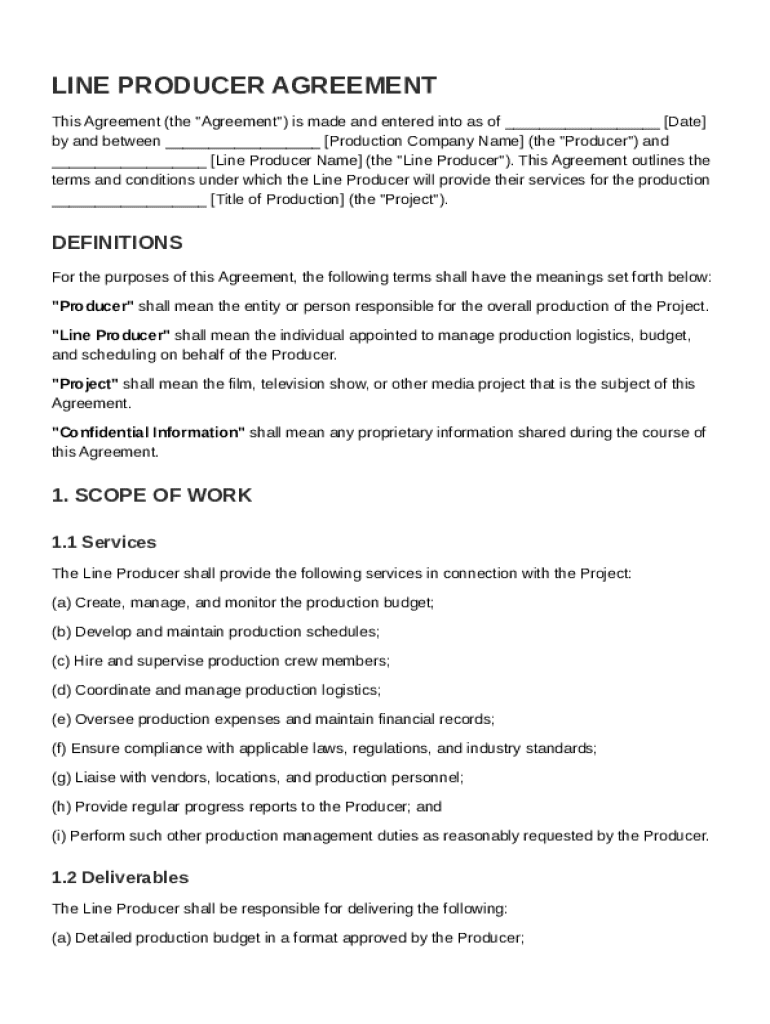
The Line Producer Agreement Template is a legal document that outlines the obligations and expectations between a Line Producer and a Production Company. This agreement is crucial for managing production logistics, budget oversight, and scheduling for film or television projects. It specifies the scope of the duties, deliverables, and compensation terms agreed upon by both parties. Essentially, the template serves as a foundation for establishing a professional relationship, ensuring that both the Line Producer and the Production Company have a clear understanding of their responsibilities.
Independent Contractor Status
- The line producer is typically classified as an independent contractor.
- This classification highlights the autonomy of the producer within the project.
- The agreement may specify that the producer is responsible for managing their taxes and insurance.
- This section helps delineate the legal and financial separation between the contractor and the company.
Confidentiality Obligations
- Details the restrictions on sharing proprietary information with third parties.
- Typically includes clauses ensuring that all project data remains protected.
- Important for safeguarding sensitive production details and budgets.
Key Elements of the Line Producer Agreement Template
This section of the agreement highlights major elements essential for effective collaboration between the Production Company and the Line Producer.
Compensation Structure
- Outlines the payment terms, such as fixed fees or profit percentage.
- May include bonus structures contingent on performance metrics.
- Defines when and how payments will be processed.
- Helps ensure both parties have a financial agreement that meets expectations.
Scope of Work
- Describes the specific tasks and responsibilities of the Line Producer.
- May include guidelines for budget creation, staff hiring, and vendor negotiations.
- Involves detailed scheduling and timeline management.
- Provides clarity on the extent of authority granted to the Line Producer.
Indemnification Clauses
- Protects both parties against claims or losses that may occur during production.
- Includes scenarios such as breaches of agreement or third-party claims.
- Establishes legal accountability in case of disputes.
Steps to Complete the Line Producer Agreement Template
Crafting a comprehensive Line Producer Agreement requires meticulous attention to detail to ensure all parties are protected and obligations are clear.
-
Gather & Verify Parties’ Information
- Collect names and legal addresses of both the Production Company and the Line Producer.
- Confirm their legal standing and ability to enter into the agreement.
-
Outline the Project Details
- Describe the project thoroughly, including timelines, location, and specific production requirements.
- Clarify the start and end dates to avoid disputes.
-
Specify Compensation and Payment Terms
- Clearly state how and when payments will be made.
- Include any special conditions, such as milestone payments or bonuses for expedited service.
-
Establish the Scope of Work
- Detail every task and expectation required of the Line Producer.
- Illustrate the boundaries of the producer's authority and responsibilities.
-
Review Legal Clauses
- Examine confidentiality, indemnification, and termination clauses.
- Consult with legal professionals to ensure compliance and adequacy.
Legal Use of the Line Producer Agreement Template
The legal application of this template ensures both compliance and protection throughout the production process.
Jurisdictional Guidelines
- Specifies which state's laws will govern the agreement.
- This choice is essential when parties are located in different jurisdictions.
Termination Conditions
- Details under which circumstances the agreement can be terminated.
- Includes conditions like breach of contract or failure to deliver outlined services.
Ownership of Work
- Clarifies who retains the rights to the work produced under the agreement.
- Important for future monetization of the production.
How to Use the Line Producer Agreement Template
Using the Line Producer Agreement Template effectively requires understanding its components and adapting them to fit your specific project needs.
-
Customization for Specific Projects:
- Tailor the template to reflect the unique aspects of your production.
- Adjust clauses to align with project-specific financial or scheduling requirements.
-
Negotiation and Finalization:
- Use the template as a starting point for discussions between the Line Producer and Production Company.
- Allow for legal reviews to ensure all parties are satisfied with the terms.
-
Electronically Signing and Sharing:
- Upon finalization, document can be signed electronically using platforms with legally binding signature features.
- Distribute copies to all signatories to ensure everyone is aligned with the agreed terms.
Who Typically Uses the Line Producer Agreement Template
The Line Producer Agreement Template is utilized by various professionals involved in media production to ensure the smooth operation of a project.


Primary Users
-
Production Companies:
- A pivotal tool for ensuring all logistical aspects are managed efficiently.
-
Independent Line Producers:
- Serves as a contractual safeguard outlining expectations and compensation.
Other Beneficiaries
-
Legal Teams:
- Utilize the template to draft or review agreements for legal compliance.
-
Project Managers:
- Reference the agreement to ensure alignment with production goals and timelines.
Examples of Using the Line Producer Agreement Template
Various production scenarios exemplify the essential use of the Line Producer Agreement Template to streamline operations.
-
Film Production:
- Used to outline the role of the Line Producer in managing crew, schedules, and budgets.
-
Television Series:
- Defines logistic arrangements and coordination required for episodic content production.
-
Commercial Projects:
- Details short-term campaigns requiring rapid turnaround and specific coordination needs.
Each example illustrates the template's adaptability across different production contexts, ensuring compliance and efficiency.