Definition & Meaning
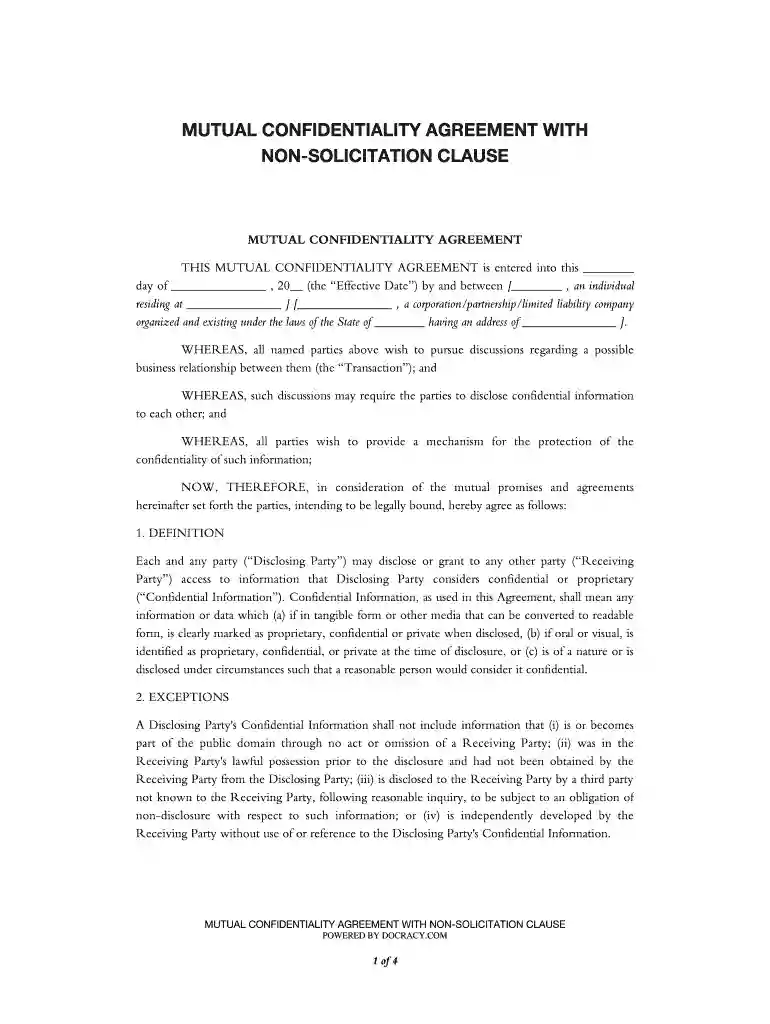
A Mutual Confidentiality Agreement with Non-Solicitation Clause is a legal contract that governs the protection and handling of confidential information shared between parties. The agreement specifically outlines what is considered confidential, detailing exceptions and the obligations of each party in managing that information. Additionally, it features a non-solicitation clause which restricts the involved parties from enticing each other's employees or customers for a specified period, typically one year after the contract's termination. This clause helps maintain business relations by preventing unfair competition following the end of a collaborative engagement.
Key Elements of the Agreement
Confidential Information
- Definition: Identifies what data, documents, or communications qualify as confidential. This often includes business plans, technical data, client lists, and proprietary methodologies.
- Exceptions: Circumstances under which information is deemed non-confidential, such as publicly known data or details independently developed by the receiving party without the use of disclosed confidential information.
Non-Solicitation Clause
- Restrictions: Outlines specific prohibitions against soliciting or hiring the other party's employees, or approaching their clients, ensuring fair practice.
- Duration: Defines the timeframe, commonly one year, during which these restrictions apply post-agreement.
Obligations and Restrictions
- Disclosure Limitations: Restrictive terms on sharing confidential data, mandating that such information only be shared internally on a need-to-know basis.
- Return/Destruction of Materials: Obligations regarding the return or destruction of confidential materials upon termination of the agreement.
How to Use the Agreement
Utilizing the agreement in a business context requires clear understanding and application of its clauses:
- Initial Review and Discussion: Before engaging in discussions, both parties should review qualifications for confidentiality and non-solicitation to ensure mutual understanding.
- Customization: Adapt the agreement with specific clauses that reflect the business scenario, like tailored definitions of what constitutes confidential information.
- Execution and Monitoring: After signing, implement systems to monitor compliance, specifically focusing on information-sharing policies and interactions with customers and staff of the other party.
Steps to Complete the Agreement
- Drafting: Begin with a template, ensuring that it includes sectors for confidentiality definitions and other necessary clauses.
- Negotiation: Both parties should engage in discussions, amending the document to address specific concerns or requirements.
- Approval: With all terms satisfactory, proceed with legal counsel if necessary for verification.
- Signing: Both parties sign, ideally electronically through platforms like DocHub, ensuring compliance and ease of access to the signed document.
- Filing: Store a copy in a secure document management system for reference and to ensure easy access for compliance reviews.
Important Terms Related to the Agreement
- Proprietary Information: Refers to intellectual property and trade secrets within the agreement.
- Restricted Period: The agreed duration wherein specific activities, typically solicitation or hiring, are prohibited.
Legal Use of the Agreement
The Mutual Confidentiality Agreement with Non-Solicitation Clause provides legal backing in protecting sensitive business information and mitigating risks associated with competition and employee poaching. Courts can enforce these agreements as long as they are reasonable and do not overly restrict a party's legitimate business activities. Always ensure that the terms are specific, relevant, and jurisdiction-compliant, especially with regard to state laws and industry regulations in the United States.
Examples of Using the Agreement
- Startup Collaborations: Two startups working on a joint project might use this agreement to clearly define the terms of information sharing and ensure no team member is poached during or after their collaboration.
- Supplier Agreements: Suppliers sharing proprietary manufacturing processes with potential partners will engage such agreements to ensure these methods are kept confidential.
State-Specific Rules for the Agreement
Regulations can vary state-by-state, impacting the enforceability of confidentiality and non-solicitation clauses.
- California: Generally restricts non-compete clauses more stringently. Agreements need clear crafting to ensure compliance.
- New York: Permits such clauses if they are reasonable in scope and duration, ensuring they protect legit interests without imposing undue hardship.
Understanding these regional variances ensures corporations maintain enforceable agreements that align with state-specific legal frameworks.