






Definition & Meaning
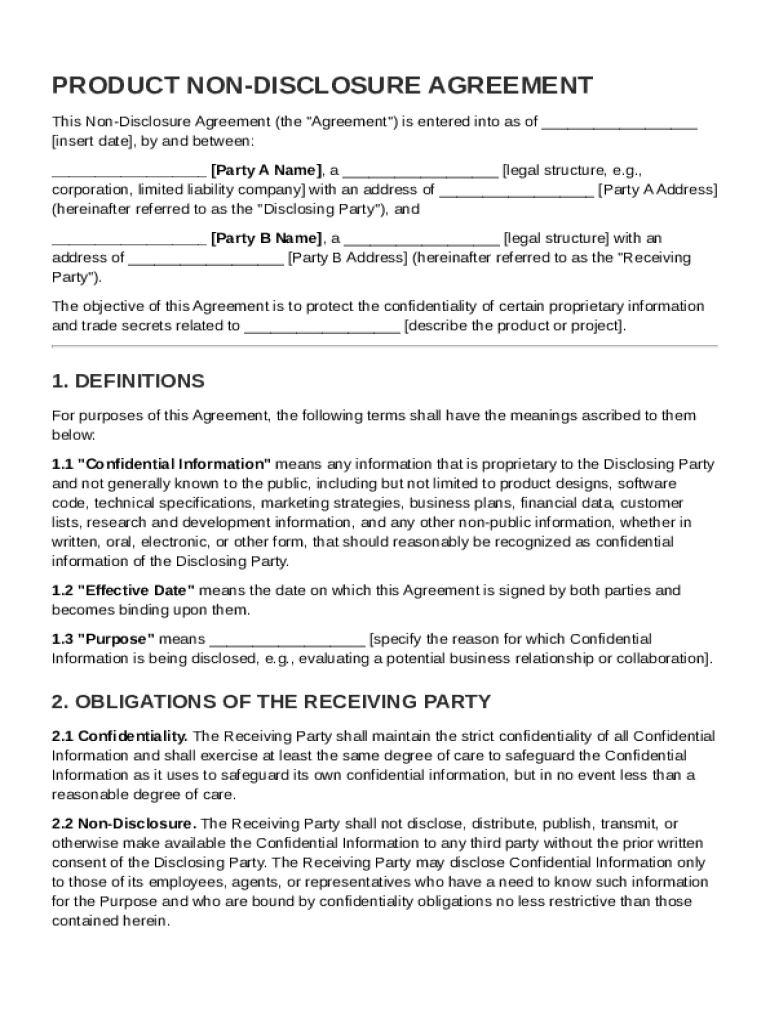
A Product Non Disclosure Agreement (NDA) Template is a legal document designed to safeguard confidential information when two parties—referred to as the Disclosing Party and the Receiving Party—engage in a business relationship concerning a specific product or project. This template sets forth the criteria and responsibilities each party must adhere to in order to protect sensitive information. In essence, the NDA is a contractual obligation preventing the Receiving Party from disclosing proprietary information that could be detrimental to the interests of the Disclosing Party.
Confidential information covered under this agreement typically includes but is not limited to product designs, development plans, business strategies, and any other vital data not generally known to the public. Both parties must clearly understand what constitutes confidential information and agree to uphold confidentiality at all times as stipulated in the NDA.
Key Elements of the Product Non Disclosure Agreement Template
Understanding the core components of a Product NDA Template is crucial for effective implementation and adherence to legal standards. These key elements provide the structural backbone to any NDA:
-
Definitions: Clearly outlines what terms like "Confidential Information," "Disclosing Party," and "Receiving Party" mean within the context of the agreement.
-
Obligations and Duties: Specifies the Receiving Party's duty to protect confidentiality and restrict access to sensitive information to authorized personnel only.
-
Exclusions: Details specific information that is not considered confidential, such as information already in the public domain or independently developed without the use of confidential information.
-
Term and Termination: Indicates the duration of the confidentiality obligations and conditions under which the agreement may be terminated.
-
Legal Provisions: Includes clauses on governing law, amendment procedures, severability, and the notice process for any legal actions or notices concerning the agreement.
Each of these elements serves the purpose of maintaining strict confidentiality, thereby safeguarding competitive advantages and fostering trust between the parties involved.
How to Use the Product Non Disclosure Agreement Template
Utilizing a Product NDA Template involves a systematic approach to ensure all necessary fields are correctly filled and understood by both parties:
-
Identify Participants: Clearly specify the roles of the Disclosing and Receiving parties by stating their names and addresses.
-
Define Information: Clearly outline what is considered confidential information for clarity and mutual understanding.
-
Set Term and Termination Conditions: Decide upon and document the duration for which the NDA will be effective along with any termination terms.
-
Specify Restrictions: Clearly state the limitations and obligations regarding the use and sharing of confidential information.
-
Signatures: Ensure signatures from authorized representatives of both parties, confirming their understanding and commitment to the terms.
By following these steps, parties can streamline the process of protecting their confidential interests and avoid potential disputes.
Legal Use of the Product Non Disclosure Agreement Template
In the United States, using an NDA Template ensures legal protection over proprietary information exchanged during business negotiations or collaborations. The agreement is legally binding, meaning any breach of confidentiality can lead to legal action, including claims for injunctive relief or damages. The NDA must comply with the state-specific laws in which it is executed, as jurisdictional nuances may influence certain legal proceedings or interpretations.
Legal counsel is often recommended when drafting or executing an NDA to ensure all provisions are enforceable. Tailoring the document to meet specific business needs while remaining compliant with state laws is integral to the efficacy and enforceability of the NDA.
Steps to Complete the Product Non Disclosure Agreement Template
Completing a Product NDA Template requires careful attention to detail to adequately express the intentions and obligations of both parties:
-
Gather Information: Collect all relevant details such as the names, roles, and contact information of both the Disclosing and Receiving parties.
-
Draft Specific Clauses: Customize the template by drafting clauses specific to the nature of the confidential information and the relationship between the parties.
-
Review Confidentiality Terms: Both parties should thoroughly review confidentiality clauses to ensure full understanding and agreement.
-
Consult Legal Experts: Engage an attorney to review the document prior to finalization for legal sufficiency and to address any potential areas of concern.
-
Sign and Store: Once finalized, obtain signatures from both parties and store signed copies securely for future reference.
Properly completing the NDA ensures that both parties are fully informed of their rights and obligations regarding the handling of confidential information.
Who Typically Uses the Product Non Disclosure Agreement Template
This template is typically used by businesses and individuals engaged in varying industries, particularly those involving innovative products and trade secrets. Common users include:
-
Businesses: Particularly startups and tech companies seeking to protect product designs, business methods, or marketing strategies.
-
Inventors and Innovators: Individuals creating new products or technologies looking to prevent unauthorized disclosures during prototype testing or investor presentations.
-
Collaborative Teams: Teams entering joint ventures needing to exchange detailed proprietary information without the risk of leaks to competitors.
The scope of use demonstrates the NDA's versatility in providing a secure framework for protecting proprietary interests across different business scenarios.


Important Terms Related to Product Non Disclosure Agreement Template
Key terminology within an NDA Template can dictate the terms and applicability of the agreement. Understanding these terms is critical for effective and comprehensive protection:
-
"Confidential Information": Any data identified explicitly or implicitly as confidential that the Disclosing Party seeks to protect.
-
"Period of Confidentiality": The time frame during which the information must remain confidential, typically spanning a few years.
-
"Authorized Personnel": Individuals permitted by the parties to access confidential information, often restricted to employees or contractors bound by similar confidentiality obligations.
By accurately defining these terms, both parties align their expectations regarding what is considered confidential and how it should be managed.
Examples of Using the Product Non Disclosure Agreement Template
Utilizing the NDA Template in real-world scenarios showcases its practical application and effectiveness:
-
Startup Ventures: A tech startup may use an NDA when collaborating with a development firm to ensure code for a new app remains confidential until public launch.
-
Investor Communications: Companies seeking investment might employ NDAs before sharing sensitive financial data or proprietary product insights with potential investors.
These examples illustrate how NDAs function as preventative tools, maintaining an environment of trust and protection in business communications.