






Definition and Meaning
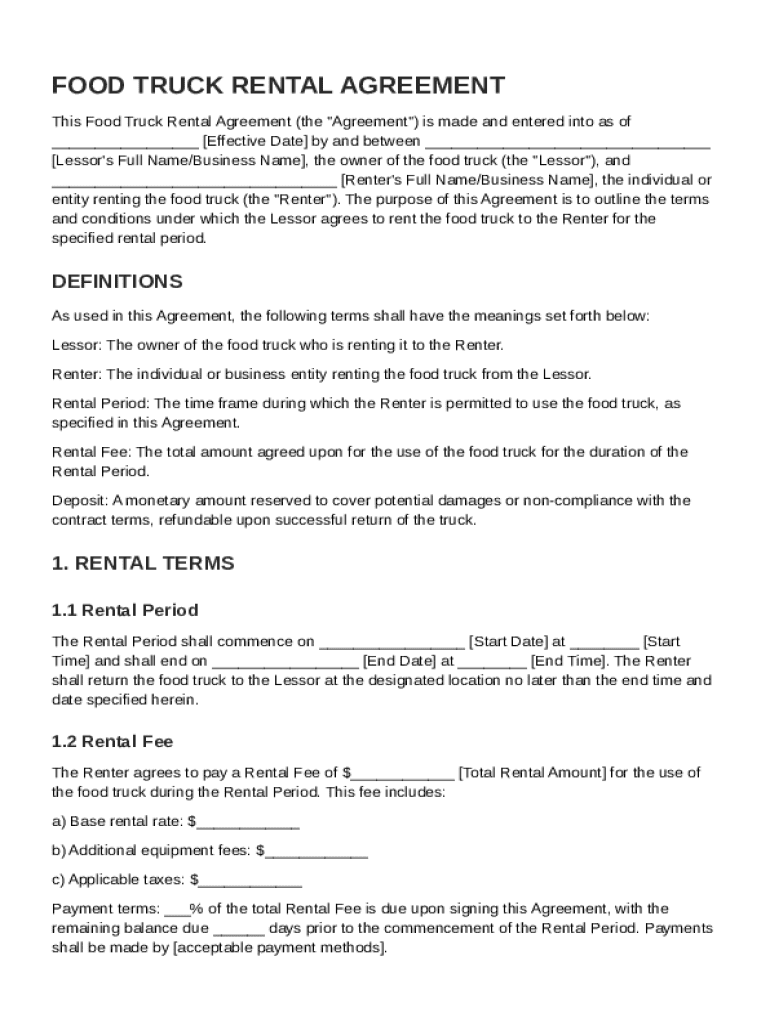
A Food Truck Rental Contract Template is a structured legal document designed to clearly outline the terms and conditions involved when renting a food truck. This template establishes a formal agreement between the lessor, who owns the food truck, and the renter, who intends to use it for their business operations. Essential elements covered within the template include definitions of key terms and the responsibilities of both the lessor and renter. It aims to ensure both parties understand their roles, liabilities, and the contractual obligations associated with the rental period. By standardizing these terms, the template protects both parties and aids in preventing misunderstandings or disputes.
How to Use the Food Truck Rental Contract Template
To effectively use the Food Truck Rental Contract Template, both parties should first thoroughly read and understand each section of the document. Begin by entering the names and contact information of both the lessor and renter. The template typically includes sections where specific details must be filled in, such as the rental period, rental fees, and any required deposits. Pay close attention to clauses about maintenance responsibilities, insurance obligations, and conditions for termination of the rental agreement. Completing these areas accurately ensures that all parties are clear on their responsibilities. Furthermore, before finalizing, both the lessor and renter should review the template to confirm that all personal and financial details are accurate and agreeable.
Steps to Complete the Food Truck Rental Contract Template
- Gather the necessary information, including personal identification details for both parties and details about the specific food truck being rented.
- Fill out the rental period section, specifying the start and end dates and whether the contract allows for extensions.
- Enter the financial terms, such as rental fees, payment schedule, and any necessary deposit amounts.
- Describe the maintenance and repair obligations of each party, outlining who will be responsible for costs associated with regular maintenance or unexpected repairs.
- Specify any insurance requirements, including coverage amounts or specific policies that must be maintained.
- Complete the liability waiver section to establish limitations on the responsibilities of both parties in case of accidents or damages.
- Review the termination conditions to understand the process for ending the contract, either at the natural conclusion of the term or prematurely.
- Both parties should initial each page and then sign the document at the end to formalize the agreement.
Important Terms Related to Food Truck Rental Contract Template
- Lessor: The party who owns the food truck and leases it to another party.
- Renter: The party who rents the food truck for a defined period.
- Rental Period: The specific time frame during which the food truck is leased.
- Rental Fees: Amounts agreed upon for the use of the food truck, often outlined per day, week, or month.
- Maintenance Obligations: Responsibilities for upkeep and repairs during the rental term.
- Insurance Obligations: Requirements for coverage, often specifying liability and comprehensive insurance.
- Liability Waiver: A clause that limits legal liability for both parties in specified circumstances.
- Termination Conditions: Terms detailing how the contract can be legally ended by either party.
Key Elements of the Food Truck Rental Contract Template
The Food Truck Rental Contract Template typically includes several key elements to provide a comprehensive framework for the agreement:
- Parties Involved: Identification of the lessor and renter.
- Description of Vehicle: Detailed description of the food truck, including make, model, and identification numbers.
- Term of Rental: Clear specification of the start and end dates of the rental agreement.
- Financial Terms: Details of payment amounts, schedules, and late fee penalties.
- Use of Vehicle: Outline of permissible uses and any restrictions.
- Insurance Provisions: Required insurance coverages and proof of insurance.
- Liability and Indemnity: Provisions detailing each party's liabilities and indemnifications.
Legal Use of the Food Truck Rental Contract Template
The Food Truck Rental Contract Template is used to ensure legal compliance between the lessor and renter. It serves as a legally binding document, establishing enforceable terms under U.S. law. The inclusion of specific insurance requirements, liability waivers, and detailed descriptions of the truck's use ensures both parties adhere to local and federal regulations. Additionally, the template can be customized to align with state-specific laws and ordinances, incorporating clauses that address unique regional legal requirements. This adaptability is crucial for adhering to varying state and municipal guidelines that may impact the operation and rental of a food truck.
Who Typically Uses the Food Truck Rental Contract Template
The primary users of a Food Truck Rental Contract Template include:
- Food Truck Owners/Lessors: Individuals or businesses that own food trucks and wish to lease them to others for a specified period.
- Entrepreneurs/Renters: Individuals or companies looking to enter the mobile food service industry without purchasing a truck outright.
- Event Planners: Organizations arranging festivals, fairs, or large gatherings that require temporary food services, where renting a food truck is advantageous.
- Catering Businesses: Companies that need additional capacity or a mobile presence to cater to events and wish to use rented food trucks for specific occasions.


State-Specific Rules for the Food Truck Rental Contract Template
The Food Truck Rental Contract Template may need to incorporate state-specific rules to ensure full legal compliance. The regulations governing food truck rental agreements can vary significantly from state to state, impacting areas such as:
- Insurance Requirements: Different states may have varying minimum coverage amounts for commercial vehicles.
- Health and Safety Regulations: Compliance with state health and sanitation standards must be explicitly mentioned.
- Business Licenses: Requirements for business operation licenses that might differ depending on jurisdiction.
- Environmental Regulations: Conditions regarding waste disposal and emissions that can affect where and how a food truck operates.
Adapting the template to reflect these varying rules ensures that both lessors and renters meet all necessary legal obligations, reducing the risk of penalties or operational disruptions.