






Definition and Meaning of a Standard Rental Agreement Template
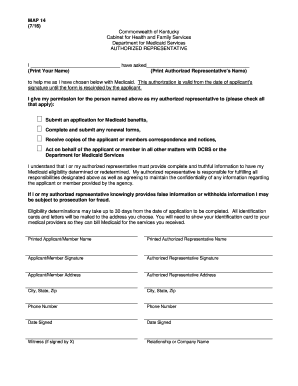
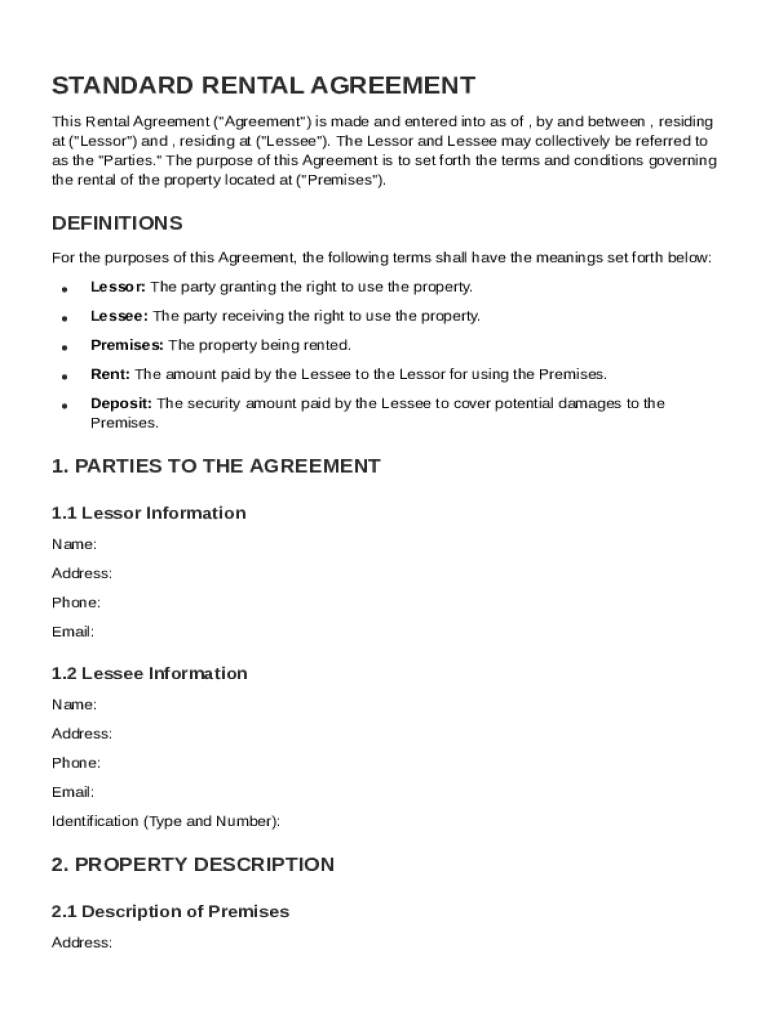
A Standard Rental Agreement Template is a pre-formatted document used to establish the contractual terms between a property owner (lessor) and a tenant (lessee). This legally binding document outlines the rights and responsibilities of both parties, ensuring clarity and preventing misunderstandings. The template typically includes essential components such as the lease term, rent payment details, security deposit conditions, and maintenance responsibilities. It serves as a practical tool to streamline the renting process by providing a standardized framework adaptable to specific situations.
Key Elements of the Standard Rental Agreement Template
Lease Term and Rent Payment Structure
The lease term defines the duration for which the agreement is valid, such as months or years, starting from a specified date. It is crucial to specify the renewal conditions and any notice requirements for termination. The rent payment structure outlines the amount due, frequency (monthly, quarterly), and accepted payment methods to ensure timely and hassle-free transactions. Defining consequences for late payments, including penalties or interest, provides an extra layer of security.
Security Deposit Conditions
A security deposit acts as financial assurance for the lessor against potential damages or unpaid rent. The agreement should specify the deposit amount, such as one month's rent, conditions for its refund, and the timeframe for returning the deposit upon lease termination. Clear stipulations regarding damages and acceptable property conditions at the time of vacating prevent conflicts and ensure a smooth transition.
Maintenance Responsibilities and Utilities
This section delineates the responsibilities of both parties concerning property upkeep. It typically specifies whether the lessor or lessee is responsible for repairs and routine maintenance tasks. Additionally, it outlines which utilities (e.g., water, electricity) are included in the rent and which are to be covered by the tenant. Clear guidelines promote harmony and prevent disputes over property conditions.
How to Use the Standard Rental Agreement Template
Importing and Editing the Template
To utilize the Standard Rental Agreement Template efficiently, you can import it into an editing platform like DocHub from various sources such as Google Drive or Dropbox. This flexibility simplifies document management by enabling you to edit directly on the platform without the need for file conversion. Customization options allow you to tailor the template to fit the specific requirements of your rental arrangement, ensuring precision and relevance.
Filling Out the Template
Using form fields, you can insert necessary information such as property address, contact details of involved parties, and specific terms. This interactive process streamlines the completion of required sections, enhances accuracy, and minimizes errors. Require certain fields to ensure all critical information is captured before finalizing the agreement, facilitating a comprehensive and clear document.
Legal Use of the Standard Rental Agreement Template
Utilizing a Standard Rental Agreement Template adheres to legal standards by formalizing rental terms under applicable laws. In the United States, adherence to state-specific landlord-tenant laws ensures the agreement is legally binding and enforceable. Adjustments may be needed to accommodate variations in state regulations, such as notice periods for eviction or deposit handling procedures. This adherence not only legitimizes the rental process but also provides protection against legal disputes.
Important Terms Related to the Standard Rental Agreement Template
Lessor and Lessee
The lessor refers to the property owner or manager who provides the premises for rent, while the lessee is the individual or entity that occupies the property under agreed terms. Defining these roles clearly in the agreement prevents ambiguity regarding rights and responsibilities, ensuring both parties understand their obligations.
Governing Law and Miscellaneous Provisions
Including a governing law clause specifies which state's laws apply in the event of a dispute. Miscellaneous provisions may cover aspects such as property use restrictions, subleasing rules, and alterations. Clear definitions within these sections ensure both parties are aware of their rights and any limitations imposed by the agreement.
Who Typically Uses the Standard Rental Agreement Template
The Standard Rental Agreement Template is commonly utilized by landlords, property managers, and real estate professionals to formalize lease arrangements. It is also beneficial for tenants seeking clarity and assurance about their rights and duties. Additionally, legal consultants may deploy these templates as a starting point for creating tailored agreements for clients in the rental market.


State-Specific Rules for the Standard Rental Agreement Template
Rental agreements may need adjustments to comply with state-specific laws and regulations. For instance, states may have unique requirements regarding the maximum allowable security deposit, mandatory disclosures, or rules regarding notice periods for termination. Awareness and incorporation of these variations ensure legality and help avoid potential disputes.
Examples of compliance include adhering to New York’s rent control laws or California’s tenant protection regulations, demonstrating the need for template flexibility to meet regional demands.