






Definition & Meaning
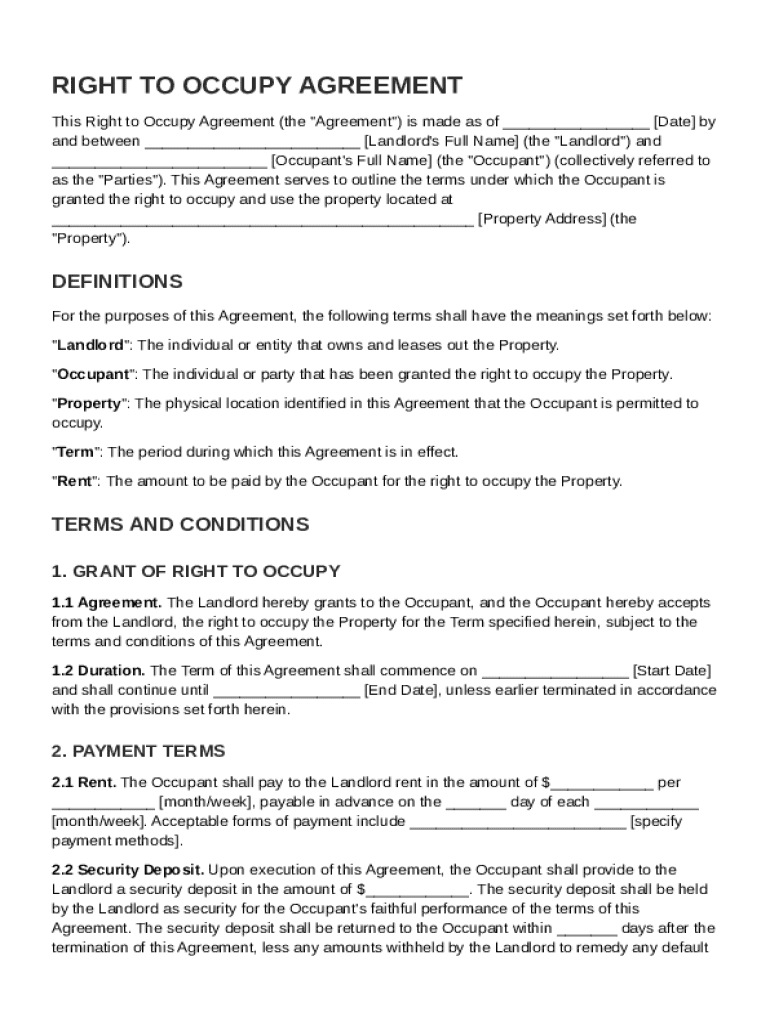
A Right to Occupy Agreement, often used in real estate, is a legal contract between a landlord and an occupant that outlines the specific terms and conditions under which the occupant is granted the right to reside in a specified property. This document is crucial in clarifying the roles, duties, and rights of both parties. Commonly, it includes key provisions such as identification of the parties involved, the property description, and the terms of payment, including rent and security deposits. These agreements serve to protect both the landlord and the occupant by legally defining acceptable use of the property, obligations in terms of maintenance, and procedures for early termination or breaches of agreement.
Key Elements of the Right to Occupy Agreement Template
Essential Provisions
- Parties Involved: Clear identification of the landlord and the occupant, including contact information.
- Property Description: Detailed account of the property involved, including address and any included amenities.
- Payment Terms: Specifications regarding rent amount, due dates, late fees, and security deposit information.
- Duration of Agreement: Defines the length of time the occupant has the right to occupy the property.
- Obligations and Responsibilities: Specifies maintenance duties, property usage limitations, and repair protocols.
Additional Clauses
- Termination Conditions: Outlines acceptable grounds for termination of the agreement by either party.
- Indemnity and Liability: Provisions for indemnity in case of property damage or occupant injury.
- Governing Law: Specification of the legal jurisdiction governing the agreement.
- Miscellaneous Provisions: Additional clauses like dispute resolution methods, confidentiality, and alterations.
Steps to Complete the Right to Occupy Agreement Template
Step-by-Step Instructions
- Identify the Parties: Enter complete details of the landlord and the occupant.
- Describe the Property: Include a comprehensive description of the property and any attached features or amenities.
- Detail Payment Terms: Define rent amount, frequency, deposit requirements, and accepted payment methods.
- Define Duration: Clearly state the commencement and expiration dates of the agreement.
- Specify Use and Responsibilities: List acceptable uses for the property and responsibilities regarding maintenance and repairs.
- Include Termination Terms: Include specific scenarios under which the agreement may be legally terminated.
- Add Governing Law Clause: Insert the applicable state jurisdiction for dispute resolution.
Who Typically Uses the Right to Occupy Agreement Template


Common Users
- Landlords: Property owners aiming to legally formalize occupancy terms with individuals or businesses.
- Tenants/Occupants: Individuals or entities seeking clarity and legal protection over the terms of their stay.
- Property Managers: Professionals overseeing rental properties on behalf of owners who need consistent contract templates.
- Legal Professionals: Attorneys and legal advisors who draft or review such contracts as part of property law services.

Business Context
Businesses that frequently rent or lease office space also use this template to secure tenancy agreements, ensure compliance, and establish clear communication of terms.
Legal Use of the Right to Occupy Agreement Template
Regulatory Considerations
- Compliance with State Laws: Must align with state-specific tenancy laws, covering rent control, tenant rights, and eviction processes.
- Fair Housing: Should comply with fair housing laws to prevent discrimination based on race, gender, religion, etc.
- Disclosure Requirements: Legal necessity to disclose any known property defects or hazards within the agreement.
- Form Enforceability: Ensures that all terms meet enforceability standards, preventing scenarios voiding contractual obligations.
Important Terms Related to Right to Occupy Agreement Template
Terminology Explanation
- Security Deposit: A predefined amount held by the landlord in case of damages beyond usual wear and tear.
- Lease Term: The specified duration for which the agreement is valid.
- Indemnity Clause: A clause wherein the occupant agrees to cover damages or legal expenses.
- Governing Law: The legal framework under which the agreement is interpreted and enforced.
Contextual Definitions
- Rent Abatement: Provisions for temporary rent reduction or waiver under specific circumstances like property damage.
- Subletting: Rights and conditions, if any, allowing the occupant to lease the space to a third party.
State-Specific Rules for the Right to Occupy Agreement Template
Variations by Jurisdiction
- California: Requires specific disclosures like mold, lead-based paint, and presence of former military training grounds.
- New York: Rent control stipulations may affect permissible rent increases and security deposit rules.
- Texas: Does not impose statutory rent control, but requires explicit terms for security deposits and late fees.
Practical Scenarios
State laws might impact permissible eviction notices, rent increase notifications, and maintenance responsibilities, making it crucial to tailor the template to the applicable jurisdiction.
Examples of Using the Right to Occupy Agreement Template
Case Studies
- Residential Lease Agreement: For a family renting a house, the template establishes clear rent terms, maintenance responsibilities, and move-out procedures.
- Commercial Lease Example: A startup renting office space uses the agreement to outline the term of occupancy, permissible alterations, and responsibilities for common area maintenance.
- Short-Term Rental Scenario: An apartment used for monthly executive stays incorporates provisions for frequent turnover and varied deposit requirements.
Practical Illustrations
These examples underline the template's adaptability across different property types and purposes, emphasizing its utility in both residential and commercial contexts.