






Definition & Meaning
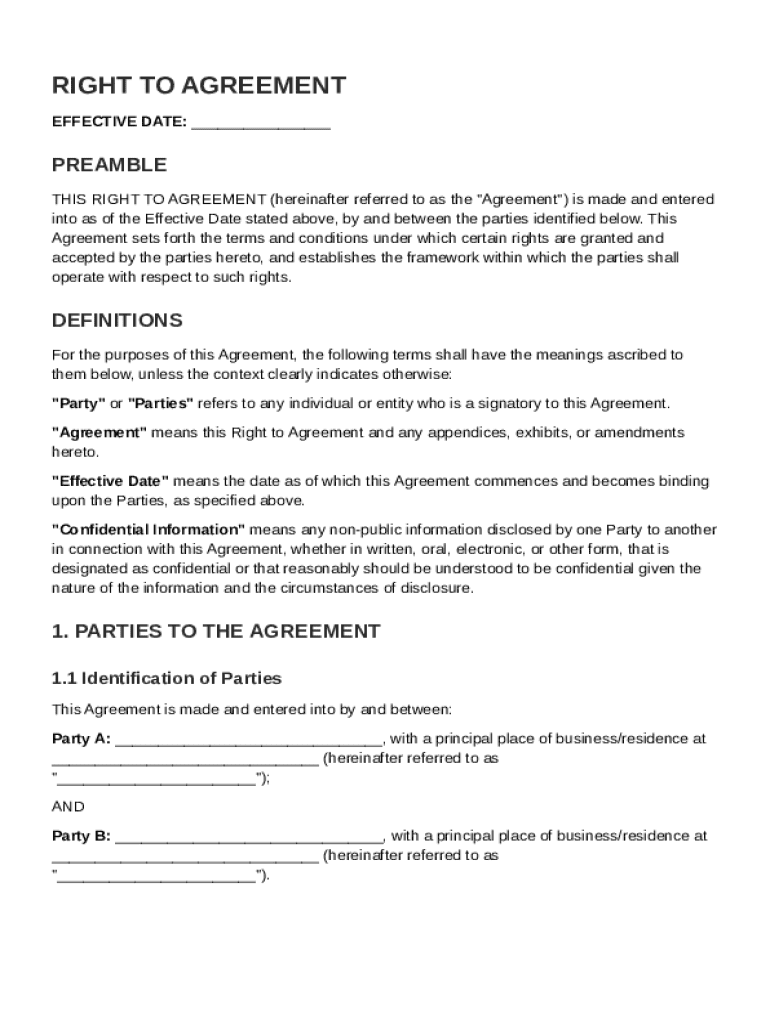
A "Right to Agreement Template" is a legal document that establishes the framework under which two parties grant and accept certain rights. This type of agreement typically includes clauses regarding definitions, identification of the parties involved, purpose, terms and conditions, compensation, confidentiality obligations, dispute resolution procedures, governing law, and possible amendments. The primary objective of this agreement is to formalize the cooperative relationship between the parties, ensuring confidentiality and specifying the responsibilities and expectations each party holds.
Key Features
- Parties Identification: Clearly names and describes the parties involved in the agreement, ensuring there is no ambiguity.
- Purpose: Defines the objective of the agreement to provide clarity on the intended outcomes of the collaboration.
- Terms and Conditions: Outlines the specific obligations and expectations of each party, providing a guideline for the collaboration.
Key Elements of the Right to Agreement Template
There are several fundamental components included in a Right to Agreement Template:
- Definitions: Establishes specific meanings for terms used throughout the document to ensure clarity and mutual understanding.
- Compensation: Details any financial arrangements or obligations, outlining how remuneration or other forms of compensation will be handled.
- Confidentiality: Sets the parameters for how confidential information will be handled, including any non-disclosure agreements.
- Dispute Resolution: Lays out the method for resolving any disagreements that might arise, such as arbitration or mediation processes.
- Governing Law: Indicates the jurisdiction under which the agreement will be interpreted and enforced.
Steps to Complete the Right to Agreement Template
Completing a Right to Agreement Template involves several important steps:
- Gather Information: Collect necessary details regarding both parties, the scope of the agreement, and any specific terms that need inclusion.
- Initial Draft: Use the template to create an initial draft, ensuring all relevant sections are filled out accurately.
- Review: Both parties should review the document meticulously to ensure all terms align with their understanding and expectations.
- Negotiate: Engage in discussions to resolve any differences or ambiguities in the terms and reach mutual consent.
- Finalize: Once both parties agree on the terms, finalize the document and prepare it for signing.
- Signing: Sign the agreement using legally binding electronic signatures, if applicable.
Legal Use of the Right to Agreement Template
The legal use of a Right to Agreement Template encompasses ensuring the document is compliant with applicable laws and regulations:
- Compliance: Confirm that terms align with relevant legal standards and industry regulations.
- Legality of Rights: Ensure the rights being granted or accepted are legal and within the capacity of the parties to negotiate.
- Mandatory Clauses: Verify that mandatory legal clauses are included, depending on jurisdictional requirements.
Important Terms Related to Right to Agreement Template
The template includes various legal terms that are crucial for comprehension:
- Amendments: Describes how changes to the agreement will be handled and documented.
- Force Majeure: Outlines situations where performance of contractual obligations may be excused due to extraordinary events.
- Indemnification: Details the extent to which one party agrees to compensate the other for certain damages or losses.
Who Typically Uses the Right to Agreement Template
This type of template is versatile and used by various individuals and entities:
- Businesses: Establish partnerships or collaborations with other companies.
- Individuals: Protect personal rights in creative or professional endeavors.
- Non-Profits: Formalize relationships with partners or sponsors.


State-Specific Rules for the Right to Agreement Template
State-specific regulations may affect the formulation and execution of such agreements:
- Jurisdictional Differences: Verify that the agreement complies with local laws specific to the state in which it will be enforced.
- Registration Requirements: Some states may require registration or additional documentation for legal enforceability.
Examples of Using the Right to Agreement Template
Real-world scenarios where this template is frequently applied include:
- Business Partnerships: Two businesses collaborate on a project, sharing resources and profits.
- Licensing Arrangements: A company licenses its intellectual property to another entity.
- Joint Ventures: Two or more parties create a subsidiary company, sharing investment and profits.
Each scenario involves specific adaptations to the basic template in order to address unique conditions or requirements pertinent to the agreement’s context.