






Definition and Meaning
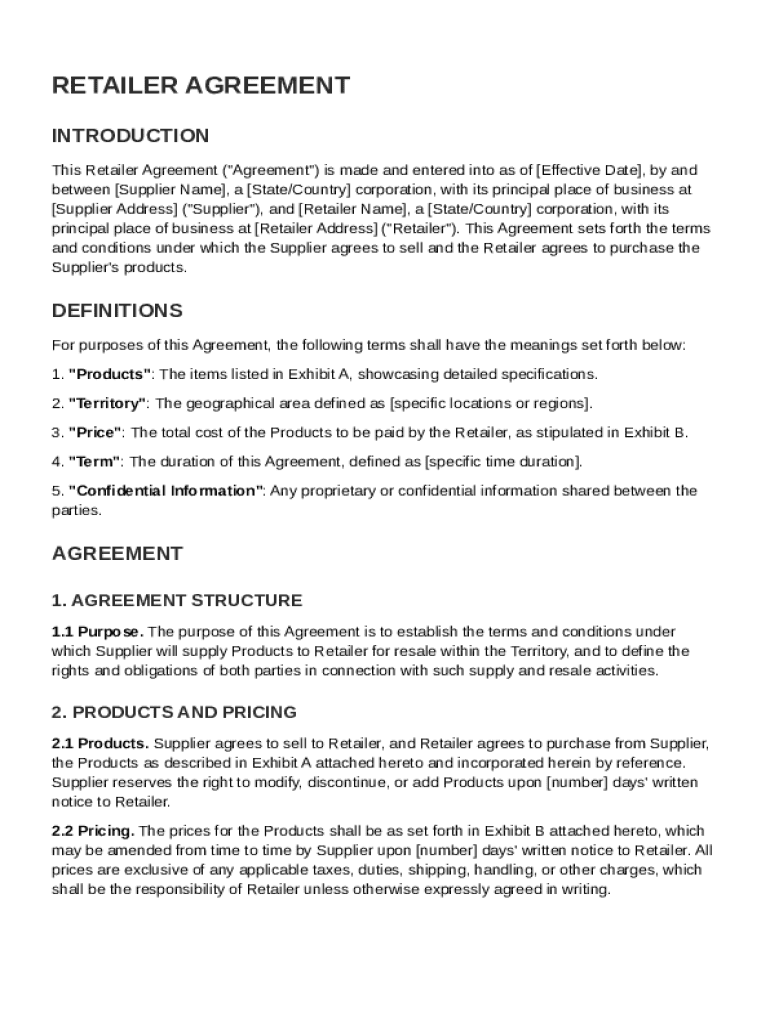
The Retailer Agreement Template outlines the formal relationship between a supplier and a retailer, detailing terms for the sale and purchase of products. This document is crucial in establishing clear guidelines and expectations between the parties involved. It includes comprehensive sections on product specifications, pricing, payment terms, and marketing obligations, ensuring that both parties are aligned on operational and business goals. By utilizing this template, businesses can safeguard their transactions and minimize potential legal disputes.
Key Elements of the Retailer Agreement Template
The Retailer Agreement Template is composed of several key components that address various aspects of business transactions. These elements include:
- Definitions and Terms: Clarity on the terminology used throughout the agreement.
- Product Specifications: Details on product quality, delivery schedules, and compliance with industry standards.
- Pricing and Payment Terms: Clear guidelines on pricing structures, invoicing, and payment timelines.
- Marketing and Promotion: Obligations for promotional activities and the use of branding materials.
- Confidentiality and Intellectual Property: Provisions to protect sensitive information and intellectual property rights.
- Indemnification and Liability: Rules on indemnification, liability limitations, and risk management.
Each section ensures that both supplier and retailer understand their responsibilities, enhancing collaboration and trust.
How to Use the Retailer Agreement Template
Using the Retailer Agreement Template involves several methodical steps to ensure that all relevant details are captured accurately. Follow these steps:
- Download and Review: Access the template from a trusted source and review each section to understand its content and purpose.
- Customize the Template: Modify sections to reflect the specific terms and conditions agreed upon between the supplier and the retailer.
- Consult with Legal Advisers: Seek guidance from legal professionals to ensure all terms comply with applicable laws and regulations.
- Finalize and Sign: After all parties are satisfied with the contents, both supplier and retailer should sign the agreement to formalize the understanding.
- Implement and Monitor: Put the agreement into action and routinely review its terms to ensure compliance and address any changes in the business relationship.
Who Typically Uses the Retailer Agreement Template
The Retailer Agreement Template is generally used by a variety of business entities across different sectors. Those who benefit most include:
- Manufacturers and Producers: Engaging retailers to distribute their products to consumers.
- Wholesale Distributors: Arranging terms with retailers to carry specific product lines.
- Retail Chains and Franchises: Managing relationships with suppliers to ensure consistent product offerings.
- E-commerce Platforms: Partnering with suppliers to stock digital storefronts effectively.
This template is essential for businesses of all sizes that engage in retail operations, ensuring clear communication and structured agreements with partners.


Steps to Complete the Retailer Agreement Template
Completing the Retailer Agreement Template involves a detailed process to ensure accuracy and compliance. Key steps include:
- Gather Relevant Information: Collect details about the products, pricing models, payment terms, and delivery schedules.
- Detail Responsibilities: Clearly outline the roles and obligations of both parties in relation to the marketing and sale of products.
- Decide on Legal Clauses: Include necessary legal clauses and consult with legal experts to cover areas like liability and dispute resolution.
- Review and Revise: Allow both parties to review the agreement, suggest revisions, and make necessary adjustments.
- Secure Approval and Signatures: Obtain approval from relevant authorities and secure signatures to formalize the agreement.
Legal Use of the Retailer Agreement Template
The legal implications of using the Retailer Agreement Template are significant, particularly in terms of ensuring compliance and safeguarding interests:
- Compliance with Commercial Law: Adherence to relevant laws, including the Uniform Commercial Code (UCC) in the United States.
- Protection of Intellectual Property: Embedding clauses to protect proprietary information and brand assets.
- Enforcement of Terms and Conditions: Providing a legal framework for enforcing the agreement's terms, securing an equitable business relationship.
Seeking legal counsel is advised to ensure the agreement meets industry standards and respective legal requirements.
State-Specific Rules for the Retailer Agreement Template
State-specific adjustments may be required when using the Retailer Agreement Template, as commercial laws can vary. Factors to consider include:
- Sales Tax Regulations: Understanding the tax obligations within each state regarding retail transactions.
- Consumer Protection Laws: Ensuring compliance with state laws designed to protect consumer rights and safety.
- Regulations on Product Standards: Adhering to state regulations about product safety, labeling, and quality standards.
Being aware of these variations ensures that the agreement aligns with state rules, avoiding potential legal issues.
State-by-State Differences
State-by-state differences can significantly impact the execution and legality of retailer agreements. Considerations involve:
- Jurisdictional Differences: Varying contract enforcement rules and litigation processes across states.
- Registration and Licensing: Requirements for businesses to register or obtain state-specific licenses.
- State Industry Regulations: Specific rules pertaining to different industry sectors within a state.
Staying informed of state-specific differences is critical for businesses operating in multiple jurisdictions to maintain compliance and operational efficiency.