



01. Edit your form online
Type text, add images, blackout confidential details, add comments, highlights and more.

Type text, add images, blackout confidential details, add comments, highlights and more.

Draw your signature, type it, upload its image, or use your mobile device as a signature pad.

Send it via email, link, or fax. You can also download it, export it or print it out.
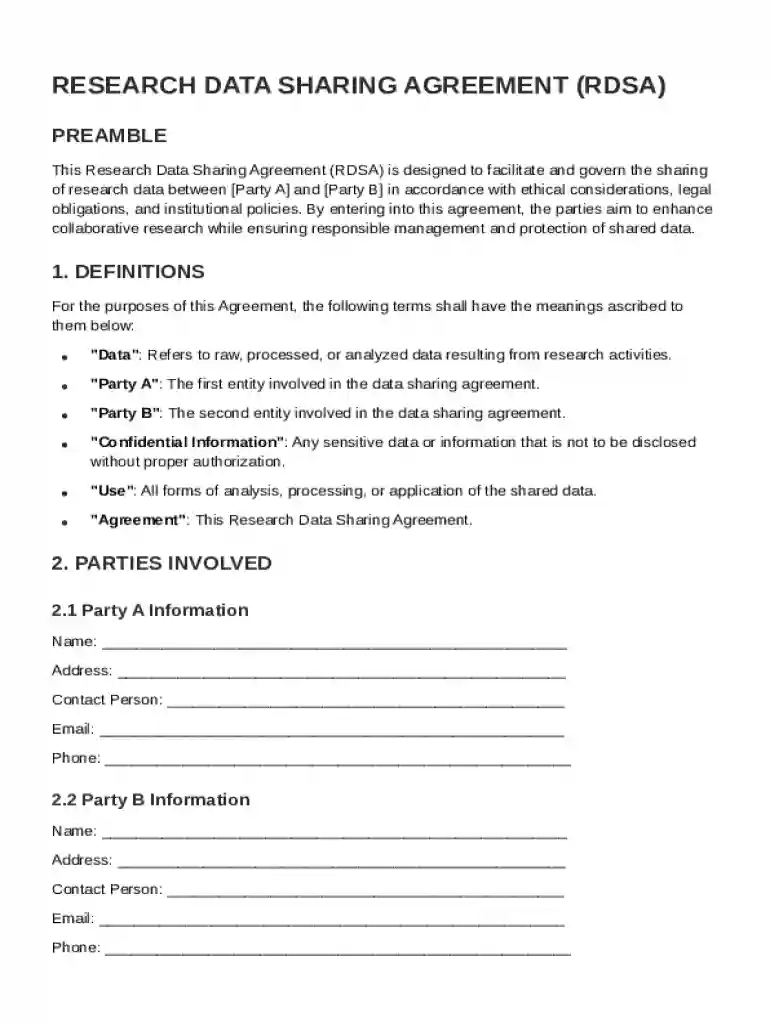
A Research Data Sharing Agreement Template is a formal document that defines the terms and conditions for sharing research data between two parties. It ensures compliance with ethical standards, legal obligations, and institutional policies. This agreement is crucial for protecting sensitive information while facilitating collaboration. Key terms include data types, security measures, intellectual property rights, and confidentiality requirements. Understanding and drafting such an agreement helps manage legal responsibilities and protect proprietary data in research collaborations.
Identify the Parties Involved: Clearly specify the organizations or individuals participating in the data-sharing agreement.
Define the Purpose: Outline the objectives and motives for sharing the data, ensuring both parties understand the scope and intent.
Detail the Data Being Shared: Describe the types of data included, emphasizing any specific datasets, formats, or relevant metadata.
Determine Confidentiality Requirements: Establish protection guidelines for sensitive information, including access restrictions and non-disclosure clauses.
Specify Intellectual Property Terms: Clarify ownership rights, usage permissions, and how intellectual property related to the data will be handled.
Lay Out Security Measures: Detail the technical and organizational steps each party must take to protect the data from unauthorized access.
Address Dispute Resolution: Include processes for resolving potential disagreements or breaches, possibly incorporating mediation or arbitration.
Review and Sign: Ensure all involved parties thoroughly understand the agreement, make any necessary amendments, and obtain proper signatures to finalize the document.
This template must comply with all relevant legal standards and policies. Data sharing often intersects with privacy laws, such as the General Data Protection Regulation (GDPR) in the European Union or HIPAA in the U.S. Thorough legal review ensures the agreement aligns with data protection laws and university or institutional policies. In the U.S., adherence to the Common Rule for human subject research is also typically required.
This template is utilized by academic researchers, universities, government agencies, and private research firms engaged in collaborative studies. It is essential for projects requiring data exchange between different organizational boundaries to facilitate joint research efforts while safeguarding data rights and privacy. It ensures clarity about roles, rights, and responsibilities when data transitions from one entity to another.

Digital tools like DocHub streamline managing and editing this agreement. The platform supports PDF and other document formats, allowing ease of use in various digital environments. Secure integration with cloud services such as Google Drive or Dropbox ensures that the agreement remains accessible but secure. Using DocHub's form creation tools allows customization of the agreement template to fit specific collaboration needs.
Academic Institutions: Universities and colleges that frequently engage in cross-departmental research collaborations.
Biotechnology Firms: Companies conducting comprehensive research where proprietary data needs stringent protection.
Healthcare Research Organizations: Entities managing vast patient data sets with high confidentiality requirements for analysis and collaboration.
Government Research Divisions: Departments sharing sensitive data across federal, state, or local lines for policy-making or scientific advancement.
These entities ensure robust data governance and collaboration integrity by employing the Research Data Sharing Agreement Template.
At DocHub, your data security is our priority. We follow HIPAA, SOC2, GDPR, and other standards, so you can work on your documents with confidence.


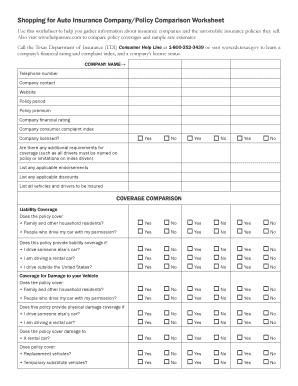
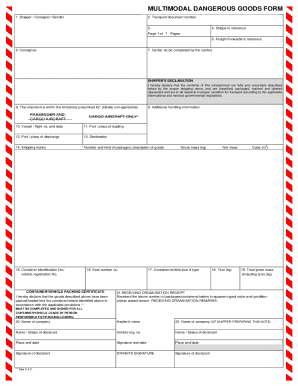

Example Data Sharing Agreement. This example DSA can be used as a template for a contract between a court and a researcher or between two research organizationsRead more
Jul 15, 2026 Privacy policy of Professional Wiki. Learn how we collect, use, and protect your personal data across our MediaWiki hosting and development


