






Definition & Meaning
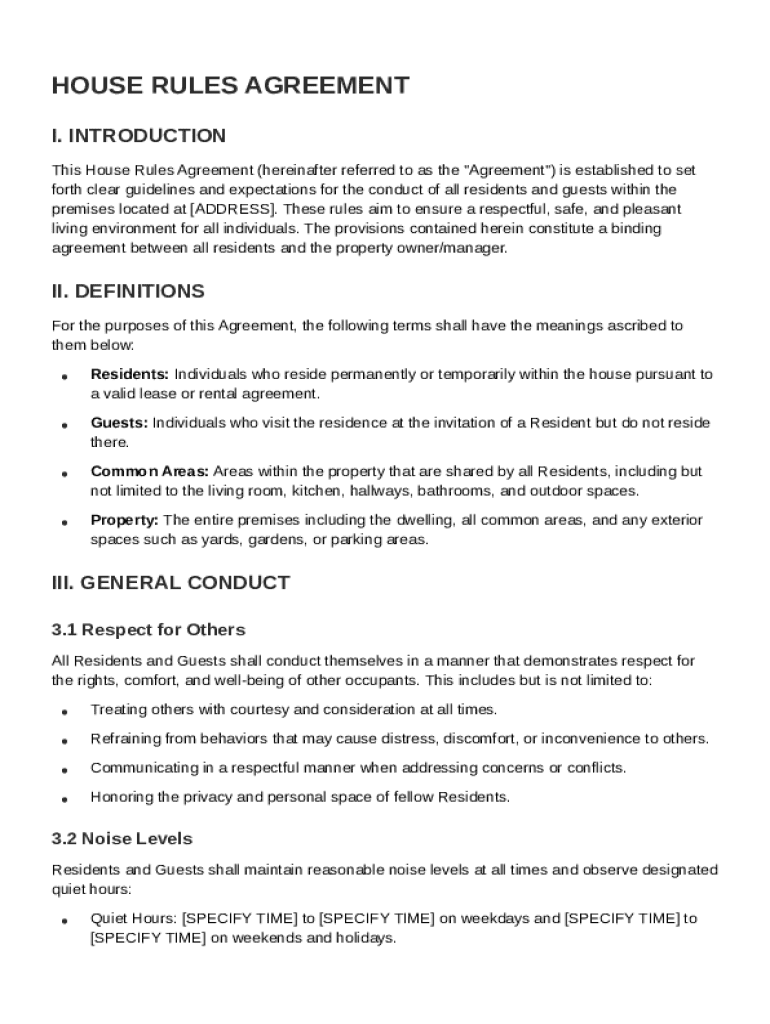
The House Rules Agreement Template is a structured document designed to outline the norms and expectations for individuals living in a shared environment, such as roommates or tenants in a co-living arrangement. This template serves as an essential guide to ensure that all residents and guests understand the guidelines that promote respect, cleanliness, safety, and effective conflict resolution. By establishing clear rules regarding noise levels, maintenance duties, and guest policies, the template helps in preventing misunderstandings and fostering a harmonious living environment.
Practical Application
This agreement not only promotes mutual respect but also sets the foundation for resolving conflicts amicably. Terms are clearly defined to avoid ambiguities and ensure everyone is on the same page. For instance, it can specify quiet hours to manage noise levels or outline procedures for maintenance responsibilities, thereby averting potential disputes.
Key Elements of the House Rules Agreement Template
The House Rules Agreement Template includes several critical components that ensure its effectiveness in a shared living context. These elements are designed to cover various aspects of daily living and community engagement within the shared environment.
Essential Components
-
Noise Regulations: Establishes acceptable noise levels and designated quiet hours, ensuring a peaceful atmosphere for all residents.
-
Guest Policy: Details rules regarding the number and frequency of guests, including notification procedures for overnight stays to maintain security and comfort for all residents.
-
Substance Use: Provides guidelines on the use of alcohol and other substances to ensure compliance with legal requirements and maintain a safe environment.
-
Maintenance Duties: Outlines responsibilities for cleaning and maintaining common areas, along with procedures for reporting repairs to avoid misunderstandings and ensure timely upkeep.
-
Conflict Resolution: Specifies steps for addressing disputes among residents, facilitating constructive communication and fair resolutions.
How to Use the House Rules Agreement Template
Using the House Rules Agreement Template effectively requires understanding its structure and customizing it to meet the specific needs of the living arrangement. This ensures clarity and adherence to the agreed-upon terms.
Step-by-Step Usage Instructions
-
Initial Review: Read through the entire template to understand its scope and identify sections that may need customization.
-
Customization: Tailor the template based on the unique requirements of your living situation. Modify sections such as noise regulations or maintenance duties to better fit your environment.
-
Collect Signatures: Ensure all parties involved have read the template and agree to its terms. Collect signatures to acknowledge their understanding and commitment to the rules.
-
Regular Updates: Review and update the agreement periodically to account for any changes in living arrangements or personal circumstances, ensuring it remains relevant and effective.
Important Terms Related to House Rules Agreement Template
Understanding the terminology used in the House Rules Agreement Template is crucial for its successful implementation. Key terms are designed to provide clarity and minimize room for misinterpretation.
Definitions and Scope
-
Resident: Any individual permanently living in the shared space and subject to the rules outlined in the agreement.
-
Guest: Any non-resident who visits or stays temporarily, with guidelines provided for their conduct and duration of stay.
-
Common Areas: Shared spaces that all residents have access to, requiring mutual respect and upkeep as per outlined maintenance duties.
-
Termination Clause: The conditions under which residency can be terminated due to non-compliance or violation of the agreement, ensuring everyone is aware of potential consequences.
Steps to Complete the House Rules Agreement Template
Completing the House Rules Agreement Template involves a detailed process that ensures every aspect is covered and agreed upon. It requires active participation from all parties involved.
Detailed Completion Process
-
Gather Information: Collect necessary details regarding the residents, property, and living arrangements to accurately fill out the template.
-
Identify Rules: Clearly define rules that reflect the community’s values, focusing on areas such as noise, guests, and maintenance.
-
Negotiate Terms: Discuss each section with all residents to ensure consensus and address any concerns or suggestions before finalizing the terms.
-
Formalize Agreement: Finalize the document with all residents’ agreements and gather signatures to confirm participation and adherence.
Legal Use of the House Rules Agreement Template
Utilizing the House Rules Agreement Template in a legal capacity helps protect all parties involved by clearly documenting the agreed-upon terms. This can prevent potential disputes and legal challenges.
Legal Boundaries and Implications
-
Compliance: Ensure the template complies with state and local laws to prevent conflicts with existing legal frameworks, such as tenant rights and housing regulations.
-
Amendments: Establish a clear process for making amendments, requiring mutual consent to ensure changes are legally binding and agreed upon by all parties.
-
Binding Nature: Clarify that, upon signing, the agreement becomes a legally binding document, reinforcing commitment to the outlined terms.
Examples of Using the House Rules Agreement Template
Real-world scenarios where the House Rules Agreement Template proves beneficial highlight its practical advantages and emphasize its role in managing shared living arrangements.
Scenario Examples
-
Student Housing: In a college dormitory setting, the template helps manage diverse living preferences among students by establishing clear expectations around noise and shared space usage.
-
Co-living Spaces: In a house shared by professionals, it can set boundaries regarding overnight guests and shared duties, promoting a respectful and balanced environment.
-
Family Agreement: For a multi-generational family home, it governs use of shared areas and responsibilities, preventing potential familial conflicts and ensuring harmony.
By capturing these scenarios, the template demonstrates its versatility and adaptability, making it a valuable tool for various living arrangements.