
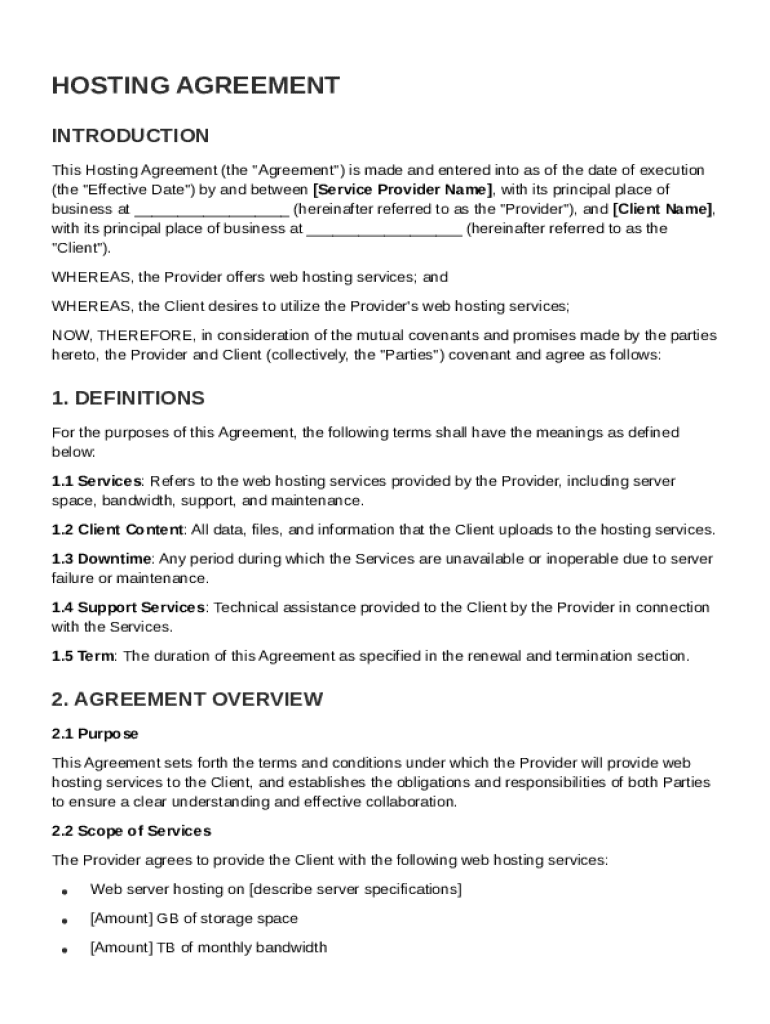







Definition and Meaning of Hosting Agreement Template
A Hosting Agreement Template is a pre-formatted document that outlines the essential terms and conditions between a web hosting service provider and a client. Its primary purpose is to establish clear guidelines and expectations for both parties involved in the web hosting process. This type of agreement includes key details such as service availability, support services, payment terms, confidentiality clauses, data protection compliance, liability limitations, and dispute resolution procedures. By clearly defining these elements, the template ensures a mutual understanding and helps prevent conflicts by setting out responsibilities and obligations for effective collaboration in web hosting.
A practical example would be a small business seeking to host its website with a provider. The Hosting Agreement Template would specify the uptime guarantee the provider must meet, the technical support available to the client, and any data privacy commitments, ensuring the client's requirements are explicitly stated and legally enforceable.
Key Elements of the Hosting Agreement Template
The Hosting Agreement Template includes several critical components that ensure the effective management and protection of the hosting relationship. These elements are typically arranged logically to cover various aspects of the hosting services:
-
Service Provision: This section outlines the services offered by the provider, including server type, storage space, bandwidth, and email accounts. It details the expectations regarding service availability, often defined by an uptime percentage guarantee.
-
Support and Maintenance: Includes specifics about the technical support available to the client, such as 24/7 helpdesk support, regular maintenance schedules, and any associated costs.
-
Payment Terms: Defines the pricing structure for services, including billing periods, payment deadlines, late payment penalties, and any setup fees or additional charges for extra services.
-
Confidentiality and Compliance: Details how both parties will handle sensitive information in compliance with data protection laws like GDPR or HIPAA. It may include clauses for confidentiality and data encryption requirements.
-
Liability and Indemnification: Specifies limits of liability for both parties and the situations where indemnification is necessary, protecting against claims or damages caused by breaches.
For example, an agreement may state that the client should notify the provider of any data breaches within 24 hours, ensuring the issue is addressed promptly.
How to Use the Hosting Agreement Template
Using a Hosting Agreement Template simplifies the process of formalizing a hosting arrangement by providing a structured framework that can be customized according to specific needs. Here is a recommended step-by-step approach to utilizing this template effectively:
-
Review the Template: Carefully read through the entire document to understand the terms and conditions included. Note any sections that require customization to fit your specific hosting needs.
-
Customize the Document: Modify the template to reflect details specific to your hosting arrangement. This can include entering names, dates, service descriptions, and any particular clauses or provisions that are relevant to your circumstances.
-
Consult with Legal Counsel: It is advisable to have a lawyer review the customized agreement to ensure all legal requirements are met and your interests are adequately protected.
-
Discuss With the Provider: Share the customized template with your hosting provider and discuss any changes or additional clauses they may request. This collaboration ensures both parties are in agreement before proceeding.
-
Finalize and Sign: Once both parties agree on the terms, the document is signed by authorized representatives from both parties to make it legally binding.
A common scenario would be a start-up customizing the agreement to include specific data protection clauses required by their industry, ensuring they are compliant from day one.
Steps to Complete the Hosting Agreement Template
Completing a Hosting Agreement Template involves several important steps to ensure all relevant information is captured accurately and the document is legally enforceable:
-
Gather Information: Collect all necessary details such as the names and contact information of both parties, specific services to be provided, and any special requirements.
-
Fill in the Template: Insert the gathered information into the appropriate sections of the template, ensuring all details are correct and comprehensive.
-
Set Service Levels: Clearly define expected service levels, including uptime guarantees and maintenance schedules, tailoring these to meet your specific needs.
-
Define Payment Terms: Ensure the payment section is complete, detailing any initial fees, recurring costs, payment methods, and the timeline for payments.
-
Include Additional Clauses: Add any additional clauses that may be specific to your industry needs, such as advanced security measures or jurisdictional preferences for dispute resolution.
-
Revise and Review: Double-check the completed template for any errors or omissions and make necessary corrections. Ensure all required sections are filled and consistent with previous agreements or industry standards.
Collaborating on a Hosting Agreement for a software as a service (SaaS) company may involve specifying performance metrics to ensure the hosting environment meets the operational demands of their application.
Important Terms Related to Hosting Agreement Template
Understanding the terminology used within a Hosting Agreement Template is crucial for comprehending its full implications. Here are some fundamental terms typically included:
-
Service Level Agreement (SLA): A document within the hosting agreement that specifies the expected level of service, including uptime guarantees and response times for technical support.
-
Uptime: Refers to the percentage of time during which the hosting services are available, typically presented as an annual or monthly percentage (e.g., 99.9%).
-
Bandwidth: Indicates the amount of data that can be transmitted over the hosting server within a given time period, affecting the site's ability to handle traffic.
-
Data Transfer: The total amount of data moved from the server to various users over a specified period.
-
Backups: Regularly scheduled copies of data stored on the server to ensure recovery in case of a data loss incident.
-
Indemnification: A contractual obligation wherein one party agrees to compensate for any damages or losses incurred by another party in specific circumstances.
Familiarity with these terms allows users to effectively negotiate and tailor the hosting agreement to meet their specific technical requirements and legal obligations.
Who Typically Uses the Hosting Agreement Template
The Hosting Agreement Template is utilized by a wide range of individuals and organizations involved in the provision or consumption of web hosting services. Typical users include:
-
Small Business Owners: These individuals use the template to engage with hosting providers to establish their online presence, ensuring website performance aligns with business needs.
-
Web Hosting Companies: Providers use the template to standardize agreements with multiple clients, simplifying contract management while maintaining legal compliance.
-
Legal Professionals: Lawyers specializing in IT or intellectual property law use the template to draft agreements for clients embarking on web-based projects.
-
Freelancers and Consultants: Independent professionals offering digital services may use the template to negotiate terms when hosting is part of the service package offered to clients.
For instance, an e-commerce start-up may utilize the template to secure web hosting services that ensure fast loading times and minimal downtown, which are crucial for sales and customer satisfaction.


Legal Use of the Hosting Agreement Template
Ensuring the legal validity of a Hosting Agreement Template requires understanding its enforceability and compliance with relevant laws. Here are critical considerations:
-
Compliance with Data Protection Laws: Agreements should adhere to policies like the ESIGN Act in the United States, GDPR in Europe, or any other local data protection regulations pertinent to where the service operates.
-
State and Federal Law: Depending on the jurisdiction, there may be specific statewide legislation affecting contract terms such as liability limits or consumer protection rights that must be integrated into the template.
-
Electronic Signatures: The use of compliant electronic signatures is integral to finalize these agreements, ensuring they are legally binding and recognized by courts.
-
Intellectual Property Rights: Terms safeguarding the intellectual property hosted on provider servers should be clearly defined, ensuring all parties' rights and responsibilities are protected.
Software companies, for example, should ensure their agreement protects proprietary software hosted on the provider’s servers, preventing unauthorized use or distribution.
Real-World Examples of Using the Hosting Agreement Template
The Hosting Agreement Template finds application across a diverse range of real-world scenarios, providing structure and legal clarity to hosting arrangements:
-
Tech Start-Ups: A new app development firm might use the template to secure hosting for their application, detailing performance expectations critical to user satisfaction.
-
E-commerce Platforms: Online retailers could employ the template to ensure data security measures and uptime guarantees meet their transaction volume demands.
-
Educational Institutions: Universities and colleges could utilize the template when hosting online course content to outline storage and bandwidth needs specific to streaming lectures.
-
Non-Profit Organizations: Charitable entities may use the template to secure affordable hosting solutions that guarantee data protection and excellent support, essential for maintaining donor trust and service continuity.
By utilizing such templates, these organizations can unify their hosting contracts under comprehensive agreements that both meet their operational needs and comply with legal standards.




