






Definition & Meaning
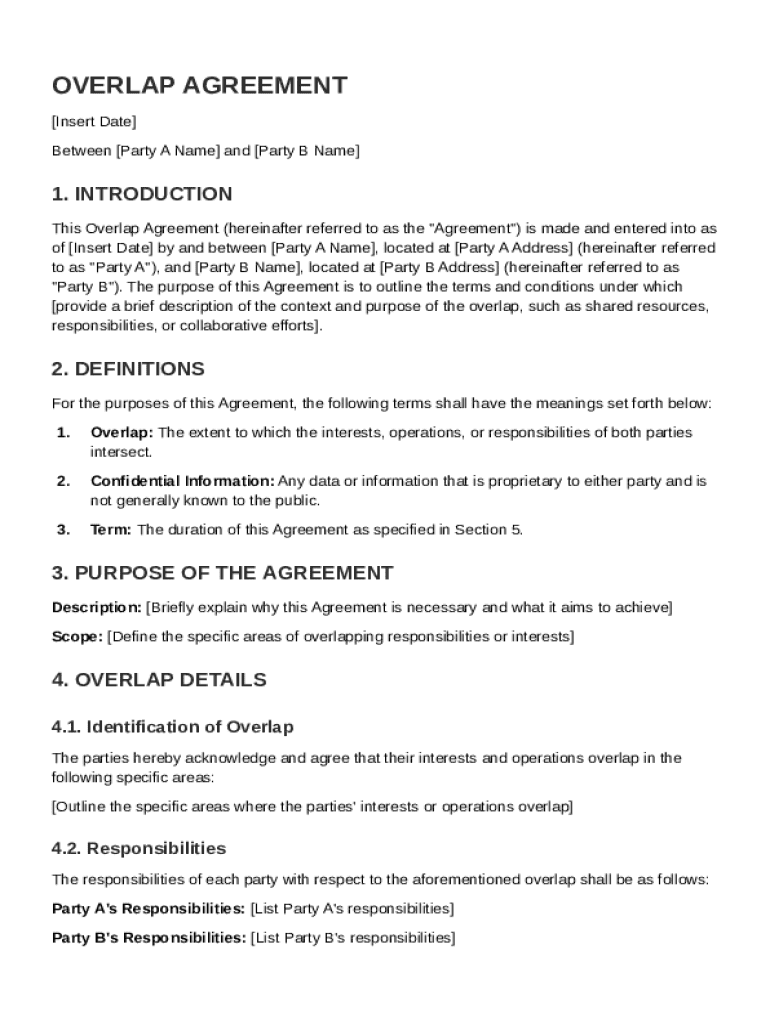
The Overlap Agreement Template is a structured document utilized to define the terms and conditions under which two parties, known as Party A and Party B, manage their overlapping interests and responsibilities. The template serves as a written framework to ensure collaboration while maintaining clarity and protecting sensitive information. It typically outlines confidentiality obligations, dispute resolution mechanisms, termination conditions, and miscellaneous provisions that are integral for the smooth operation between parties. This document is essential for establishing mutual understanding and avoiding conflicts in shared endeavors.
Key Elements of the Overlap Agreement Template
Confidentiality Obligations
Confidentiality obligations are critical in an Overlap Agreement to ensure that sensitive information shared between parties remains protected. The agreement typically delineates what constitutes confidential information and the measures each party must adhere to for its safekeeping. It includes clauses on how information should be handled, potential penalties for breaches, and exceptions to confidentiality, such as when information is required by law to be disclosed.
Dispute Resolution Processes
To mitigate conflicts, the template usually incorporates a section on dispute resolution. This might comprise steps such as negotiation, mediation, or arbitration, aimed at resolving disagreements before they escalate to litigation. Clear processes are outlined, specifying how disputes will be handled and the roles each party plays in reaching a resolution.
Steps to Complete the Overlap Agreement Template
-
Identify the Parties Involved: Begin by clearly identifying Party A and Party B, including their legal names and contact information. This establishes the foundation upon which all terms in the agreement apply.
-
Define Terms and Responsibilities: Detail each party's responsibilities and the specific areas of overlap to avoid ambiguity. This includes the objectives of the collaboration and the expected outcomes.
-
Specify Confidentiality Terms: Craft clauses outlining confidentiality requirements for handling sensitive information, including who has access and under what conditions.
-
Outline Dispute Resolution: Specify the methods used to resolve disputes, such as mediation or arbitration, ensuring that both parties agree on these mechanisms.
-
Set Termination Conditions: Include conditions under which the agreement can be terminated, whether for breach of terms, mutual consent, or other reasons.
Who Typically Uses the Overlap Agreement Template
Overlap Agreement Templates are typically used by businesses engaged in joint ventures, strategic partnerships, or collaborative projects where overlapping interests are present. These documents are also common among departments within large organizations that must coordinate efforts on shared initiatives. In academic or research entities, these templates facilitate collaboration while protecting intellectual property and research findings.


Why You Should Use an Overlap Agreement Template
An Overlap Agreement Template offers numerous benefits, primarily providing clarity in shared operations and protecting each party's interests:
- Prevents Misunderstandings: By explicitly defining roles, responsibilities, and expectations, it minimizes the potential for conflicts or misunderstandings.
- Protects Sensitive Information: Safeguards confidential information through predefined confidentiality obligations.
- Facilitates Smooth Dispute Resolution: Ensures there is a process in place for amicably resolving disputes without resorting to litigation.
- Enhances Communication and Cooperation: By clearly outlining terms and conditions, it fosters a collaborative environment.
Important Terms Related to Overlap Agreement Template
- Parties: The entities entering the agreement (Party A and Party B).
- Confidential Information: Data that must remain undisclosed to unauthorized parties.
- Dispute Resolution: Methods and procedures for resolving conflicts.
- Termination: Conditions under which the agreement ceases to be effective.
- Obligations: Duties and responsibilities each party must fulfill as part of the agreement.
Legal Use of the Overlap Agreement Template
The legal use of an Overlap Agreement Template involves ensuring that the document complies with applicable laws and regulations. This includes but is not limited to adhering to contract law principles in the United States, which require the agreement to contain an offer, acceptance, and consideration. Additionally, parties must have the legal capacity to enter into the agreement, and its terms should not be illegal or against public policy.
Examples of Using the Overlap Agreement Template
Consider a scenario where two technology companies decide to collaborate on developing a new software application. An Overlap Agreement would define how intellectual property is shared, confidentiality measures are applied, and how profits from the project are divided. Alternatively, a university and a corporation might use such an agreement to clarify rights and responsibilities over joint research endeavors, including publication rights and commercial exploitation of inventions. These use cases demonstrate the flexibility and applicability of the template across different sectors and collaborations.