Definition & Meaning
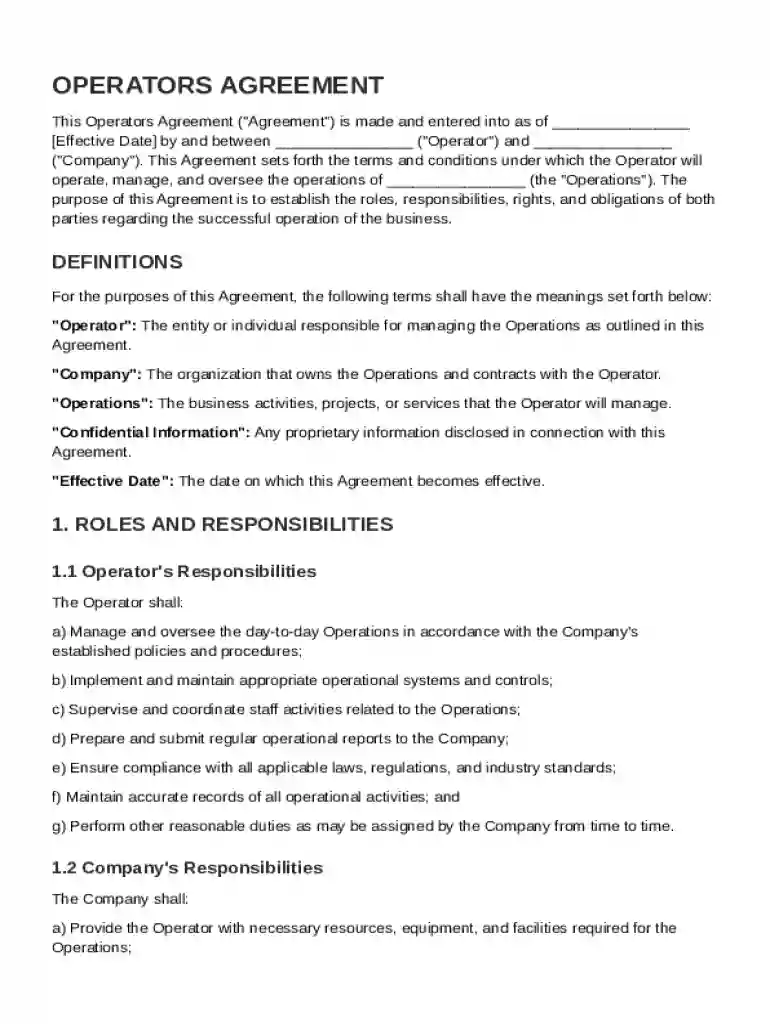
An Operators Agreement Template is a legal document establishing the operational relationship between an Operator and a Company. This template serves as a framework outlining critical aspects such as responsibilities, compensation schemes, and performance expectations. It details confidentiality obligations, indemnification clauses, dispute resolution processes, and the conditions applicable to the termination or renewal of the contract. By defining these elements, the Operators Agreement helps ensure that both parties understand their roles, thereby minimizing potential conflicts.
The template typically includes sections that define the scope of operations, performance metrics, and conditions for amendments. This structured approach allows businesses to customize agreements according to specific operational needs while maintaining a standard level of legal compliance. Such templates are crucial in sectors where operational risks and role complexities are high, ensuring a clear understanding and adherence to agreed-upon operational standards.
How to Use the Operators Agreement Template
Using an Operators Agreement Template involves several key steps designed to ensure the document is both comprehensive and tailored to specific business needs. First, both the Operator and the Company should review the template to understand its structure and content. This includes examining sections such as roles, responsibilities, compensation, and confidentiality.
- Customization: Users should make any necessary adjustments to standard clauses to reflect the unique terms of their relationship. This might involve modifying language to specify duties or updating compensation sections to align with agreed-upon payment structures.
- Legal Review: Given the formal nature of these agreements, it is advisable to seek legal counsel to ensure all legal obligations are clearly articulated and that the document complies with applicable laws.
- Collaboration: Once the document is satisfactorily tailored, both parties should collaborate to ensure mutual understanding and agreement on all terms. This step might involve negotiating certain terms until both parties are content.
- Execution: Both parties should sign the finalized document, which then becomes a binding agreement. Ensure all signed copies are appropriately distributed and stored for legal and operational references.
Key Elements of the Operators Agreement Template
The Operators Agreement Template comprises various key elements that ensure thorough coverage of operational aspects. Each section plays a fundamental role in establishing a clear understanding between the Operator and the Company.
- Roles and Responsibilities: This section clarifies the duties each party is expected to perform, providing a clear outline to eliminate misunderstandings related to operational expectations.
- Compensation and Payment Terms: It lists the remuneration method and frequency, including any bonuses, incentives, or penalties related to the Operator’s performance.
- Confidentiality Clause: Critical for protecting proprietary information, this section defines what constitutes confidential information and the obligation of each party to maintain it.
- Indemnification: Specifies the extent to which the Operator or Company will be indemnified from liabilities or damages arising from the execution of the agreement.
- Dispute Resolution: Outlines methods for resolving conflicts, such as mediation or arbitration, ensuring disputes are handled efficiently without resorting to prolonged litigation.
Legal Use of the Operators Agreement Template
The legal use of an Operators Agreement Template involves ensuring that the document adheres to applicable laws and provides a valid framework for managing business relationships. This requires compliance with federal and state laws relevant to business operations.
- Legal Compliance: The template must comply with general contract laws, including elements such as offer, acceptance, consideration, and mutual consent.
- State-Specific Regulations: Different states may have varying requirements regarding contract terms, particularly around termination clauses and indemnifications, thus necessitating state-specific adjustments.
- Legal Counsel: It is advisable to involve legal experts when drafting or customizing the agreement to mitigate the risk of legal challenges that could arise due to non-compliance.
State-Specific Rules for the Operators Agreement Template
Operators Agreements may be subject to various state-specific rules that affect how they are structured and enforced. These regulations can significantly impact how these agreements are both crafted and interpreted.
- Employment Laws: States have distinct laws concerning employment terms that could influence sections of the agreement related to roles and compensation.
- Termination Conditions: Some states have specific legal frameworks around contract termination, requiring careful attention to terms that define how and under what circumstances the agreement may be concluded.
- Commercial Contract Requirements: While the core terms of an Operators Agreement Template may remain consistent, certain obligations, such as registration or compliance processes, can vary across state lines.
Examples of Using the Operators Agreement Template
Several examples highlight the practical application of the Operators Agreement Template, showcasing the variety of ways in which it can be utilized across different industries and scenarios.
- Franchise Operations: A restaurant chain may use the template to manage outlets operated by third-party franchisees, ensuring consistent adherence to brand and operational standards.
- Logistics Management: A logistics company may contract an individual operator to handle warehousing and distribution in a specific region, using the agreement to clarify responsibilities and reporting structures.
- Technical Services: An IT firm might employ the agreement to outline the terms under which a technical service provider manages network operations and support services, detailing service levels and confidentiality requirements.
Steps to Complete the Operators Agreement Template
Completing an Operators Agreement Template involves several methodical steps designed to ensure the document accurately reflects the agreed terms and facilitates a successful operational partnership.
- Initial Review: Both parties review the template's standard clauses, discussing initial thoughts on required modifications.
- Draft Customization: Parties make necessary changes to the template sections, such as altering role descriptions, adjusting compensation structures, or revising confidentiality clauses.
- Internal Assessment: Stakeholders within both organizations review the draft to ensure alignment with strategic goals and operational capacities.
- Legal Evaluation: Legal experts review the customized draft to ensure compliance with contractual and state-specific laws.
- Negotiation and Finalization: Any outstanding terms are negotiated between the parties before reaching a final version that all parties agree to.
- Signing and Execution: Both parties sign the finalized agreement, converting it into a legally binding document that guides the operational relationship.
Following these steps systematically helps ensure the Operators Agreement is both comprehensive and legally sound, providing a robust framework for managing business operations effectively.