






Definition & Meaning
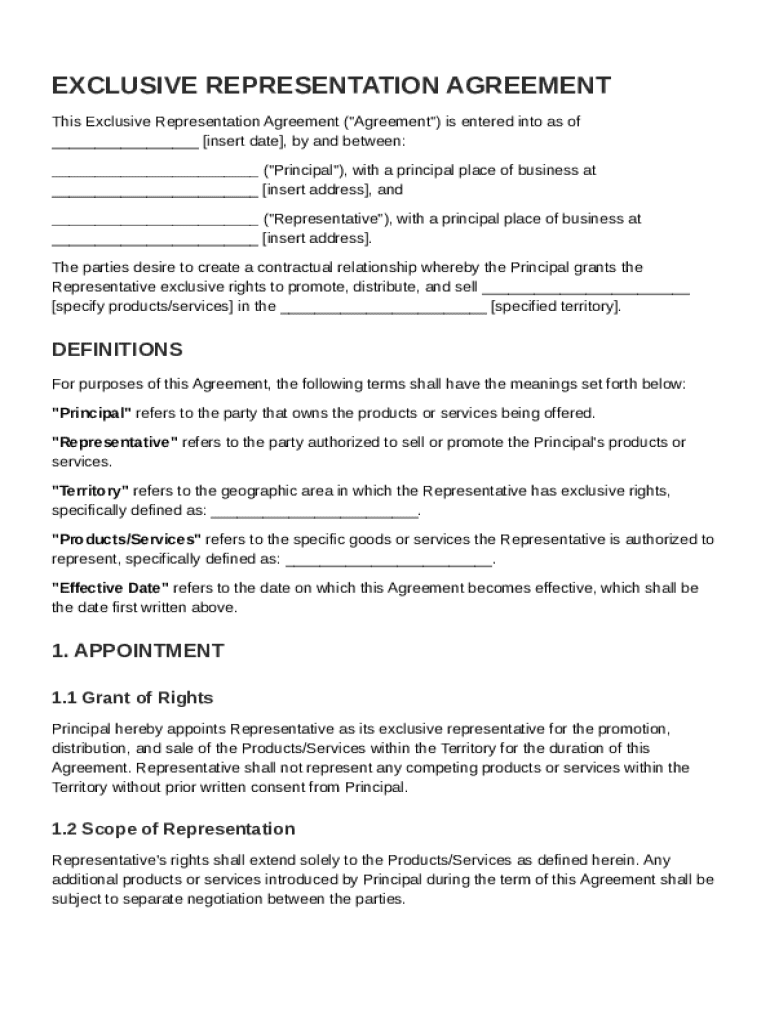
An Exclusive Representation Agreement Template is a formal document outlining a contractual relationship between a Principal and a Representative. In this agreement, exclusive rights are granted to the Representative to promote, distribute, and sell certain products or services within a specific geographic area or market segment. It establishes clear boundaries, terms, and conditions under which both parties commit to operate, ensuring mutual obligations and benefits are well-defined.
Key Points Covered:
- Appointment: The Representative is officially appointed by the Principal to act on their behalf within the agreed scope.
- Authority: Exclusive rights are conferred, restricting other parties from undertaking similar roles within the same jurisdiction.
- Products/Services and Territory: Clearly defined scope of what the Representative can market or sell, and within which geographic region.
- Duration and Renewal: Specifies the agreement's time frame, including any conditions for renewal.
Key Elements of the Exclusive Representation Agreement Template
When crafting an Exclusive Representation Agreement, several critical elements are typically included to ensure clarity and enforceability.
Principal and Representative Obligations
- Principal's Responsibilities: Define the support, resources, and information that the Principal must provide to the Representative.
- Representative's Duties: Detail the specific activities and deliverables expected from the Representative, including marketing efforts and reporting requirements.
Compensation Structure
- Payment Terms: Outline how the Representative will be compensated, including commission rates, payment schedules, and any bonuses or incentives.
- Expense Coverage: Clarify if and how the Representative will be reimbursed for costs incurred while performing their duties.
Confidentiality and Intellectual Property
- Data Protection: Ensure the confidentiality of sensitive business information shared between parties.
- Intellectual Property Rights: Address the ownership and permissible use of the intellectual property, such as trademarks and patents, during and after the agreement.
Steps to Complete the Exclusive Representation Agreement Template
Completing an Exclusive Representation Agreement requires careful attention to detail to ensure all parties' interests and responsibilities are accurately documented.
Step-by-Step Instructions:
- Identify Parties: Clearly state the full legal names and contact information of the Principal and the Representative.
- Define Scope: Specify the products or services involved and the geographical area the agreement covers.
- Set Term Length: Determine the start and end dates, along with any renewal conditions.
- Detail Responsibilities: Clearly articulate the duties and obligations of both parties.
- Outline Compensation: Define how the Representative will be remunerated, including any fixed fees or commission structures.
- Include Legal Provisions: Address legal considerations such as confidentiality, dispute resolution, and amendment procedures.
- Review and Sign: Ensure both parties carefully review the document, resolve any unclear terms, and provide their signatures.
Important Terms Related to Exclusive Representation Agreement Template
Using an Exclusive Representation Agreement often involves various legal and business terms critical to its understanding and execution.
Key Terms and Their Implications:
- Exclusive Rights: This means only one Representative is allowed to act in the defined territory, ensuring no competition from within the Principal's organization.
- Territory: Refers to the specific region or market segment where the Representative has exclusive rights.
- Commission: A form of compensation based on performance metrics, usually a percentage of sales generated by the Representative.
- Independent Contractor: Establishes that the Representative operates independently and is not considered an employee of the Principal.
Legal Use of the Exclusive Representation Agreement Template
Proper legal use of the Exclusive Representation Agreement ensures compliance with relevant laws and enhances dispute resolution capabilities.
Compliance and Enforcement:
- Governing Law: The agreement should specify which state laws apply, critical for conflicts and enforcement.
- Dispute Resolution: Include arbitration or mediation clauses to manage disputes efficiently and reduce litigation costs.
- Termination Clauses: Detail the conditions under which either party can terminate the agreement, ensuring a clear and fair process.
- Amendments: Address how modifications to the agreement can be made, usually requiring written consent from both parties.
Who Typically Uses the Exclusive Representation Agreement Template
The Exclusive Representation Agreement is a versatile tool employed by various business types and industries to streamline and formalize working relationships.


Common Users:
- Manufacturers and Distributors: Engage Representatives to sell products within targeted regions, leveraging local expertise.
- Artists and Authors: Use agents or managers to exclusively handle distributions and sales, especially in entertainment or publishing.
- Technology Companies: Appoint exclusive Representatives to market and sell software or IT services in foreign markets where they lack a direct presence.
- Start-ups and SMEs: Often rely on Representatives to increase market penetration without the overhead of maintaining a large salesforce.

Business Types That Benefit Most from Exclusive Representation Agreement Template
Businesses varying in size and industry can often reap substantial rewards from implementing an Exclusive Representation Agreement.
Beneficial Business Types:
- Export Companies: Seek local Representatives in international markets to navigate cultural and regulatory landscapes.
- Franchise Operations: Utilize these agreements to maintain consistent brand presence and product offerings across multiple territories.
- Retail Brands: Engage exclusive representatives to coordinate nationwide distribution strategies within a controlled framework.
- Specialty Product Manufacturers: Often depend on exclusive agreements to ensure high-level touchpoints in niche markets, enhancing customer relationships and brand loyalty.