01. Edit your form online
Type text, add images, blackout confidential details, add comments, highlights and more.

Type text, add images, blackout confidential details, add comments, highlights and more.

Draw your signature, type it, upload its image, or use your mobile device as a signature pad.

Send it via email, link, or fax. You can also download it, export it or print it out.
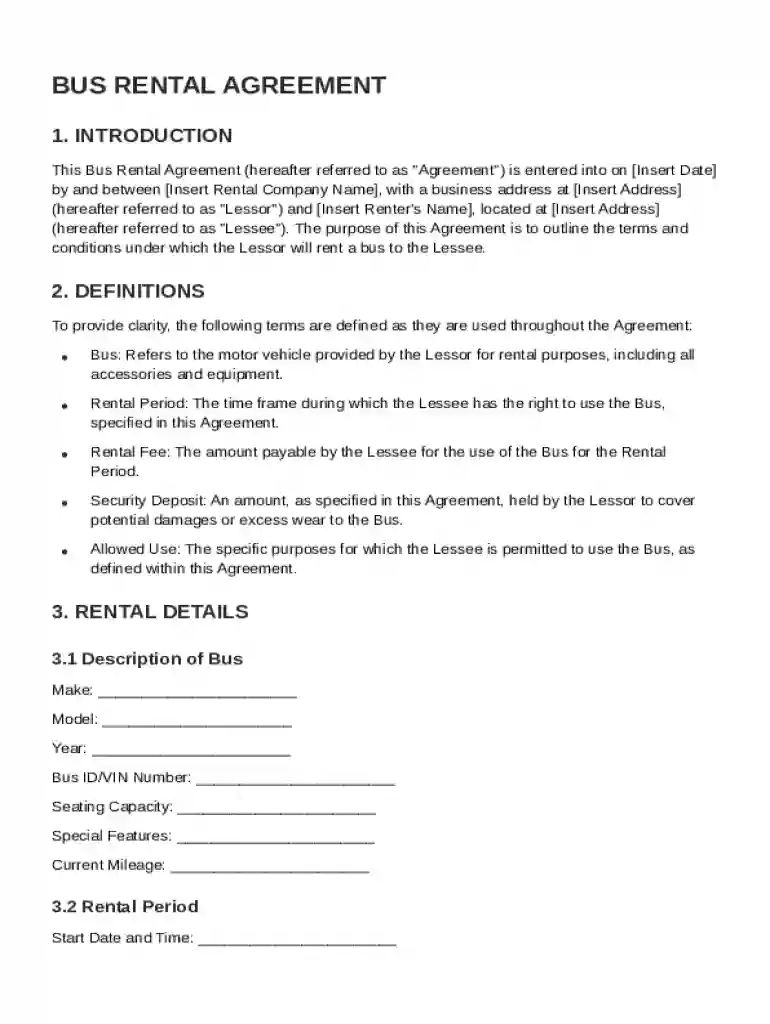
A Bus Rental Agreement Template is a pre-structured legal document that outlines the terms and conditions governing the rental of a bus. This template is used to define and clarify the roles of the Lessor (the owner of the bus) and the Lessee (the party renting the bus), ensuring both parties understand their rights and obligations. It covers key aspects such as rental fees, responsibilities, insurance requirements, and potential liabilities. The purpose of this template is to provide a standardized framework that ensures transparency and legal protection for both parties involved in the rental transaction. By detailing all necessary elements, it minimizes the risk of disputes and misunderstandings.
Using a Bus Rental Agreement Template involves several critical steps to ensure the document is comprehensive and applicable to the specific rental scenario. Initially, the Lessor should customize the template by inserting specific details such as the bus's make, model, and identification numbers. Following this, both parties must agree on the rental terms, including duration, pricing, and payment methods.
The Bus Rental Agreement Template includes several critical elements that must be accurately completed:
These elements form the backbone of the agreement, ensuring both parties are legally covered and have a clear understanding of their commitments.
Understanding specific terminology within the Bus Rental Agreement Template is crucial for all parties involved. Some key terms include:
These terms ensure clarity and are essential for interpreting the legal framework of the rental arrangement correctly.
Completing a Bus Rental Agreement Template involves a systematic approach to ensure all relevant information is accurately captured:
Different states may have specific regulations affecting the Bus Rental Agreement Template. It's crucial to be aware of these variations to ensure compliance:
Understanding these rules helps in tailoring the template to conform with state-specific legal mandates and protect the interests of all parties.
The legal use of a Bus Rental Agreement Template involves ensuring that both parties adhere to the stipulated terms to avoid potential disputes or legal issues. This includes:
Proper legal use of the template ensures both parties are protected and reduces the likelihood of misunderstandings or litigation.
Real-world scenarios illustrate how businesses and individuals can effectively use the Bus Rental Agreement Template:
These examples demonstrate how the template can be adapted for various situations, ensuring clarity and legal protection for both the Lessor and Lessee.
At DocHub, your data security is our priority. We follow HIPAA, SOC2, GDPR, and other standards, so you can work on your documents with confidence.