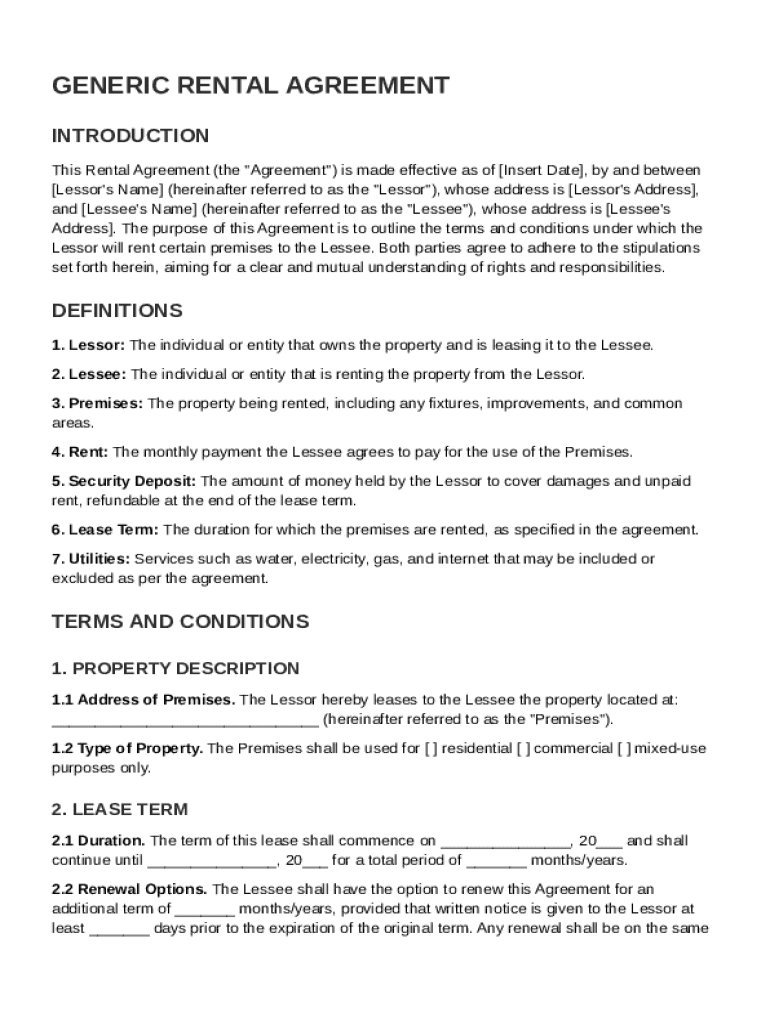







Definition and Meaning
A Generic Rental Agreement Template is a standardized document that delineates the terms and conditions for renting a property from the lessor (property owner or manager) to the lessee (tenant). This template serves as an essential legal framework ensuring both parties understand their rights and obligations. The agreement generally includes terms like the duration of the lease, rent payment schedules, security deposit requirements, and maintenance responsibilities. Its purpose is to provide a clear and consistent format for initiating rental relationships.
The template acts as a starting point for customizing specific agreements to match individual circumstances, while maintaining a comprehensive structure. This standardized document minimizes disputes by setting clear expectations and guidelines in a legally recognized format. Additionally, using such a template helps ensure compliance with legal standards, making it a critical tool for property rental transactions.
Key Elements of the Generic Rental Agreement Template
The Generic Rental Agreement Template comprises several core elements that establish the foundation of a rental transaction. These elements ensure clarity and legal compliance, providing detailed instructions for both parties involved in the agreement.
- Property Description: Clearly defines the rental premises, including the address and any included amenities or exclusive areas.
- Lease Term: Specifies the duration of the lease, providing start and end dates, and outlining the process for renewal or extension if applicable.
- Rent Details: Includes the monthly rental amount, due date, and accepted payment methods. It may also cover penalties for late payment.
- Security Deposit: Describes the amount required as a security deposit, conditions for its return, and permissible deductions.
- Maintenance Responsibilities: Defines the maintenance duties of both parties, specifying areas that require regular upkeep by the tenant or landlord.
- Occupancy Limits: Establishes the maximum number of occupants allowed, preventing overcrowding and potential legal issues.
- Termination Conditions: Outlines the circumstances allowing each party to terminate the agreement early, including notice periods required.
These elements ensure that the rental agreement is comprehensive and adaptable, reducing the risk of disputes and fostering a mutually beneficial arrangement.
How to Use the Generic Rental Agreement Template
Using a Generic Rental Agreement Template involves several straightforward steps that guide landlords and tenants through the process of creating a legally binding document.
- Download the Template: Access the template from a trusted source like a legal document platform or a real estate office.
- Review the Content: Carefully read each section of the template to ensure understanding and identify areas that may need customization.
- Fill in the Blanks: Enter specific information related to the property and rental terms, adjusting sections as necessary to fit the unique agreement.
- Customize Provisions: Modify any clauses to better align with local laws or specific agreements made between the lessor and lessee.
- Legal Review: If possible, have a legal professional review the completed document to ensure compliance with applicable laws.
- Sign the Agreement: Both parties should review the final document, signing and dating it to render it legally enforceable.
This process ensures that both parties have a clear understanding of their obligations and rights, contributing to a stable rental relationship.
Legal Use of the Generic Rental Agreement Template
The legal use of a Generic Rental Agreement Template is essential for upholding the rights and responsibilities of all parties involved. This template ensures that the agreement aligns with local, state, and federal laws governing rental transactions.
- Compliance with Fair Housing Act: Ensures non-discriminatory practices in selecting tenants and defining occupancy rules.
- Adherence to State Landlord-Tenant Laws: Each state has specific statutes regarding landlord-tenant relationships that must be integrated into the agreement.
- Security Deposit Regulations: Many jurisdictions have laws governing the handling, use, and return of security deposits, which must be adhered to.
- Habitable Condition Laws: Landlords are required to maintain rental properties in a livable condition, and this obligation should be clearly outlined.
Using a well-structured template mitigates legal risks and creates an enforceable document that safeguards both parties, reducing disputes and enhancing trust.
Who Typically Uses the Generic Rental Agreement Template
The Generic Rental Agreement Template serves a broad audience, encompassing various stakeholders involved in property rental processes.
- Landlords and Property Managers: Often use these templates to streamline the process of drafting rental agreements, ensuring consistency, and legal compliance across multiple tenants.
- Tenants: Benefit by having a clear understanding of their responsibilities and the terms of their rental agreements.
- Real Estate Agents: May utilize these templates to assist clients, providing standardized agreements that can be easily tailored to meet specific needs.
- Legal Professionals: Use these templates as a basis for customizing agreements during legal consultations or disputes.
This widespread usage underscores the template’s flexibility and its vital role in facilitating smooth rental transactions.


Important Terms Related to the Generic Rental Agreement Template
Understanding the terms used in a Generic Rental Agreement Template is crucial for both landlords and tenants. These terms define the rights and responsibilities of each party.
- Lessor and Lessee: The parties involved in the lease agreement; the lessor is the property owner, while the lessee is the tenant.
- Premises: Refers to the rental property, including land, buildings, and any included amenities.
- Tenant's Obligations: Duties and behaviors expected of the tenant throughout the lease term, including payment of rent, maintenance, and adherence to property rules.
- Landlord's Rights: Entitlements that the landlord holds concerning property oversight, such as collecting rent and conducting inspections.
- Alterations: Any changes to the property, which typically require landlord approval.
- Default: Occurs when the tenant fails to comply with lease terms, potentially leading to eviction or legal action.
Familiarity with these terms ensures both parties are aware of their roles within the rental agreement framework.
State-Specific Rules for the Generic Rental Agreement Template
Rental agreement regulations can vary significantly by state, which influences how a Generic Rental Agreement Template is completed and enforced.
- Security Deposits: State laws often dictate the maximum deposit amount, interest requirements, and deadlines for returning deposits.
- Notice Periods: States set rules regarding the notice required for lease termination, rent increases, and changes to lease terms.
- Lease Renewal Terms: Regulations may guide automatic renewals and conditions under which lease agreements can be renewed.
- Disclosure Requirements: Some states mandate specific disclosures, such as lead-based paint hazards or flood zone information.
Compliance with state-specific rules is vital for the legality and enforceability of rental agreements, making it necessary for landlords and tenants to be informed of their particular state’s requirements.
Steps to Complete the Generic Rental Agreement Template
The process of completing a Generic Rental Agreement Template involves several critical steps to ensure a thorough and effective rental contract.
- Gather Necessary Information: Collect all details regarding the property, tenant, landlord, and lease terms.
- Understand Legal Obligations: Review applicable local, state, and federal rental laws to guide proper completion.
- Customize Template: Fill out the template with specific information, modifying sections to fit the individual leasing arrangement.
- Review for Accuracy: Double-check all entered information to ensure accuracy and completeness.
- Seek Legal Advice: Consider consulting with an attorney to review the agreement for legal compliance and completeness.
- Signing the Agreement: Ensure both parties sign the document, securing their commitment to its terms.
- Provide Copies: Distribute copies to all relevant parties to maintain a record of the agreement.
These steps result in a clear, enforceable rental contract that protects both the landlord's and tenant's interests.