
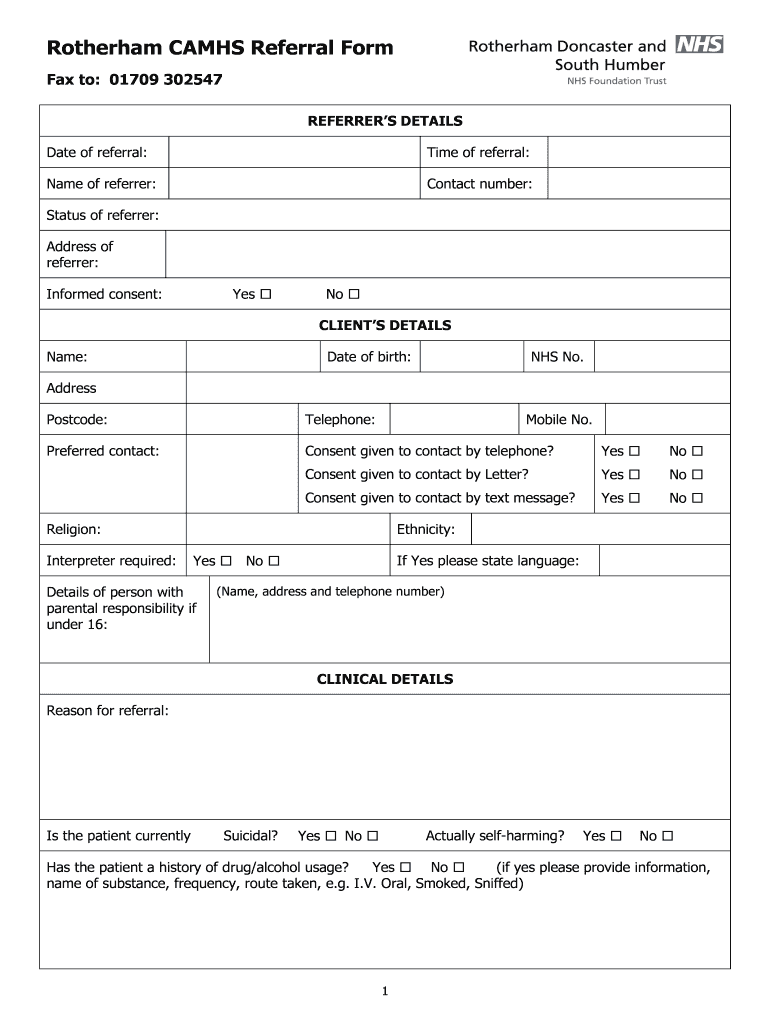







Definition and Purpose of the CAMHS Referral Form
The CAMHS referral form is a critical document used for initiating the process of referring a client to Child and Adolescent Mental Health Services (CAMHS). This form serves as a comprehensive tool for gathering essential details about the client's mental health needs, facilitating an efficient referral process. It helps ensure that all necessary information, such as clinical observations and personal details, is captured at the outset, promoting a clear understanding of the client's situation for the receiving mental health team. The form is designed to support the assessment of the client's needs, streamline communication among healthcare professionals, and contribute to the development of an effective care plan.
How to Use the CAMHS Referral Form
Filling out the CAMHS referral form requires a structured approach to ensure all relevant information is accurately captured. Key steps include:
- Carefully review the entire form before starting to understand which sections are applicable.
- Complete the referrer’s details, including contact information and relationship to the client.
- Fill in the client's personal information, ensuring accuracy in names, dates of birth, and contact details.
- Provide detailed clinical information about the reason for referral, including any symptoms, behaviors, or reported concerns.
- Summarize any known medical history that may impact the client’s mental health.
- Mention any other professionals involved in the client's care to facilitate coordinated support.
- Discuss the importance of informed consent with the client or their guardian and ensure it is obtained before submission.
Obtaining the CAMHS Referral Form
The CAMHS referral form is typically available through various sources. It can be accessed:
- Directly through healthcare facilities that offer CAMHS services.
- Online from regional CAMHS or health service websites where downloadable versions may be available.
- From professionals such as school counselors or general practitioners who can provide a physical copy or guidance on where to find it.
Obtaining the form from these sources ensures that users have the most current version, with sections aligned to the latest requirements and practices.
Steps to Complete the CAMHS Referral Form
Filling out the CAMHS referral form involves multiple steps designed to capture comprehensive information:
-
Section One: Referrer Information
- Include the name, contact details, and professional role of the referrer. Specify the relationship to the client.
-
Section Two: Client Details
- Provide the client’s full name, date of birth, and contact information. Include guardianship details where applicable.
-
Section Three: Clinical Details
- Explain the reasons for the referral with specific examples of behaviors or incidents.
- Add any relevant diagnoses if available.
-
Section Four: Medical History
- Summarize past medical treatments and ongoing medication, if any.
- Highlight any family medical history that might be relevant.
-
Section Five: Additional Professionals
- List other professionals or agencies involved in the client’s care, along with their respective roles.
-
Section Six: Consent and Safeguarding
- Confirm that informed consent has been obtained from a legal guardian where necessary.
- Address any safeguarding concerns, providing detailed notes if pertinent.
Key Elements of the CAMHS Referral Form
- Referrer Details: Information about the individual or organization making the referral.
- Client Information: Comprehensive data on the client including medical and personal history.
- Clinical Observations: Detailed documentation of symptoms and reasons for the referral.
- Consent: Legal guardian consent notes and safeguarding details to ensure ethical processing.
- Professional Collaboration: Information about other professionals involved, facilitating a unified care approach.
Important Terms Related to the CAMHS Referral Form
Certain terms are crucial for understanding and effectively using the CAMHS referral form:
- Informed Consent: The process by which clients or their guardians agree to participate in services after understanding all pertinent information.
- Safeguarding Concerns: Issues identified that may affect the safety or welfare of the client, necessitating special attention.
- Referrer vs. Respondent: The referrer is the person making the referral, whereas the respondent might refer to those responsible for processing the form.
Digital vs. Paper Version Comparison
-
Digital Version:
- Allows for easy updates and immediate submission.
- Compatible with document management systems for streamlined processing.
- Often includes built-in checks to reduce errors and omissions.
-
Paper Version:
- May be suitable for settings without reliable internet access.
- Provides a tangible record for physical filing systems.
Both versions aim to capture the same comprehensive data but cater to different infrastructural needs.
Legal Use of the CAMHS Referral Form
The CAMHS referral form must be used in compliance with legal standards. In the U.S., this includes adhering to privacy laws such as the Health Insurance Portability and Accountability Act (HIPAA). Understanding the legal obligations regarding information sharing is essential:
- HIPAA Compliance: Ensure all client information is securely handled during and after submission.
- Guardian Consent: Legally required for clients under a certain age, varying by state.
- Confidentiality Protocols: Observed to protect the client’s personal and medical information.
By following these protocols, referrers ensure ethical use of the form while promoting the client’s best interests.




