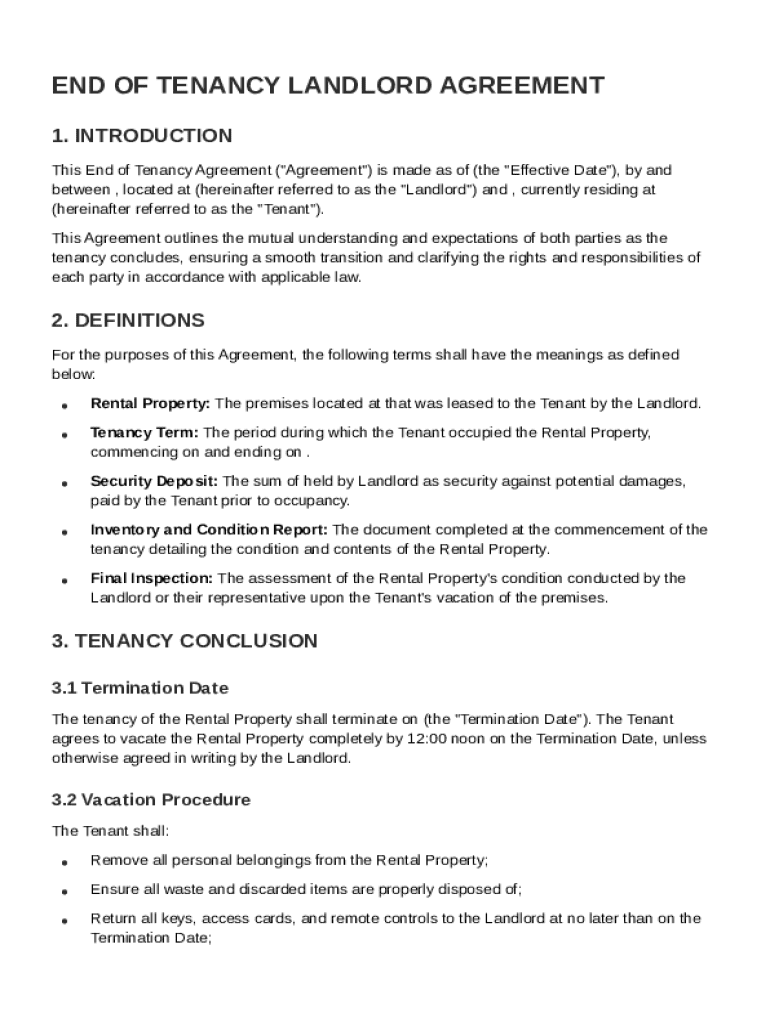







Definition & Meaning
An End of Tenancy from Landlord Agreement Template is a legal document that outlines the obligations and expectations of both the landlord and tenant when a tenancy is coming to an end. This template ensures that both parties have a clear understanding of their responsibilities, which can help prevent disputes. The document typically specifies details such as the termination date, procedures for vacating the premises, property condition requirements, arrangements for returning keys, utility account settlements, and the process for returning the security deposit. Additionally, it includes provisions on dispute resolution and governing law, ensuring both parties understand their rights and obligations.
How to Use the End of Tenancy from Landlord Agreement Template
Using the End of Tenancy from Landlord Agreement Template involves several key steps to ensure that both parties' interests are protected. First, review the entire agreement to ensure it includes all necessary sections, such as the tenant's obligations to clean and repair the property, as well as the landlord's responsibility to return the security deposit. After both parties understand the document, customize the template to reflect any specific agreements or arrangements unique to your situation. Finally, both landlord and tenant should carefully review the tailored document and provide their signatures to signify their acceptance of each term within the agreement.
Step-by-Step Process
- Review the Template: Thoroughly read through the template to ensure it aligns with your needs.
- Customize the Document: Adjust sections to reflect specific terms and agreements pertinent to your tenancy.
- Clarify Each Party’s Responsibilities: Clearly outline obligations for cleaning, repairs, and the return of deposits.
- Sign the Agreement: Both parties should sign the document after reviewing and agreeing to all terms.
- Keep a Copy for Both Parties: Ensure both landlord and tenant retain a copy for their records.
Steps to Complete the End of Tenancy from Landlord Agreement Template
Completing the End of Tenancy from Landlord Agreement Template requires a methodical approach to ensure accuracy and compliance. Begin by collecting all relevant information needed to fill in the template accurately. This includes tenant details, property address, lease commencement, and termination dates. Thoroughly complete each section, paying particular attention to property conditions and checklists that might require input from both parties to ensure mutual agreement. Consider including a section that addresses potential disputes and how they should be resolved. After all sections are complete, ensure both parties sign the document and retain a final version for future reference.
Practical Steps
- Gather Required Information: Include tenant details, property address, and lease dates.
- Complete Sections Thoroughly: Pay close attention to clauses about property condition and deposit return.
- Address Dispute Resolution: Consider how any potential disagreements will be managed.
- Retain Signed Copies: Both parties should keep a signed copy for their records.
Key Elements of the End of Tenancy from Landlord Agreement Template
The End of Tenancy from Landlord Agreement Template comprises several key elements that are crucial for a successful and smooth conclusion to the tenancy. This usually includes a clear termination date, specific property condition requirements, such as cleanliness and repairs, and the process for keys return. Significant focus is also placed on the return of the security deposit, detailing the conditions under which deductions might be made. Lastly, the template should include clauses regarding the settlement of any final utility bills, as well as provisions for handling disputes, ensuring a legally binding agreement that minimizes the risk of conflicts.
Essential Components
- Termination and Vacate Dates
- Property Condition Requirements
- Key Return Process
- Security Deposit Procedures
- Utility Settlements
- Dispute Resolution Clauses
State-Specific Rules for the End of Tenancy from Landlord Agreement Template
Understanding state-specific rules is critical when utilizing the End of Tenancy from Landlord Agreement Template, as tenancy laws vary significantly across the United States. Each state has distinct regulations regarding notice periods, security deposit returns, and acceptable conditions for property maintenance. For instance, some states require a longer notice period before vacating, while others have stringent regulations on the timeframe for returning a security deposit. Landlords and tenants should familiarize themselves with their particular state's tenancy laws to ensure their agreement template complies with local legislation and adequately protects their rights and interests.
Legal Use of the End of Tenancy from Landlord Agreement Template
The legal use of the End of Tenancy from Landlord Agreement Template is to provide a structured and clear framework that governs the end of a leasing period, ensuring compliance with applicable legal standards. This document serves as a legal contract that can be enforced in court should disputes arise between the landlord and tenant. By clearly stating the expectations and responsibilities of both parties, including property conditions and financial settlements, the agreement helps to minimize misunderstandings and legal conflicts. It is advisable to consult with a legal professional to review the template and ensure it meets all necessary legal criteria specific to your jurisdiction.
Examples of Using the End of Tenancy from Landlord Agreement Template
Using the End of Tenancy from Landlord Agreement Template can vary based on differing scenarios between landlords and tenants. For instance, a landlord might use the agreement to document the condition of the property before the tenant vacates, ensuring any damages beyond normal wear and tear are noted and addressed. Conversely, a tenant can utilize the agreement to ensure they understand their rights regarding the return of their security deposit, based on the condition they leave the property in. Real-world examples also include using the agreement to resolve disputes amicably, demonstrating both parties' prior agreements on contentious issues like repair responsibilities and financial settlements.
Who Typically Uses the End of Tenancy from Landlord Agreement Template
The typical users of the End of Tenancy from Landlord Agreement Template include landlords, property managers, and tenants. Landlords use the agreement to officially document the end of a lease, ensuring all terms are clear and enforceable. Property managers might leverage this document to manage several properties efficiently, offering a standardized process across multiple tenancies. Tenants utilize the agreement to fully comprehend their obligations and protect their rights concerning deposits and property conditions. This document is particularly valuable for ensuring that all transactions and expectations are comprehensively documented and agreed upon, minimizing potential disputes.