
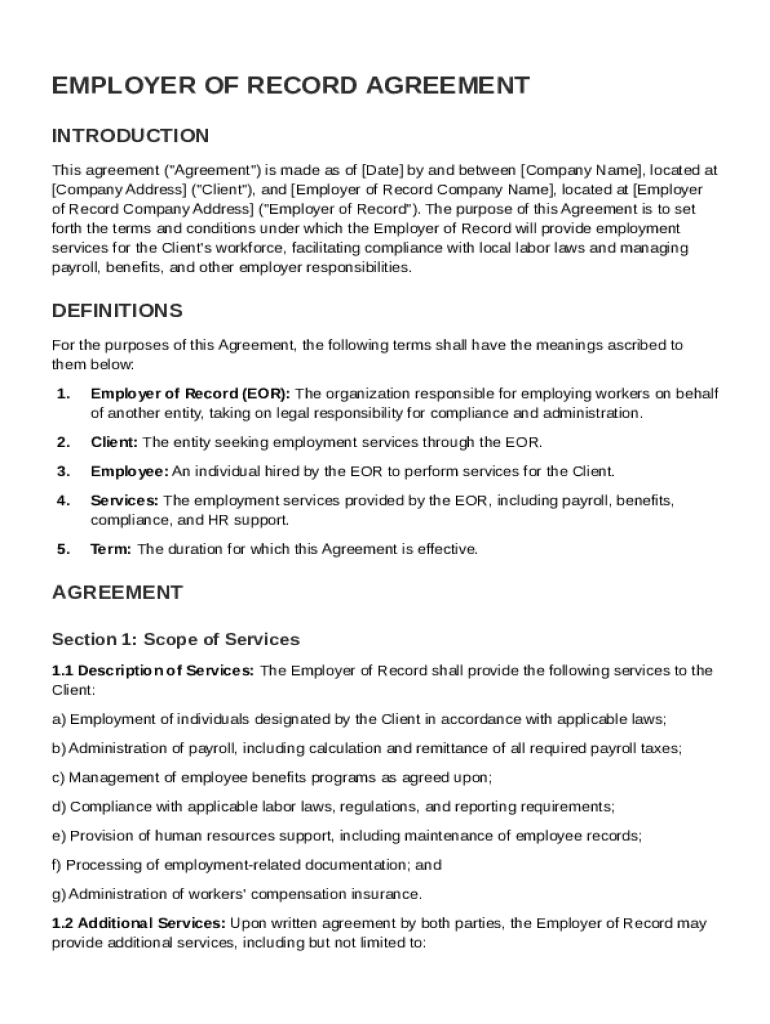







Understanding the Employer of Record Agreement Template
The Employer of Record (EOR) Agreement Template is a comprehensive document that outlines the relationship between a Client and an Employer of Record. It governs terms related to employment services such as payroll management, compliance with labor laws, and employee benefits administration. The EOR Agreement aims to facilitate legal employment practices, ensuring that responsibilities and adherence to applicable regulations are clear to both parties.
Key Elements of the Agreement
The agreement includes various crucial components to ensure it comprehensively addresses the nuanced dynamics of the Client and EOR relationship:
- Roles and Responsibilities: It defines the specific duties of both the Client and the EOR and clarifies expectations about service delivery and compliance with legal employment standards.
- Service Fees: Details on the cost structure are outlined, including how fees are calculated and the schedule for payments.
- Confidentiality Obligations: This section covers the importance of maintaining confidentiality and the measures both parties must take to protect sensitive information.
- Termination Conditions: Specifies the conditions under which either party can terminate the agreement, including notice periods and any associated penalties.
How to Use the Template
Using the Employer of Record Agreement Template effectively involves a series of careful steps to ensure accuracy and compliance:
- Review the Template Thoroughly: Understand all sections to ensure they cater to your specific needs.
- Customize the Details: Fill in relevant details specific to your organization and partnership, such as names, roles, and service specifics.
- Legal Review: Have the agreement reviewed by a legal expert to ensure compliance with local labor laws and regulations.
- Mutual Agreement: Both parties should discuss and agree on the terms before finalizing and executing the document.
Important Terms Related to the Agreement
To navigate the EOR template effectively, familiarity with key terms is crucial:
- Employer of Record (EOR): A third-party organization contracted by clients to manage employment tasks such as payroll and compliance.
- Compliance: Adherence to laws and regulations governing employment practices.
- Service Fees: Charges for the services provided by the EOR, which may be flat-rate or percentage-based.
Legal Use of the Employer of Record Agreement Template
The legal usage of the Employer of Record Agreement Template ensures that both the Client and the EOR are operating within the bounds of the law:
- Compliance with Employment Laws: The agreement should be drafted in adherence to federal and state labor laws to protect all parties involved.
- Legally Binding: Once signed, it becomes a legally enforceable contract.
- Audit Provisions: May include clauses that allow for periodic audits by either party to ensure compliance with agreed terms and applicable legislation.
State-Specific Rules
Given that employment laws can vary significantly from one state to another in the U.S., it's essential to consider:
- Local Employment Laws: Understand the state-specific employment legislation which can impact the agreement's enforceability.
- Benefits Administration: Different states have unique requirements for employee benefits, influencing the EOR’s capabilities.
- Tax Obligations: State taxes and employment tax requirements can affect how the EOR operates and must be accounted for in the agreement.
Steps to Complete the Template
Filling out the Employer of Record Agreement Template involves several critical steps to ensure thoroughness and accuracy:
- Gather Required Information: Compile all relevant data, including client and employee details.
- Populate the Template: Fill in the fields related to services, fees, roles, and responsibilities.
- Confirm Legal Requirements: Ensure that the filled template meets all legal standards and is applicable to your specific state.
- Final Review and Sign-Off: Conduct a final review with a qualified legal professional and obtain signatures from all parties involved.
Examples of Using the Agreement
The EOR template is utilized across various scenarios, such as:
- Small Businesses: For handling employment without establishing a separate HR department.
- Startups: When expanding operations across different jurisdictions, navigating complex employment laws.
- International Companies: For managing local employees in the U.S., providing a bridge to compliance with domestic labor laws.
Who Typically Uses the Employer of Record Agreement Template
This template is a staple for different entities, ensuring they effectively manage employment responsibilities:
- Businesses without a Presence in the U.S.: Utilize the EOR to employ staff without establishing a business entity.
- HR Departments: Larger corporations may use EOR services to scale operations without overwhelming internal HR resources.
- Legal Advisors: Lawyers assist businesses in customizing agreements to align with local laws and organizational needs.


Software Compatibility and Integration
To manage the EOR Agreement seamlessly, some organizations leverage software solutions:
- Document Editing Platforms: Like DocHub, which offer collaborative and secure editing capabilities.
- HR Management Systems: For integrating the agreement with existing human resource workflows.
This in-depth coverage of the Employer of Record Agreement Template provides essential guidance on how to leverage the document effectively and legally across various organizational contexts. By understanding key elements and completing the steps thoroughly, one can ensure compliance and operational efficiency.




