






Definition and Meaning
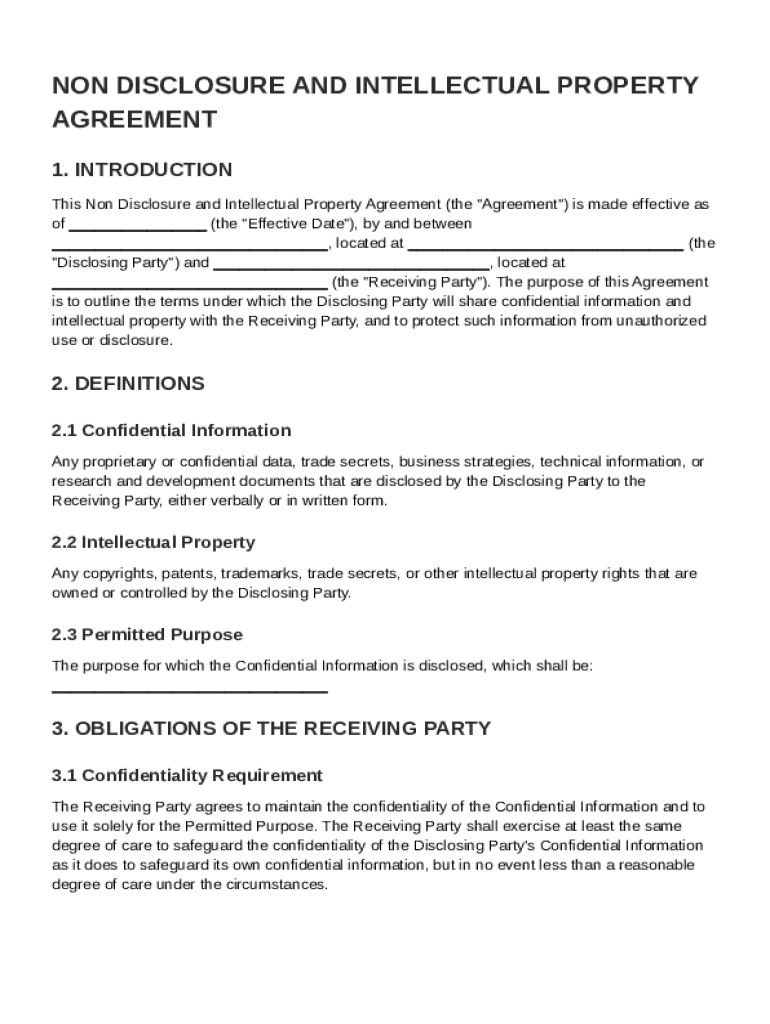
The Non Disclosure Intellectual Property Agreement Template is a legal document used to outline the terms and conditions for sharing confidential information and intellectual property between two parties, namely the Disclosing Party and the Receiving Party. This agreement specifies the definitions of key terms, such as "Confidential Information" and "Intellectual Property," to ensure both parties understand what is protected under the agreement. It emphasizes the importance of preserving the privacy of proprietary data and intellectual assets during interactions.
Key Elements of the Non Disclosure Intellectual Property Agreement Template
A comprehensive Non Disclosure Intellectual Property Agreement includes several vital components:
- Confidential Information Definition: This section specifies what is considered confidential and how such information will be handled.
- Intellectual Property Rights: It delineates ownership rights, ensuring that the Disclosing Party retains control over their original ideas, patents, and other intellectual assets.
- Obligations and Exclusions: Specific duties of the Receiving Party to maintain confidentiality and any scenarios where certain disclosures might be permissible.
- Termination and Legal Remedies: Conditions under which the agreement can be terminated and the legal recourse available if terms are breached.
How to Use the Non Disclosure Intellectual Property Agreement Template
To effectively use this template, follow these guidelines:
- Identify the Parties: Clearly state the names and contact information of the Disclosing and Receiving Parties.
- Clarify Obligations: Ensure that both parties read and understand their obligations regarding confidentiality.
- Tailor the Template: Modify the template to reflect the specific needs and nuances relevant to the agreement being set forth.
- Seek Legal Counsel: If unsure, consult a legal professional to verify that the template meets the required legal standards and adequately covers all necessary points.
Who Typically Uses the Non Disclosure Intellectual Property Agreement Template
This template is widely used by:
- Businesses: Engaging in partnerships, mergers, or acquisitions where sensitive information is discussed.
- Startups and Entrepreneurs: Sharing groundbreaking ideas or technology with potential investors or partners.
- Freelancers and Contractors: Working on projects involving proprietary content or trade secrets.
- Researchers and Academics: Collaborating with external organizations on confidential studies or developments.


Important Terms Related to the Non Disclosure Intellectual Property Agreement Template
Understanding these terms can ensure accurate use of the agreement:
- Disclosing Party: The entity or individual providing confidential information.
- Receiving Party: The entity or individual agreeing to keep the information secret.
- Trade Secret: Information that holds economic value from not being publicly known.
- Governing Law: Legal jurisdiction that will interpret the agreement if disputes arise.
Legal Use of the Non Disclosure Intellectual Property Agreement Template
The legal application of this agreement is crucial:
- Compliance: Ensure the agreement is compliant with applicable laws, including laws in the jurisdictions of both parties.
- Enforceability: Review to confirm that the agreement is enforceable in a court of law if breaches occur.
- Amendments: Build flexibility into the agreement for amendments to accommodate changes over time.
State-Specific Rules for the Non Disclosure Intellectual Property Agreement Template
Varied states may have distinct requirements or interpretations:
- California: Known for its unique stance on non-compete clauses, which may affect NDA agreements.
- New York: Employers must balance NDAs with whistleblower protections under state laws.
- Texas: Typically more business-friendly, but specific statutory guidelines must be adhered to.
Examples of Using the Non Disclosure Intellectual Property Agreement Template
Real-world scenarios include:
- Partnership Agreements: Two tech companies agree to exchange technological advancements under strict confidentiality.
- Investor Presentations: A startup ensures potential investors sign an NDA before sharing innovative business strategies.
- Creative Collaborations: A film studio employs an NDA to safeguard new scripts and production details shared with external talent.