Definition & Meaning
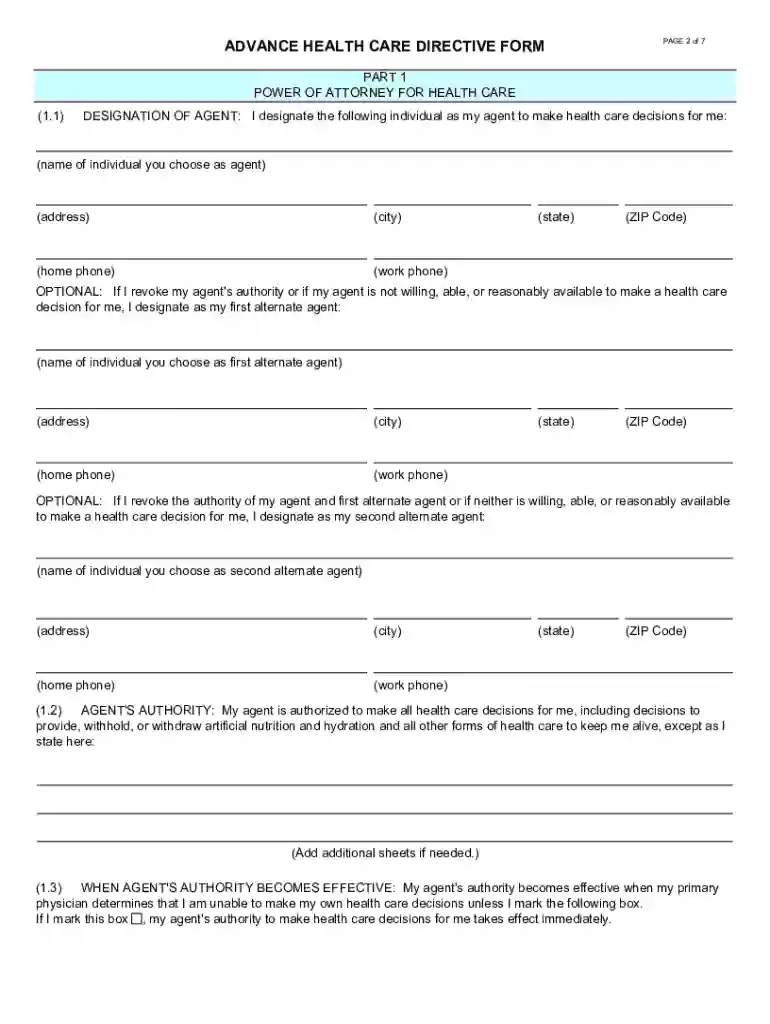
The "Probate Code Advance Health Care Directive Form-fillable" is a legal document used primarily in California. This form allows an individual, known as the principal, to provide clear instructions regarding their healthcare preferences in situations where they might be unable to communicate their decisions themselves. It is a comprehensive form that accommodates the naming of a healthcare agent, detailed healthcare instructions, and personal wishes related to medical treatment and end-of-life care. Additionally, it includes the ability for the principal to indicate whether they would like to donate organs after their death. As the form is fillable, it provides a convenient way for users to complete the document digitally or print it for physical completion.
How to Use the Probate Code Advance Health Care Directive Form-fillable
Using the form requires a clear understanding of one's healthcare wishes, which need to be documented within the form. Here are the key steps involved:
- Fill in Personal Information: Begin by entering all necessary personal information, such as name, address, and contact details.
- Designate a Healthcare Agent: Select a person (agent) who is trusted to make healthcare decisions on the principal’s behalf. Include their contact information.
- Define Healthcare Preferences: Specify decisions about medical treatments you prefer or wish to avoid, including life-sustaining measures.
- Organ Donation and Post-Death Choices: Indicate any preferences or intentions for organ donation or other post-death arrangements.
- Sign and Witness: Complete the signing process, ensuring that the form is witnessed by an adult or notarized, as required by California law.
Steps to Complete the Probate Code Advance Health Care Directive Form-fillable
The process to complete the form involves several critical steps to ensure legal validity and clarity:
- Understand the Document: Familiarize yourself with each section of the directive to ensure your intentions are clearly outlined.
- Gather Necessary Information: Collect personal details, healthcare agent information, and specific health preferences.
- Complete Each Section: Accurately fill in all sections of the form, ensuring legibility and correctness of information.
- Consult with Legal or Medical Professionals: It may be beneficial to discuss choices with a legal advisor or healthcare provider.
- Finalize the Form: Once completed, the form must be signed by the principal and witnessed or notarized according to California's requirements.
Key Elements of the Probate Code Advance Health Care Directive Form-fillable
The form includes several critical components that ensure it fulfills its purpose:
- Principal’s Personal Information: Vital for identification and reference.
- Designation of Healthcare Agent: Clearly identifies who will make decisions.
- Detailed Instructions: Outlines specific medical treatments and interventions.
- Living Will Components: Preferences regarding life support and end-of-life care.
- Organ Donation: Options for specifying donation preferences.
- Witness and Notarization: Necessary legal formalities to validate the document.
Legal Use of the Probate Code Advance Health Care Directive Form-fillable
The form has specific legal requirements and implications:
- Validation Requirements: Must be signed and either witnessed by two adults or notarized.
- Binding Legal Document: Serves as a binding directive under California law once properly executed.
- Revocation Rights: The principal has the right to revoke the directive at any time, provided they are mentally competent.
- Agent’s Authority: The agent’s power to make healthcare decisions is only active if the principal is incapacitated.
State-Specific Rules for the Probate Code Advance Health Care Directive Form-fillable
California law provides specific rules governing the form:
- Witnesses: Must be two adults, independent of the document’s beneficiaries.
- Notarization: An alternative to witnesses, providing a secure form of validation.
- Agent Limitations: Clarifies who can and cannot serve as an agent (e.g., restrictions on healthcare providers acting as agents for their patients).
- Form Updates: Individuals should check for updates or changes in legislation affecting the form.
Important Terms Related to Probate Code Advance Health Care Directive Form-fillable
Understanding key terms is vital for effective use:
- Principal: The person creating the directive.
- Healthcare Agent: Individual appointed to make decisions on the principal’s behalf.
- Living Will: A component outlining wishes for end-of-life care.
- Incapacity: Legal term describing the inability to make conscious healthcare decisions.
Examples of Using the Probate Code Advance Health Care Directive Form-fillable
Practical scenarios illustrating the form’s application:
- Scenario 1: An individual with a terminal illness uses the form to refuse certain life-prolonging treatments while approving pain management.
- Scenario 2: A person selects a family member as their healthcare agent to ensure continuity of care that aligns with their personal beliefs.
- Scenario 3: An elderly parent prepares the form, aligning their organ donation preferences with their personal values and religious beliefs.
Versions or Alternatives to the Probate Code Advance Health Care Directive Form-fillable
There are various versions and alternatives available, which might include:
- Out-of-State Directives: Adaptations based on other state laws.
- Customized Legal Solutions: Specific versions created by legal firms to cater to tailored healthcare needs.
- Digital Platforms: Tools like DocHub that allow for interactive, fillable forms for ease of use.