






Definition and Purpose of the Employee Pay Agreement Template
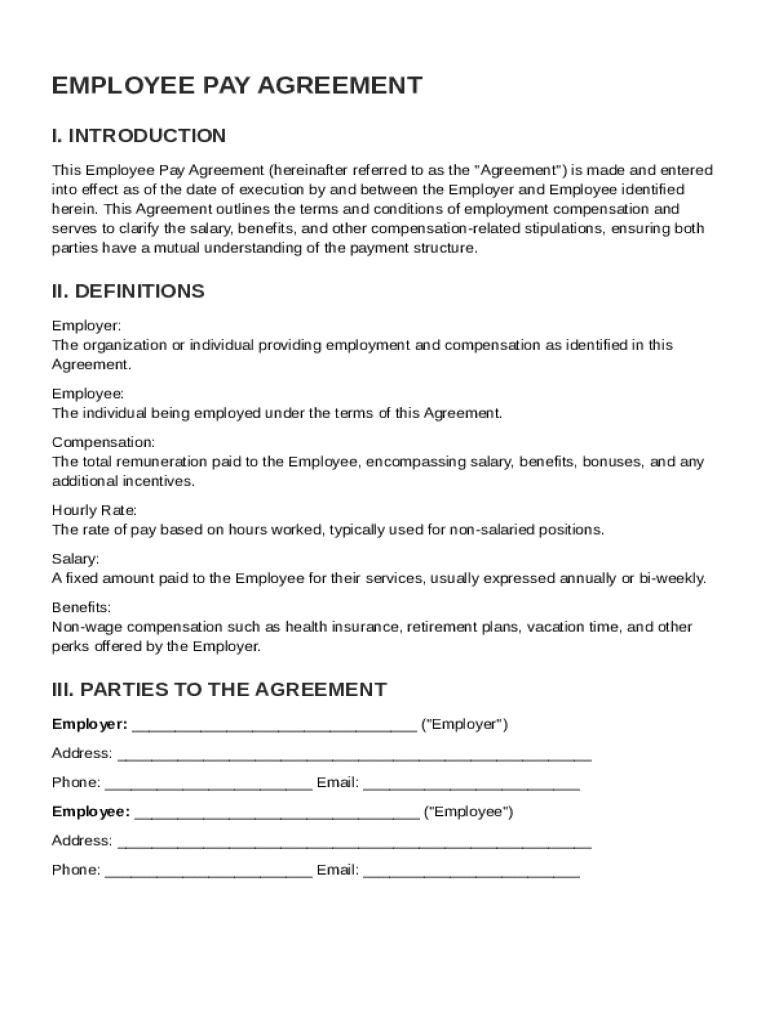
An Employee Pay Agreement Template is a formal document that outlines the terms and conditions regarding compensation between an employer and an employee. It establishes a clear understanding of salary structures, including base pay and any potential bonuses. This template acts as a binding agreement that covers not only the monetary aspects but also the job responsibilities, performance metrics, and conditions under which the employment may be terminated. By using this template, both parties ensure that they are aligned on the financial arrangements and expectations within the employment relationship.
- Compensation Structure: Details about base pay, bonuses, and other financial perks.
- Benefits: Information on health insurance, retirement plans, and other non-monetary compensations.
- Job Responsibilities: Defined roles and expectations to ensure both parties understand the duties involved.
- Termination Conditions: Clarity on circumstances under which the employment can be ended.
How to Use the Employee Pay Agreement Template
Using the Employee Pay Agreement Template involves several careful steps to ensure that all employment compensation details are clearly documented. Begin by reviewing the template to understand each section and its implications. It is essential to fill out the template accurately to avoid potential disputes. Employers will typically complete the compensation sections first, followed by benefits, responsibilities, and termination conditions. Employees should review the filled template and suggest modifications if necessary before signing.
- Review: Go through each section to understand its requirements.
- Customize: Fill in specific details related to the employment.
- Verification: Have the employee review for accuracy and comprehension.
- Amendments: Make necessary adjustments based on feedback.
Key Elements of the Employee Pay Agreement Template
The Employee Pay Agreement Template consists of several crucial elements that provide a comprehensive overview of the employment compensation agreement.
- Base Salary: Outlines the agreed-upon starting salary.
- Performance Bonuses: Conditions under which performance-related bonuses are awarded.
- Benefits Plan: Includes health insurance, retirement benefits, and other perks.
- Job Description: Details roles and responsibilities.
- Confidentiality Clauses: Protects sensitive business information.
- Governing Law: Specifies the jurisdiction under which the agreement is enforceable.
Steps to Complete the Employee Pay Agreement Template
Completing the template involves sequential steps to ensure all necessary details are captured accurately.
- Initiate Draft: Begin by entering the employer and employee details, including contact information.
- Detail Compensation: Clearly state the salary and explain any bonus structures.
- Outline Benefits: List out all benefits offered, from healthcare to stock options.
- Define Responsibilities: Write a detailed account of the expected duties and responsibilities.
- Include Legal Terms: Add clauses concerning confidentiality, termination, and applicable law.
- Review: Both parties should carefully review the agreement.
- Signatures: Conclude by obtaining the signatures of both the employer and employee to validate the agreement.
Legal Use of the Employee Pay Agreement Template
The Employee Pay Agreement Template is not just a binding contract; it is a legally recognized document that helps protect the interests of both parties engaged in the employment process. It ensures adherence to state and federal employment laws, including those related to fair wages and anti-discrimination statutes. By signing this agreement, both employer and employee agree to resolve disputes through the provisions set in the document.
- Compliance: Aligns with state and federal laws.
- Dispute Resolution: Specifies accepted methods of resolving disagreements.
- Amendments: Legal criteria for making alterations to the document.
Important Terms Related to the Employee Pay Agreement Template
Understanding the terminology used within the Employee Pay Agreement Template is crucial for both parties. These terms form the backbone of the agreement and ensure clarity in communication.
- Base Salary: The initial salary agreed upon before deductions or additions.
- Bonus: Additional compensation awarded for meeting specific targets.
- Benefits: Non-salary perks provided as part of the employment package.
- Confidentiality: Obligation to keep certain business information private.
- Governing Law: Legal framework that will be referred to in potential legal proceedings.
Examples of Using the Employee Pay Agreement Template
Practical scenarios where the Employee Pay Agreement Template is crucial include hiring a new employee, promoting an existing employee to a managerial position, or establishing terms for a temporary consultant. In each case, the template serves as a foundational document to set clear expectations and ensure mutual agreement.
- New Hires: Standardizing compensation terms for newly onboarded employees.
- Promotions: Updating the pay agreement terms to reflect new job responsibilities and higher pay grades.
- Consultants: Defining payment terms and responsibilities for temporary or project-based roles.
State-Specific Rules for the Employee Pay Agreement Template
Employment laws can differ by state, affecting how the Employee Pay Agreement Template should be completed and executed. Certain states might have additional requirements for minimum wage, overtime pay, and employee benefits that must be included.
- Minimum Wage Compliance: Ensure the base salary meets or exceeds state-specific minimum wage laws.
- Overtime Regulations: Incorporate specific terms compliant with state labor laws regarding overtime.
- State Benefits: Adapt the agreement to include state-mandated benefits or requirements.
Each of these sections is integral to crafting a robust Employee Pay Agreement that stands up to scrutiny and ensures both the employer and employee are clear about the terms of employment.