



Definition & Meaning
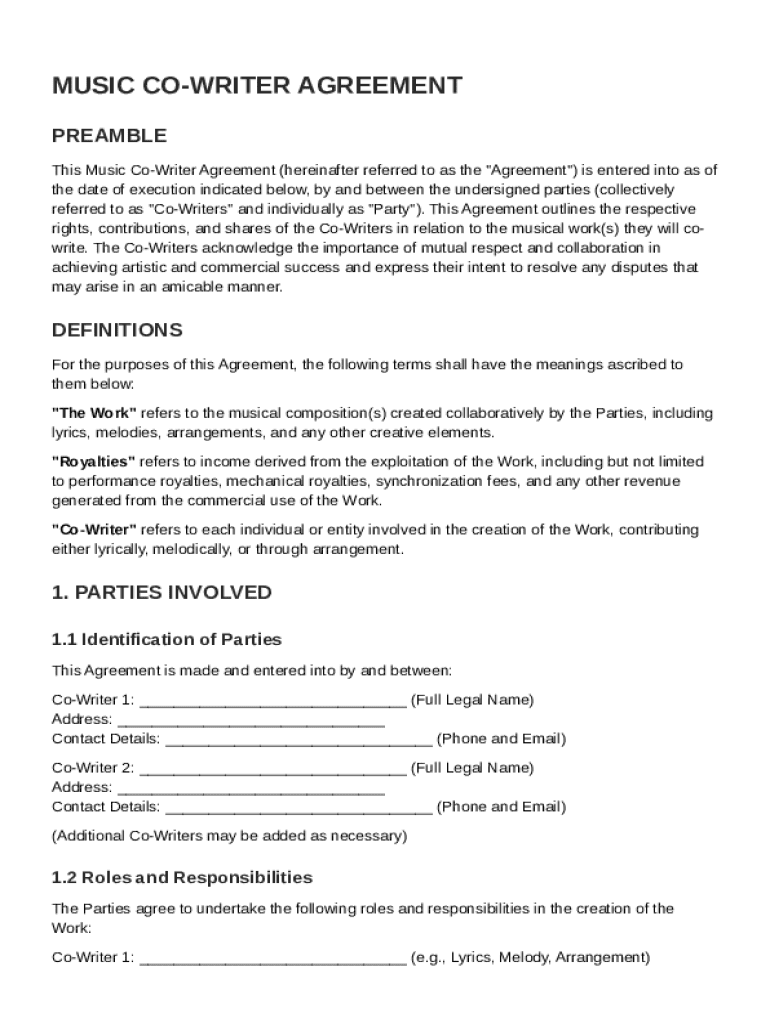
A Music Co-Writer Agreement Template serves as a comprehensive framework for establishing a fair and transparent working relationship between collaborating musicians. It defines the specific roles of each co-writer, outlines the ownership of the musical work, and details how revenues will be shared. By clarifying these important aspects, the template helps prevent future disputes and ensures an equitable distribution of royalties and responsibilities among all involved parties.
Key Elements of the Music Co-Writer Agreement Template
The Music Co-Writer Agreement Template typically includes several crucial elements that ensure all parties understand their rights and responsibilities.
- Role Allocation: It specifies the contributions of each co-writer, whether in lyrics, melody, or arrangement.
- Ownership Provisions: Details the percentage of ownership of the created work, ensuring clarity on intellectual property rights.
- Revenue Sharing: Outlines how royalties and other earnings will be split among co-writers.
- Dispute Resolution: Provides a mechanism to handle disagreements, with options for mediation or arbitration.
- Term and Termination: Specifies the duration of the agreement and conditions under which it can be terminated.
How to Use the Music Co-Writer Agreement Template
Using the Music Co-Writer Agreement Template involves several careful steps to ensure all involved parties are adequately protected.
- Discuss Roles and Contributions: Before finalizing the template, co-writers should sit down to discuss each party’s individual contributions to the project.
- Define Terms Clearly: Ensure that all terms, including ownership percentages and revenue splits, are clearly understood and agreed upon by all parties.
- Customize the Template: Modify the template to fit the specific needs of your collaboration by adding any unique clauses relevant to your project.
- Seek Legal Advice: It’s advisable to have an entertainment lawyer review the completed template to ensure compliance with applicable laws and to address any potential ambiguities.
Steps to Complete the Music Co-Writer Agreement Template
Completing a Music Co-Writer Agreement Template involves several steps to ensure thoroughness and mutual understanding.
- Gather Information: Compile all necessary details about the co-writers and the music project.
- Fill in Names and Roles: Ensure accurate and complete names of all the parties are included, along with a description of their specific roles.
- Define Ownership Shares: Clearly specify each co-writer's stake in the project.
- Establish Payment Terms: Indicate how royalties and revenues will be distributed, along with terms of payment.
- Finalize and Sign: Review the document for accuracy, make necessary adjustments, and obtain signatures from all parties involved.
Important Terms Related to Music Co-Writer Agreement Template
Understanding key terms within the Music Co-Writer Agreement Template is crucial for effectively utilizing it.
- Royalties: Payments due to co-writers based on sales, streams, and performances of the musical work.
- Cross-Collateralization: A method to recoup expenses across multiple projects, not always favorable in splitting revenues.
- End Termination: Notice required to end the agreement, often dependent on specific conditions or completion of the project.
- Mediation Clause: Allows co-writers to resolve disputes through a third-party mediator before resorting to legal action.
- Audit Rights: Enables co-writers to examine financial records to ensure correct payment of royalties.
Legal Use of the Music Co-Writer Agreement Template
Legally, the Music Co-Writer Agreement Template serves as a contract that is enforceable in courts.
- Compliance with ESIGN Act: If signed electronically, ensure that the process complies with the Electronic Signatures in Global and National Commerce Act.
- State Law Considerations: The template should conform to the laws of the state where the agreement is executed, which can affect the interpretation and enforcement.
- Legal Representation: Having an attorney review and guide the process can provide additional legal safeguards.
Examples of Using the Music Co-Writer Agreement Template
Real-world scenarios illustrate the diverse use of the Music Co-Writer Agreement Template across various projects.
- Pop Music Duos: Frequently used by two artists collaborating on a mainstream album, clearly defining songwriting contributions and performance revenues.
- Film Score Collaborations: Useful in setting terms for composers working together on a movie soundtrack to allocate credit and distribute royalties equitably.
- Cross-Genre Projects: Adapted for joint ventures where musicians from different genres work together, necessitating unique revenue sharing and rights management.
Software Compatibility for the Music Co-Writer Agreement Template
Understanding its compatibility with various software can enhance document management and sharing.
- DocHub: The template integrates seamlessly with DocHub for editing, annotating, and signing.
- Google Workspace: Easily accessible for users within the Google ecosystem, allowing for direct imports and exports from Google Drive.
- PDF Readers: Available in PDF format for use with standard PDF readers for printing or offline viewing, ensuring broader distribution and access.
Versions or Alternatives to the Music Co-Writer Agreement Template
When exploring the Music Co-Writer Agreement Template, recognizing current versions and alternatives can aid in selecting the most appropriate form.
- Standard Co-Writer Agreements: A minimalistic version that focuses solely on basic terms of engagement.
- Comprehensive Templates: Includes extensive clauses covering performance rights, merchandising, and sync licensing.
- Digital Alternatives: Utilizing platforms like DocHub to create bespoke digital versions that accommodate real-time collaboration and modification.
Business Types that Benefit Most from Music Co-Writer Agreement Template
Understanding which business types frequently employ such templates can guide effective implementation.
- Independent Label Artists: Musicians operating without major label backing distinctly rely on clear agreements to protect their interests.
- Freelance Composers: Individuals composing music for various personalities and projects, necessitating explicit contracts.
- Music Production Companies: Ensure equitable collaboration terms for artists under their management, safeguarding against potential disputes.
Who Typically Uses the Music Co-Writer Agreement Template
Various professionals within the music industry effectively use the Music Co-Writer Agreement Template.
- Songwriters and Lyricists: Utilize the template to formalize working arrangements when crafting lyrics and melodies.
- Producers and Arrangers: Essential for those involved in sound production and arrangement, clarifying their creative input and financial returns.
- Label Executives: Use it to negotiate equitable terms that align with company policies while fostering artist satisfaction.


Important State-specific Rules for the Music Co-Writer Agreement Template
Navigating state-specific rules is critical to ensuring the agreement aligns with local legal standards.
- Governing Law Clauses: Choose a jurisdiction whose laws will govern the interpretation and enforcement of the contract.
- Royalty Disbursement Laws: Some states have specific requirements for royalty disbursement that must be adhered to in the agreement.
- Provisions for Minors: Special clauses for underage co-writers, which may require guardian consent to comply with legal standards.