




01. Edit your form online
Type text, add images, blackout confidential details, add comments, highlights and more.

Type text, add images, blackout confidential details, add comments, highlights and more.

Draw your signature, type it, upload its image, or use your mobile device as a signature pad.

Send it via email, link, or fax. You can also download it, export it or print it out.
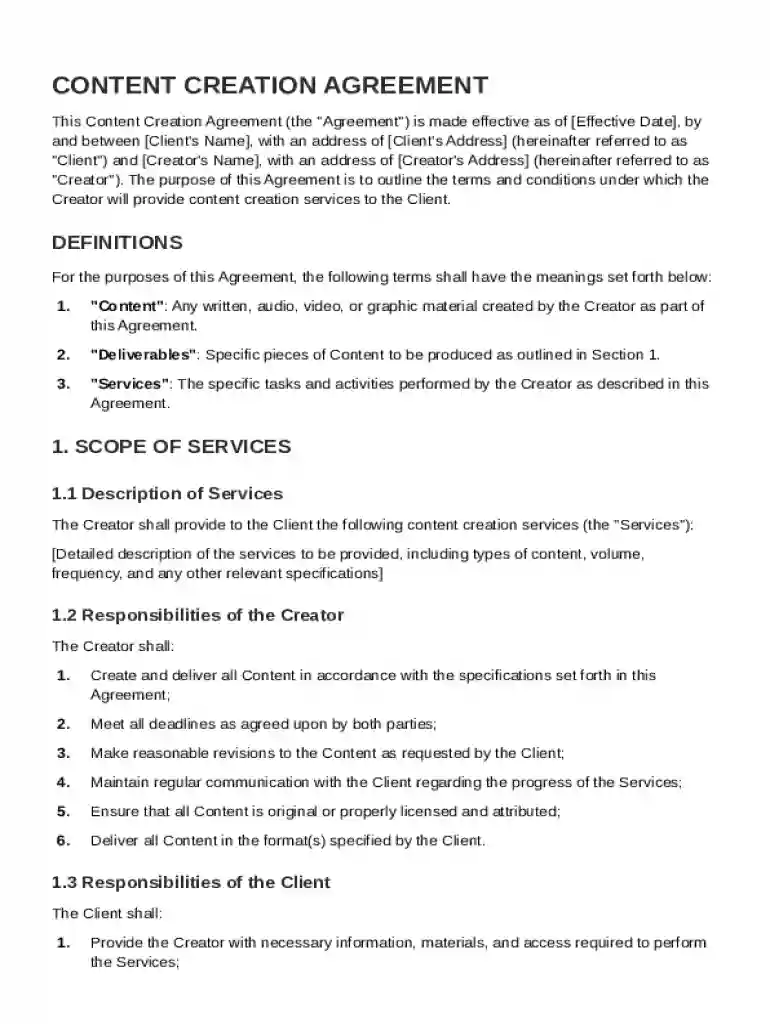
The Content Creation Agreement Template is a structured legal document that outlines the specific terms and conditions between a client and a creator for content creation services. It serves as a critical tool to define the contractual relationship and set clear expectations for both parties. Within this agreement, you'll find clauses detailing the scope of services provided, compensation structures, intellectual property rights, confidentiality obligations, and conditions for termination. By articulating these elements, the agreement minimizes misunderstandings and protects the interests of both the client and the creator. For instance, if a marketing agency hires a freelance writer to produce blog posts, the template will outline how many articles need to be written, the required length and style, and the amount the writer will be compensated.
The Content Creation Agreement Template incorporates several essential elements that ensure comprehensive coverage of all aspects of the client-creator relationship. Key sections include:
These core elements create a framework that helps both parties avoid conflicts and ensures a smooth working relationship.
Using a Content Creation Agreement Template involves several careful steps to tailor it to your specific needs.
By following these steps, you ensure that the template serves as an effective legal contract tailored to your needs.
Completing the Content Creation Agreement Template involves a series of crucial steps aimed at ensuring that every necessary detail is captured and agreed upon.
Each step ensures that the content creation process is clearly documented and understood by all parties involved.
The legal use of the Content Creation Agreement Template involves ensuring compliance with applicable laws and using the document as evidence of agreed terms. It is vital to understand that:
By considering these factors, parties can use the template effectively to secure a lawful and enforceable agreement.
This template is predominantly used by various types of businesses and professionals involved in content creation. Common users include:
By using a structured agreement, these parties ensure that their working arrangements are clear, fair, and legally sound.


Typically, the Content Creation Agreement Template is drafted and issued by the party initiating the creation of content, often the client or their legal representative. In cases involving freelance or agency work, both parties may collaborate on the agreement to ensure mutual satisfaction.
Issuing a well-crafted agreement underscores the professionalism and seriousness of the engagement.
The Content Creation Agreement Template is designed to be compatible with a variety of document editing and management software. This flexibility is crucial for both drafting and collaboration:
Such compatibility ensures that both parties can easily work on the document without technical obstacles.
At DocHub, your data security is our priority. We follow HIPAA, SOC2, GDPR, and other standards, so you can work on your documents with confidence.


