






Definition and Purpose of a Living Arrangement Agreement Template
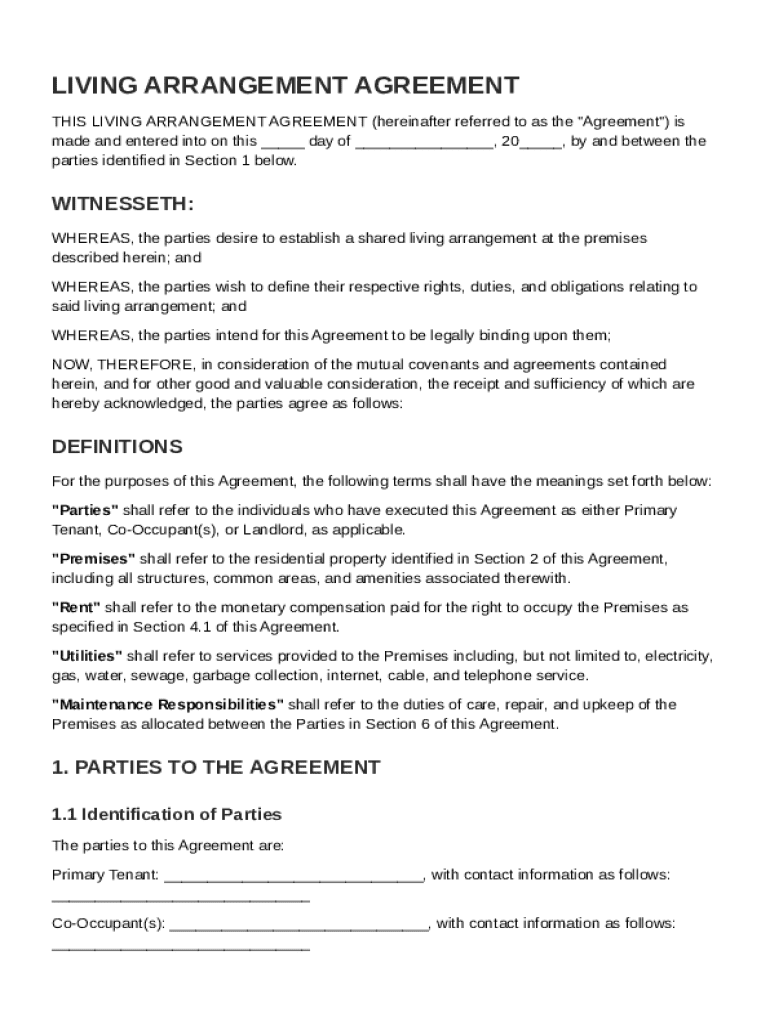
A Living Arrangement Agreement Template serves as a comprehensive document outlining the terms and conditions agreed upon by all parties involved in a shared living situation. Typically, these parties include the Primary Tenant, Co-Occupants, and sometimes the Landlord. This agreement clearly delineates roles, responsibilities, and financial commitments such as rent and utilities. It also covers house rules, tasks related to maintenance, termination procedures, methods for resolving disputes, and the legal framework under which the agreement operates. By setting clear expectations, the document aims to maintain a harmonious living environment while establishing legally binding obligations for all parties involved.
Real-World Applications
- Co-Living Arrangements: Frequently utilized by roommates, whether in college settings or among young professionals, to prevent future misunderstandings.
- Family Shared Housing: Useful for relatives living together, ensuring clarity on shared financial responsibilities and chores.
- Property Owners and Tenants: Beneficial for landlords who live in the same premises as tenants, establishing mutual conduct expectations.
Key Elements of a Living Arrangement Agreement Template
A well-structured Living Arrangement Agreement Template typically encompasses several critical components designed to address diverse aspects of shared living scenarios. These elements ensure comprehensive coverage of the most pertinent issues that may arise.
Essential Components
- Financial Obligations: Details regarding rent, security deposits, and utility costs. Clarifies the responsibility of each party concerning payment deadlines and methods.
- House Rules: Establishes daily living practices like smoking policies, noise level agreements, and pet regulations. These rules help maintain a peaceful coexistence.
- Conflict Resolution: Outlines procedures for addressing disputes, whether through mediation or formal legal channels.
- Termination Clauses: Specifies conditions under which the agreement can be ended by any party and outlines notice periods required for termination.
- Maintenance Responsibilities: Divides responsibilities for cleaning and upkeep of shared spaces and outlines procedures for reporting and resolving maintenance issues.
Steps to Complete the Living Arrangement Agreement Template
Completing a Living Arrangement Agreement Template involves a series of structured actions to ensure that all necessary components are accurately filled out and agreed upon by all involved parties. This step-by-step approach facilitates a comprehensive and effective agreement process.
Procedural Steps
- Gather Information: Collect essential details including personal information of all parties, property address, and financial terms.
- Fill Out Financial Sections: Clearly specify the rent amount, payment schedule, and division of utility costs. Include any additional fees if applicable.
- Define House Rules and Responsibilities: Discuss and agree on shared responsibilities such as cleaning, maintenance duties, and daily living policies.
- Draft Conflict Resolution Methods: Establish processes for handling disagreements or breaches of the agreement.
- Negotiate and Review: All parties should review the completed document, propose necessary adjustments, and ensure mutual understanding.
- Sign and Distribute: Once finalized, all parties should sign the document. Provide copies to each occupant and landlord where applicable.
Legal Use and Implications of the Living Arrangement Agreement Template
Using a Living Arrangement Agreement Template has significant legal implications as it creates binding obligations among its signatories. This section discusses the legal aspects associated with employing this template to formalize living arrangements.
Legal Considerations
- Contractual Binding: Upon signing, the agreement becomes a legally enforceable contract that can be upheld in a court of law.
- Amendments and Modifications: Any changes to the original agreement should be documented in writing and signed by all parties to retain legal validity.
- Compliance with Local Laws: The agreement should conform to state and local rental and housing laws to ensure enforceability and avoid legal disputes.
- Governing Law Clause: Typically included to determine which state laws will govern any potential legal disputes arising from the agreement.
Important Terms Related to Living Arrangement Agreement Template
Understanding the specific terminology associated with a Living Arrangement Agreement Template is crucial for all parties involved. Familiarity with these key terms ensures clarity and reduces the likelihood of misunderstandings.
Key Terminology
- Primary Tenant: The key individual responsible for the rental agreement and financial commitments related to the property.
- Co-Occupants: Additional individuals who share the living space and contribute to rent and utilities.
- Security Deposit: A refundable fee collected to cover potential damages to the property beyond normal wear and tear.
- Shared Spaces: Areas within the property that all residents have access to, such as kitchens, living rooms, and bathrooms.
State-Specific Rules for the Living Arrangement Agreement Template
Living Arrangement Agreements may have variations depending on state-specific regulations and legal considerations. It is essential to tailor the template to align with these regional rules effectively.
Regional Variations
- California: May require specific disclosures about tenant rights and property conditions as per state legislation.
- New York: Typically mandates stricter eviction procedures and advance notice for lease termination.
- Texas: Might include additional clauses here regarding property management and tenant interactions due to state guidelines.
Examples of Using the Living Arrangement Agreement Template
Practical examples demonstrate the application of a Living Arrangement Agreement Template, highlighting common scenarios and providing insights into the document’s value in diverse contexts.
Illustrative Scenarios
- Roommate Co-Living: Two college students sharing an apartment use the agreement to divide rental responsibilities and establish a cleaning schedule.
- Family Members Sharing Property: A sibling moving into a family-owned home uses the template to agree on shared expenses and privacy rules.
- Landlord and Live-In Tenants: A landlord sharing part of their home with tenants utilizes the agreement to formalize rent terms and clarify behavioral expectations.
Each of these examples illustrates how a Living Arrangement Agreement Template functions as a practical tool in facilitating organized, clear, and legally sound cohabitation agreements.