






Definition & Meaning
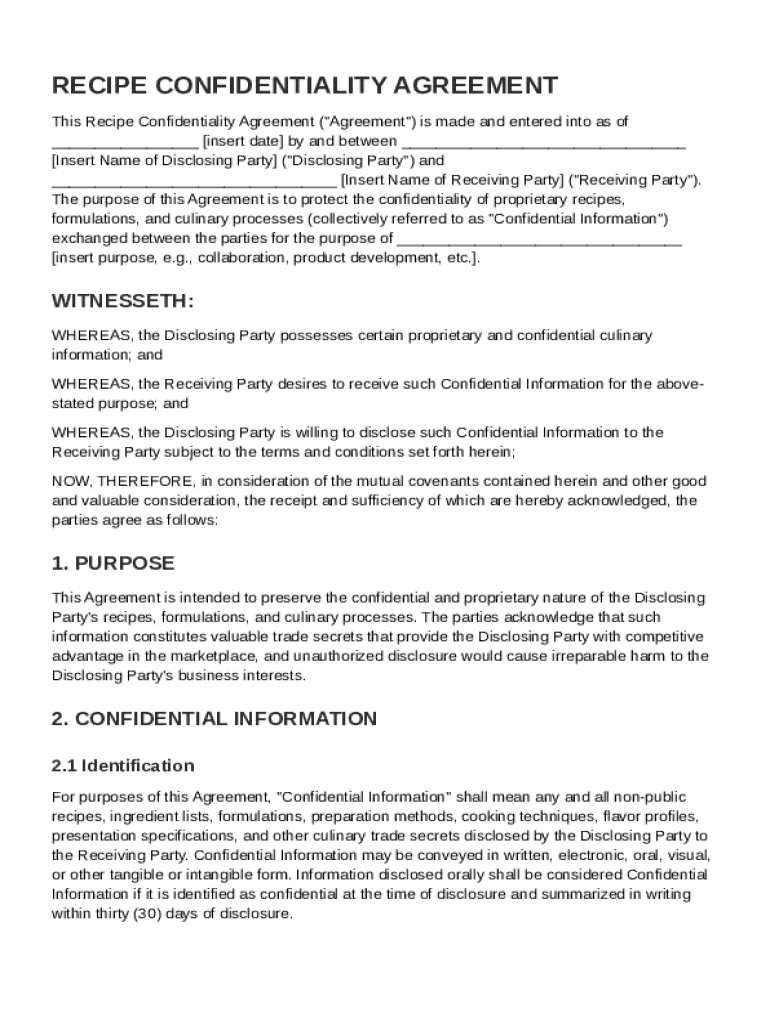
A Recipe Confidentiality Agreement Template is a legal document designed to protect the proprietary interests of culinary creators. It establishes the framework within which a Disclosing Party shares sensitive recipes and culinary processes with a Receiving Party, ensuring that the latter upholds confidentiality and prevents unauthorized dissemination. This agreement is crucial for maintaining the integrity and exclusivity of culinary innovations. It often encompasses clauses that define trade secrets, outline responsibilities for information safeguarding, and specify penalties in case of breaches.
Key Elements of the Recipe Confidentiality Agreement Template
The template typically contains several critical components necessary for upholding confidentiality:
-
Parties Involved: Clearly identifies the Disclosing Party and the Receiving Party. This section specifies their roles and responsibilities regarding the information shared.
-
Definition of Confidential Information: Describes what constitutes confidential information, usually including recipes, ingredients, techniques, and any other proprietary data shared between parties.
-
Obligations of the Receiving Party: Outlines the Receiving Party's duty to protect the information, which includes not sharing or using it for unintended purposes.
-
Term of Confidentiality: Establishes how long the confidentiality agreement is valid, often continuing even after the relationship between the parties ends.
-
Permitted Disclosures: Lists exceptions where the information can be disclosed legally, such as compliance with legal requests or subpoenas.
-
Return or Destruction of Materials: Enforces the return or proper disposal of any documents containing the confidential information upon termination of the agreement.
Steps to Complete the Recipe Confidentiality Agreement Template
- Download the Template: Obtain the Recipe Confidentiality Agreement Template from a reputable source like DocHub, ensuring it's tailored to your needs.
- Identify Parties: Fill in the details of the Disclosing and Receiving Parties, ensuring their full legal names and contact information are accurate.
- Specify Confidential Information: Clearly describe what constitutes confidential information in the context of the agreement.
- Detail Responsibilities: Write down the obligations of the Receiving Party to maintain and protect the confidentiality of the disclosed information.
- Set the Duration: Define the timeframe for which the confidentiality obligations remain in effect.
- Signatures: Ensure both parties review the document carefully before signing, indicating their understanding and agreement to abide by its terms.
How to Use the Recipe Confidentiality Agreement Template
To effectively employ the Recipe Confidentiality Agreement Template:
- Collect Necessary Information: Gather all relevant details about the parties and specifics of the confidential information to be shared.
- Customize Accordingly: Adjust clauses within the template to accommodate any unique stipulations or exceptions specific to your situation.
- Seek Legal Advice: Consult with a legal professional to ensure the agreement meets legal requirements and offers adequate protection.
- Finalize and Store Safely: Once completed and signed, store the agreement securely, either physically or digitally, as a reference for both parties.
Who Typically Uses the Recipe Confidentiality Agreement Template
This template is particularly beneficial for:
- Chefs and Restaurateurs: To protect unique recipes and culinary techniques that distinguish their offerings in the market.
- Food Manufacturers: When collaborating on or outsourcing production, ensuring proprietary processes and ingredients remain confidential.
- Consultants and Culinary Experts: Who often handle sensitive information across various culinary projects and need robust protection mechanisms.


Legal Use of the Recipe Confidentiality Agreement Template
The legal enforceability of this agreement rests on its compliance with contract laws:
-
Validity: To ensure legality, both parties must willingly enter into the agreement with mutual consent, understanding, and compensation (if applicable).
-
Dispute Resolution: The template should include methods for resolving disputes, such as mediation or arbitration, to handle breaches amicably.
-
Governing Law: Identify which jurisdiction's laws apply to the agreement, which is usually based on the location of the Disclosing Party.
Examples of Using the Recipe Confidentiality Agreement Template
- Collaborative Product Development: A chef collaborates with a food scientist to develop a new product line. An agreement ensures the scientist doesn't share the recipe with competitors.
- Franchising Agreements: A franchisor provides recipes to franchisees. The agreement prevents the franchisee from disseminating these recipes unauthorizedly.
- Recipe Books or Publications: When hiring a ghostwriter for recipe documentation, an agreement protects the chef's original creations.
Important Terms Related to Recipe Confidentiality Agreement Template
Understanding specific terms is crucial when using the template:
- Non-Disclosure Agreement (NDA): While similar, an NDA is not always specific to recipes but encompasses broader business secrets.
- Trade Secret: Refers to proprietary knowledge, such as specific recipes, that provides a business advantage.
- Intellectual Property (IP): Innovations and concepts developed by the Disclosing Party, requiring legal safeguarding beyond the agreement.
State-Specific Rules for the Recipe Confidentiality Agreement Template
While general in application, some states have unique stipulations or requirements for these agreements:
- California and New York: Known for stringent employee protection laws that may affect non-compete clauses in confidentiality agreements.
- Texas and Florida: Typically allow broader enforcement of confidentiality agreements but stress the importance of reasonable scope and duration.
Understanding these nuances ensures adherence to both federal and state regulations, offering adequate protection and avoiding legal pitfalls.