






Definition and Meaning
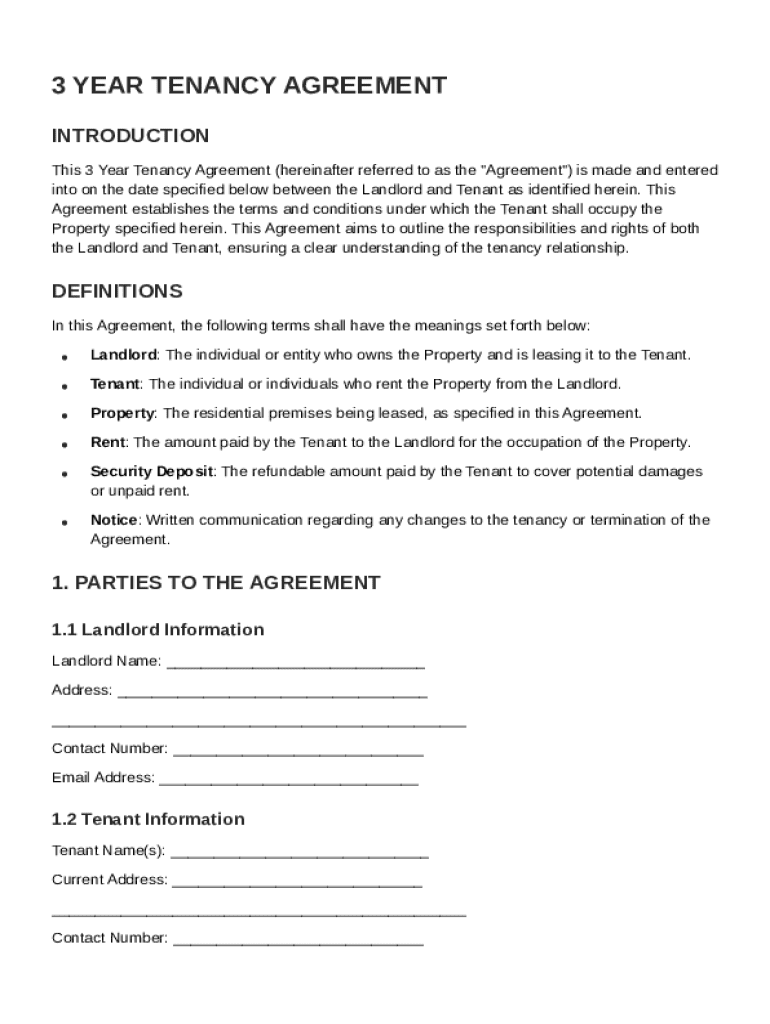
A 3 Year Tenancy Agreement Template is a legal document that outlines the terms and conditions governing the rental arrangement between a landlord and a tenant for a period of three years. This template covers essential components such as the responsibilities of both parties, rent payment details, security deposit specifications, maintenance obligations, and occupancy rules. Utilizing this template helps ensure that both the landlord and tenant have a clear understanding of their rights and duties, reducing misunderstandings and disputes.
Key Elements of the 3 Year Tenancy Agreement Template
Parties Involved
- Landlord: The property owner or entity leasing the premises.
- Tenant: The individual or group renting the property.
Duration and Renewal
- Initial Term: This agreement covers a three-year period.
- Renewal Options: Provision details for the potential renewal of the lease upon completion of the initial term.
Payment and Deposits
- Rent Amount: Specifies the monthly rent and acceptable payment methods.
- Security Deposit: Amount required, conditions for its return, and situations under which deductions may occur.
Maintenance and Repairs
- Landlord Responsibilities: Details duties such as structural repairs and concern for major appliances.
- Tenant Responsibilities: Includes upkeep of minor repairs and general cleanliness.
Dispute Resolution
- Procedures: Outlines methods for resolving disputes, such as mediation or arbitration, aiming for legally compliant and amicable resolutions.
Legal Use of the 3 Year Tenancy Agreement Template
This template is designed to support compliance with U.S. rental property laws. The agreement ensures that both federal and state-specific regulations are respected, thereby safeguarding the interests of both landlords and tenants. It is essential that the template is reviewed by a legal professional to tailor it according to specific state laws and personal requirements.
Important Terms Related to the 3 Year Tenancy Agreement Template
Rent Control
- State or local laws that may affect how much the rent can be increased annually.
Habitability
- Legal requirement for landlords to ensure the property is fit to live in, covering aspects like plumbing, heating, and safety measures.
Leasehold Improvements
- Modifications made by the tenant, potentially requiring approval from the landlord prior to implementation.
Steps to Complete the 3 Year Tenancy Agreement Template
- Fill in Personal Details: Input names and contact information of the landlord and tenant.
- Define Rent Details: Specify the rental amount, due dates, and any additional fees.
- Security Deposit Terms: Complete sections on deposit amounts and conditions for its return.
- Set Maintenance Responsibilities: Clearly outline duties for repairs and maintenance tasks.
- Review Terms and Sign: Once completed, both parties should carefully review the agreement before signing to finalize the contract legally.
Examples of Using the 3 Year Tenancy Agreement Template
Scenario 1: Residential Lease
A family leasing a house in a suburban area uses the template to specify their obligations, including paying the rent on the first of each month, maintaining the garden, and adhering to community noise regulations.
Scenario 2: Commercial Lease
A small business tenant utilizes the template to finalize leasing terms for a retail space, allowing for customized installations and signage placement with prior approval from the landlord.
State-Specific Rules for the 3 Year Tenancy Agreement Template
States like California, New York, and Texas have unique rental laws that impact clauses regarding security deposits, rent control, and eviction procedures. Understanding these local laws is crucial for crafting an agreement that protects both parties' legal interests and ensures compliance with all applicable regulations.
Software Compatibility
DocHub provides robust support for electronic document management. Its benefits include importing and exporting filled tenancy agreement templates seamlessly with platforms such as Google Drive, Dropbox, and email clients like Gmail. It also supports various file formats, allowing for broad compatibility across different software ecosystems.