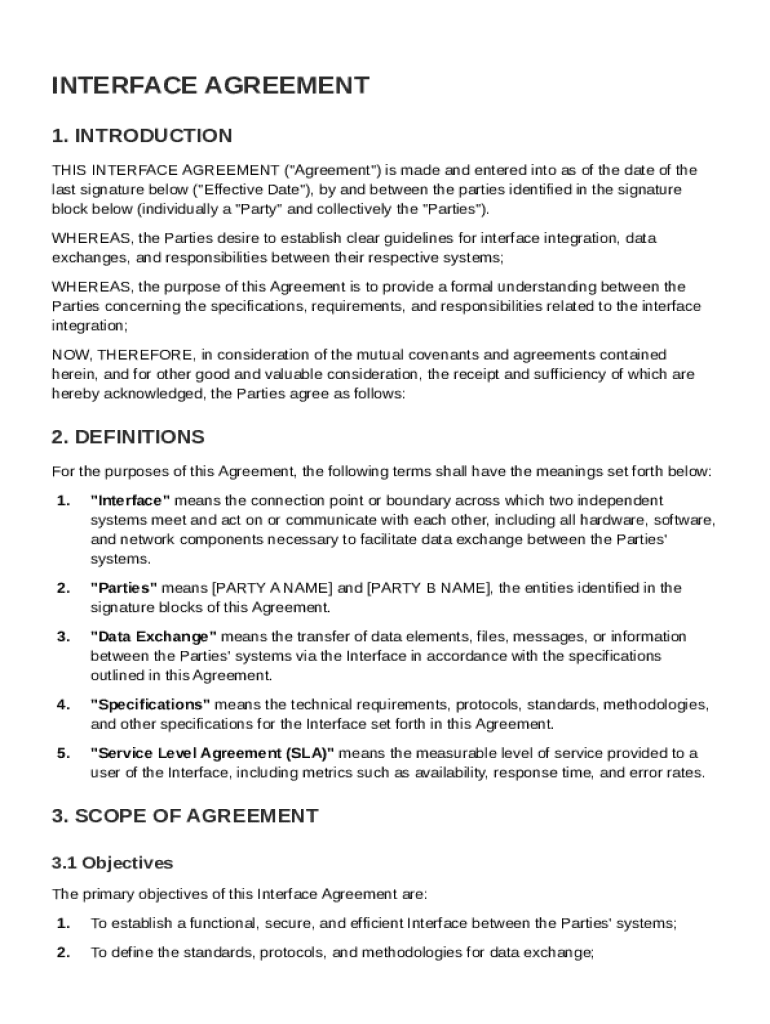







Definition & Meaning
An Interface Agreement Template is a crucial document that delineates the guidelines and procedures for integrating and exchanging data between two separate systems or parties. This document is instrumental in establishing a clear framework for collaboration by defining roles, technical specifications, and responsibilities of each involved entity. It aims to ensure a functional interface that not only performs optimally but also adheres to necessary legal and security standards. These templates often include comprehensive details such as performance metrics, ensuring both parties are on the same page regarding expectations and deliverables.
Key Elements of the Interface Agreement Template
A well-structured Interface Agreement Template encompasses several critical components. These include:
- Definitions and Scope: Clearly outlined terms and the scope of the agreement to ensure mutual understanding.
- Technical Specifications: Detailed technical requirements, including data formats, protocols, and hardware or software prerequisites.
- Security Measures: Protocols to protect data integrity and confidentiality.
- Responsibilities: Duties of each party, from data handling to troubleshooting.
- Testing Procedures: Steps for validating the interface's performance before full-scale deployment.
- Change Management: Policies for managing modifications to the interface or underlying systems.
- Dispute Resolution: Mechanisms for addressing conflicts that may arise during the agreement’s term.
How to Use the Interface Agreement Template
Utilizing the Interface Agreement Template involves several strategic steps to tailor the document to specific needs:
- Review the Template: Understand each section's intent to ensure comprehensive coverage of all required elements.
- Customize for Relevance: Modify sections to fit the specifics of the project, including unique technical and operational requirements.
- Consult Stakeholders: Gather input from both parties' legal, technical, and operational teams to ensure all needs are met.
- Finalize the Agreement: Ensure all modifications are clearly communicated and agreed upon before finalizing and signing.
Steps to Complete the Interface Agreement Template
Completing the template involves meticulous attention to detail:
- Collect Required Information: Gather all necessary technical specifications, roles, and legal requirements.
- Fill Out Template Sections: Systematically populate each area with specific, relevant data.
- Review for Accuracy: Check for precision in technical details and compliance with regulatory standards.
- Seek Approvals: Obtain approval and consensus from all stakeholders involved.
Who Typically Uses the Interface Agreement Template
This template is generally used by organizations involved in IT and systems integration, including:
- Software Companies: Ensuring seamless integration with other software products.
- IT Departments: Facilitating internal system connectivity.
- Business Partners: When two businesses need to share data securely and efficiently.
- Consultants and Contractors: Setting clear guidelines and expectations for third-party engagements.


Legal Use of the Interface Agreement Template
Legally, the Interface Agreement Template serves as a binding contract between two entities, ensuring compliance with relevant legal standards. Important legal considerations include:
- Compliance with Data Protection Laws: Such as GDPR or HIPAA, where applicable.
- Adherence to Industry Standards: Aligning the agreement with accepted industry practices.
- Intellectual Property Rights: Ensuring all creations or data shared remain protected under the law.
Software Compatibility and Integration
For digital processes, understanding the compatibility of Interface Agreement Templates with various software platforms is critical:
- Cloud Services: Compatibility with cloud storage solutions like Google Drive or Dropbox for seamless management.
- Document Editing Software: Ensuring templates can be edited in platforms like Microsoft Word or Google Docs.
- Project Management Tools: Integrating with platforms such as Trello or Asana to monitor task assignments related to the interface.
Business Types that Benefit Most from Interface Agreement Template
Certain businesses derive more value from deploying Interface Agreement Templates:
- Technology Startups: Integrations are core to many startups, requiring careful interface planning.
- Healthcare Providers: Needing robust data exchange mechanisms for patient information.
- E-commerce Platforms: For smooth transactions between the marketplace and suppliers.
- Financial Institutions: Facilitating secure data exchanges with clients and regulatory bodies.
Each section of the Interface Agreement Template requires careful attention to ensure both legal soundness and functional efficacy. The depth and precision of each section facilitate a reliable and efficient integration process between systems or parties, ultimately contributing to successful collaborations and sustainable partnerships.