Definition & Meaning
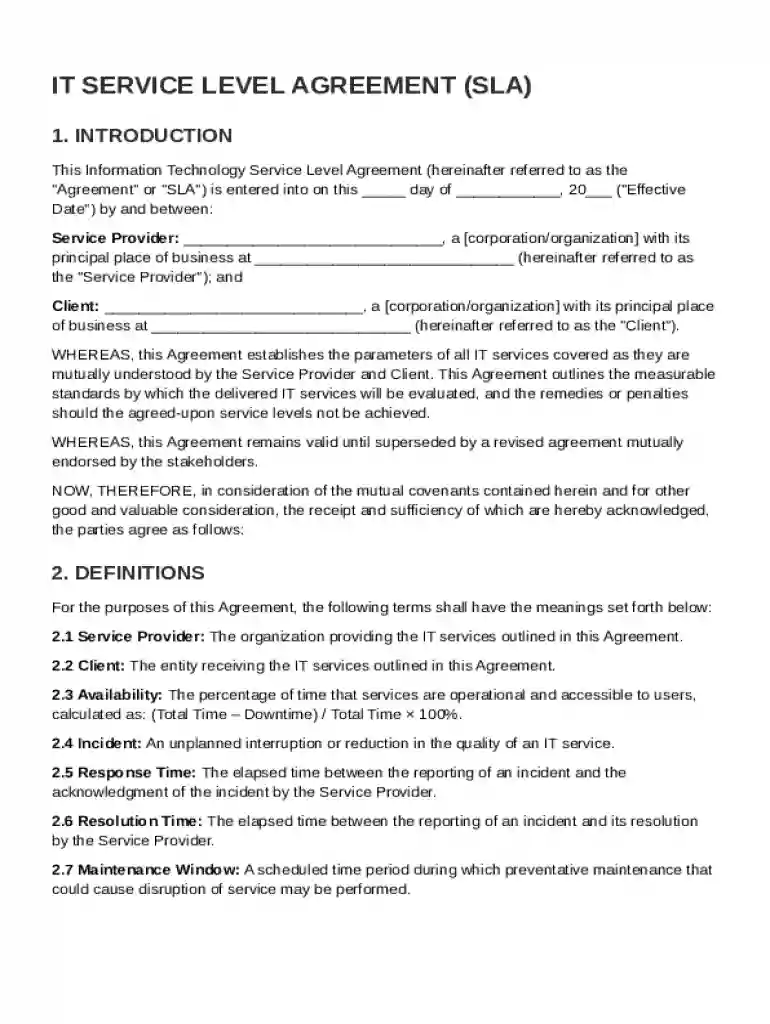
An IT Service Level Agreement (SLA) Template serves as a foundational document defining the contractual expectations between a service provider and a client regarding IT service deliverables. It ensures that both parties are aligned on the key terms and conditions for service delivery, encompassing areas like service scope, performance metrics, and the responsibilities of each party. The IT SLA Template is crucial for establishing a clear framework for service availability, setting response and resolution times, and providing mechanisms to monitor performance.
Key Elements of the IT SLA Agreement Template
The IT SLA Agreement Template typically comprises several essential components that are critical for maintaining a successful service relationship. These include:
- Service Scope: Clearly defines the IT services to be provided, including any limitations or exclusions.
- Performance Metrics: Establishes measurable criteria such as uptime percentages, response times, and resolution targets to gauge service levels.
- Responsibility Allocation: Details the roles and responsibilities of both the service provider and the client to prevent misunderstandings.
- Incident Management Procedures: Outlines the process for reporting and resolving incidents that could disrupt service, ensuring minimal downtime.
- Compliance and Penalties: Specifies how compliance with the SLA will be measured and the penalties for non-compliance.
- Amendment and Termination Conditions: Provides guidelines for modifying the SLA or terminating the agreement if necessary.
Steps to Complete the IT SLA Agreement Template
Filling out an IT SLA Agreement Template involves several distinct steps to ensure accuracy and comprehensiveness:
- Identify Parties Involved: Begin by detailing the service provider and client involved in the agreement, including contact information and roles.
- Define Services: Specify the services covered under the agreement, providing detailed descriptions of each.
- Set Performance Metrics: Establish specific, measurable performance metrics tied to the key services being provided.
- Outline Responsibilities: Clearly denote the responsibilities for both the service provider and client.
- Draft Incident Management Protocols: Design a procedure for incident reporting and resolution.
- Establish Compliance Measures: Define how compliance will be tracked and measured throughout the agreement period.
- Include Amendment and Termination Clauses: Add clauses that explain how the SLA can be amended or terminated.
Why Use an IT SLA Agreement Template
Using an IT SLA Agreement Template provides several benefits:
- Clarity and Consistency: Templates ensure that all necessary information is included and organized consistently.
- Efficiency: Save time by using a pre-defined structure, allowing you to focus on the specifics of the agreement.
- Risk Mitigation: Protects both parties by setting clear expectations and procedures for managing performance.
- Conflict Prevention: Reduces the likelihood of disputes by clearly defining roles and expectations.
Who Typically Uses the IT SLA Agreement Template
The IT SLA Agreement Template is used by a wide range of entities in the IT sector including:

- Service Providers: Businesses that offer IT services to clients, whether small startups or large tech companies.
- Clients: Companies and organizations that rely on IT services for their operations, looking for reliable and documented service terms.
- IT Consultants: Professionals who advise on creating SLAs tailored to specific business needs and regulatory requirements.
- Legal Teams: Ensures that all agreements meet legal standards and protect the interests of both parties.
Important Terms Related to IT SLA Agreement Template
Understanding specific terminology is crucial when working with an IT SLA Agreement Template:
- Uptime: The time during which a service is operational and available to users.
- Response Time: The time taken by the service provider to respond to a client’s request for support.
- Resolution Time: The duration required to identify and resolve an issue reported by the client.
- Service Credits: Compensation provided by the service provider to the client in case service levels are not met.
Legal Use of the IT SLA Agreement Template
When deploying an IT SLA Agreement Template, it is vital to ensure that it complies with relevant laws:
- ESIGN Act Compliance: Ensure that electronic agreements and transactions are legally binding and enforceable.
- Data Protection Regulations: The agreement must comply with data protection laws such as GDPR or CCPA when handling personal data.
- Confidentiality Clauses: Protect sensitive information from unauthorized disclosure throughout the agreement period.
State-Specific Rules for the IT SLA Agreement Template
While the IT SLA Agreement Template provides a general framework, it is necessary to consider state-specific regulations:
- Data Privacy Laws: Some states have additional requirements for data privacy and protection that must be adhered to.
- Consumer Protection Regulations: Different states may have distinct laws regarding consumer rights that affect service agreements.
- Tax Implications: State taxation laws may influence how SLAs are structured in relation to service costs and billing methods.