Definition and Meaning
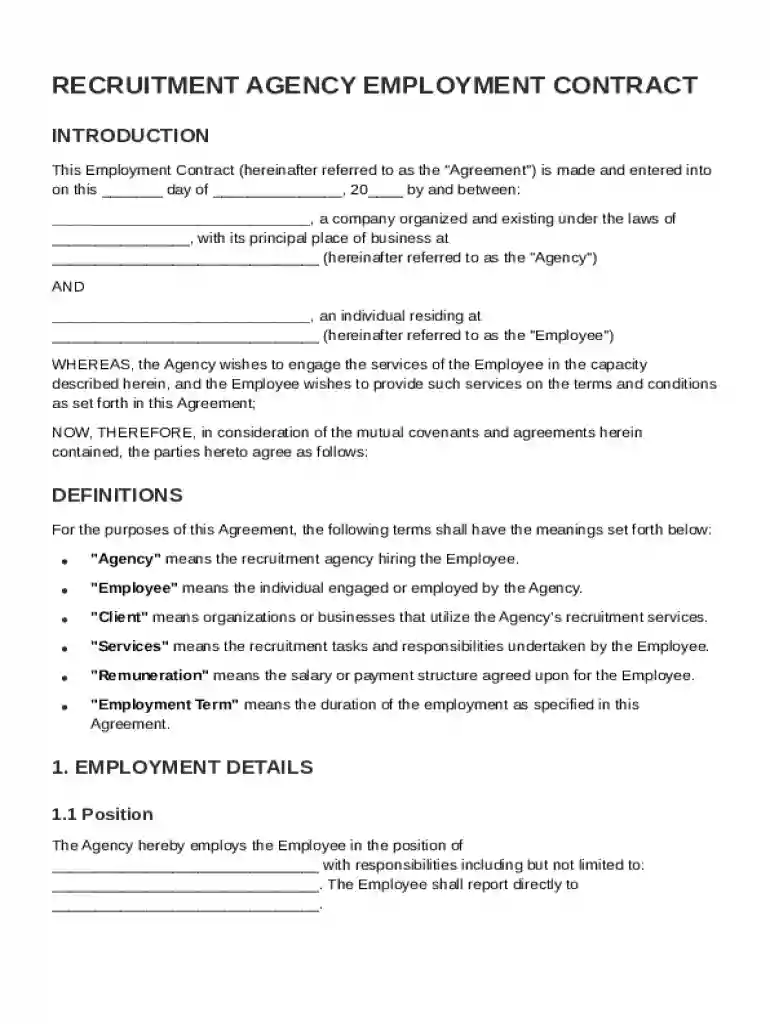
The "Recruitment Agency Employment Contract Template" serves as a standardized framework for outlining the terms of employment between a recruitment agency and its employee. It establishes formal, legal agreements covering crucial aspects such as roles, responsibilities, salary structure, and benefits. This template is instrumental in facilitating clarity and consistency in employment contracts, reducing the likelihood of misunderstandings and disputes. By integrating elements such as performance standards, confidentiality agreements, and termination conditions, the template ensures that all parties are well-informed of their obligations and rights.
Key Elements of the Recruitment Agency Employment Contract Template
Employment Details
- Role and Position: Clearly defines the specific job title and role expectations.
- Working Hours: Specifies the standard work schedule, including any flexible or remote working arrangements.
- Location: States the official workplace or any remote operation locations.
Compensation and Benefits
- Salary Structure: Details the base salary, frequency of payment, and any applicable bonuses or commissions.
- Benefits: Outlines benefits such as health insurance, retirement plans, and paid time off.
Employee Obligations and Conduct
- Performance Standards: Lists expected performance metrics and evaluation processes.
- Code of Conduct: Includes standards of professionalism and ethical behavior.
Confidentiality and Non-disclosure
- Confidentiality Clauses: Protects sensitive company information from unauthorized disclosure.
- Non-compete Agreements: Establishes restrictions on working with competitors for a specified period.
Termination Conditions
- Notice Periods: Defines the necessary notice period for resignation or termination.
- Grounds for Termination: Lists conditions under which employment can be terminated immediately.
Dispute Resolution
- Arbitration Procedures: Provides guidelines on resolving disputes through arbitration rather than litigation.
- Jurisdiction: States the legal jurisdiction governing the contract.
Step-by-Step Instructions: Completing the Template
- Gather Essential Information: Collect data on the employee's role, salary, and benefits.
- Customize Role Details: Tailor the template with specific job titles and responsibilities.
- Define Compensation Terms: Specify salary details, payment frequency, and any additional bonuses.
- Review Legal Clauses: Ensure confidentiality and termination clauses are appropriate for the role.
- Seek Legal Advice: Consider consulting with an employment lawyer to verify legal compliance.
- Finalize and Sign: Both parties should review and sign the document, ensuring mutual understanding.
Important Terms Related to Recruitment Agency Employment Contract Template
- Probationary Period: A trial period during which the employer evaluates the employee's performance.
- Intellectual Property Rights: Legal rights concerning creations derived from the employee's work.
- Severance Package: Compensation paid to an employee upon termination of employment.
- Force Majeure: Contractual clause relieving parties from obligations due to extraordinary events.
State-Specific Rules for the Recruitment Agency Employment Contract Template
- Employment Laws: Varying state laws may affect terms, including notice periods and employee rights.
- Minimum Wage Requirements: Each state has distinct wage laws that must be reflected in the contract.
- Local Compliance: State-specific regulations regarding sick leave and benefits may apply.
Examples of Using the Recruitment Agency Employment Contract Template
- Temporary Staffing: Used for short-term placements where flexibility and clarity are crucial.
- Permanent Placements: Provides a detailed framework for long-term employment relationships.
- Remote Roles: Adapts to include stipulations for remote work arrangements and schedules.
Legal Use of the Recruitment Agency Employment Contract Template
The Recruitment Agency Employment Contract Template is legally binding and must comply with the ESIGN Act for electronic signatures when completed online. It ensures all employment terms are legally enforceable and meets U.S. standards for employment agreements. Users must ensure the template is adapted to fit jurisdictional laws and that both parties have a clear understanding of the terms to avoid potential legal disputes.