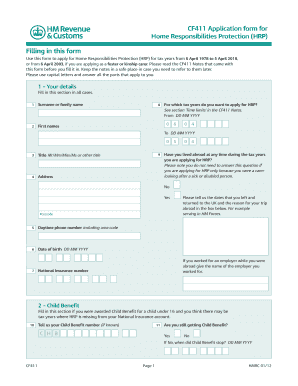
Customer identification form 2026

Get Form
customer identification form Preview on Page 1

Here's how it works

01. Edit your customer identification form online
Type text, add images, blackout confidential details, add comments, highlights and more.

02. Sign it in a few clicks
Draw your signature, type it, upload its image, or use your mobile device as a signature pad.

03. Share your form with others
Send it via email, link, or fax. You can also download it, export it or print it out.

Definition & Meaning

A customer identification form is a critical document commonly used in financial and business settings to verify the identity of customers. This form ensures that institutions comply with legal regulations like the Patriot Act, which mandates identity verification to prevent fraud and money laundering. It typically requires detailed information such as names, addresses, and identification numbers from official documents like driver's licenses or passports. Accurate completion of this form is essential in maintaining integrity and security in transactions.

Steps to Complete the Customer Identification Form

  1. Gather Required Documents: Before beginning, ensure you have all necessary identification documents, such as a driver's license or passport. These documents will provide the information needed to fill out the form accurately.
  2. Provide Personal Information: Enter personal details including full name, address, and contact information. Accuracy is key, as discrepancies can lead to verification delays.
  3. Enter Identification Details: Input details from your identification document, such as document number, expiration date, and issuing authority. This step is crucial for identity verification.
  4. Certification and Signature: Once all information is filled in, the form must be signed. This certifies that the details provided are true and correct to the best of the applicant's knowledge.
  5. Submit the Form: The form can typically be submitted via multiple methods such as online portals, mail, or in-person submission, depending on the organization's requirements.

Who Typically Uses the Customer Identification Form

Banks, credit unions, and other financial institutions are primary users of the customer identification form. These entities use it to comply with federal regulations for identity verification. Additionally, businesses that extend credit or require customer verification as part of their service provision also utilize this form to authenticate and safeguard customer interactions.


decoration image ratings of Dochub

Key Elements of the Customer Identification Form

  • Personal Details: Full name, date of birth, and contact information.
  • Identification Information: Details from government-issued ID such as number, type, and expiration date.
  • Signature Section: A space for the applicant’s signature to certify the form’s accuracy.
  • Internal Use Section: Often includes space for verification notes by staff, acknowledging receipt and review of the form.

How to Use the Customer Identification Form

The form is used as part of the onboarding process for new customers in financial and business settings. It should be completed at the earliest interaction to ensure that identity verification does not delay the commencement of services. Businesses often integrate this form as part of their Know Your Customer (KYC) protocol, a critical process for identifying and verifying the identity of their clients.

Legal Use of the Customer Identification Form

The use of a customer identification form is rooted in legal obligations to combat fraud and criminal activities such as money laundering. In the United States, this falls under the regulations set by the Patriot Act, which requires financial institutions to verify the identity of individuals wishing to conduct transactions. Properly completed forms ensure compliance with these regulations and protect institutions from legal repercussions.

Required Documents

To complete the customer identification form, applicants are usually required to provide a valid form of identification. Acceptable documents include:

  • Driver's license
  • Passport
  • State-issued identification card In addition, proof of address such as utility bills or bank statements may be required to corroborate the information provided on the form.

Form Submission Methods (Online / Mail / In-Person)

Institutions typically offer various submission methods to accommodate customer preferences. Online submission is convenient and speeds up processing through digital platforms. For those who prefer traditional methods, forms can be mailed to the issuing institution. In-person submission is also available, often providing immediate feedback if there are issues with the form, ensuring that it is accurately completed on the first attempt.

Examples of Using the Customer Identification Form

A practical example is a new bank account opening process where an applicant completes the customer identification form to initiate identity verification. Similarly, a retail company offering store credit would use this form to validate customer identities, ensuring that account details match the credit application. These use cases illustrate the form’s role in safeguarding transactions and preventing fraudulent activity.

Penalties for Non-Compliance

Failure to properly complete and submit the customer identification form can lead to significant penalties for both customers and institutions. Financial institutions may face fines and legal action for non-compliance with federal regulations, while customers could experience delays in service provision or denial of account services due to incomplete or inaccurate documentation.

be ready to get more

Complete this form in 5 minutes or less

Get form

Got questions?

We have answers to the most popular questions from our customers. If you can't find an answer to your question, please contact us.
Contact us
The CIP requirement was established under Section 326 of the USA PATRIOT Act, enacted in 2001 in the wake of 9/11 to prevent money laundering, terrorist financing, and other financial crimes by ensuring that institutions thoroughly vet potential customers and identify suspicious transactions.
CIP is an important measure for financial institutions to ensure the security of their operations and prevent financial crime. It requires financial institutions to verify customer identification information, such as name, address, date of birth and government-issued identification number before opening an account.
Customer identification means identifying the customer and verifying his/her identity by using reliable, independent source documents, data or information. Given below is the indicative procedure which may be reviewed and implemented by the Standing Committee on KYC/AML from time to time. Customer Identification
What is a CIF number? The CIF number (full form - Customer Identification File number) is an 11-digit unique number banks use to identify customers and save their data. The full form of CIF is the Customer Information File. It is essential for enabling effective client management and account information access.
Any business thats considered a financial institution under the Bank Secrecy Act and related laws must establish a CIP.

Security and compliance

At DocHub, your data security is our priority. We follow HIPAA, SOC2, GDPR, and other standards, so you can work on your documents with confidence.

Learn more
ccpa2
pci-dss
gdpr-compliance
hipaa
soc-compliance
be ready to get more

Complete this form in 5 minutes or less

Get form

People also ask

When you create an individual or organization profile, a Customer ID number is automatically generated. Customer ID numbers are unique 6-digit numbers which are generated in increments of 10. For example, if a new record has a Customer ID number of #009700, the next Customer ID number will be #009710.

Related links