
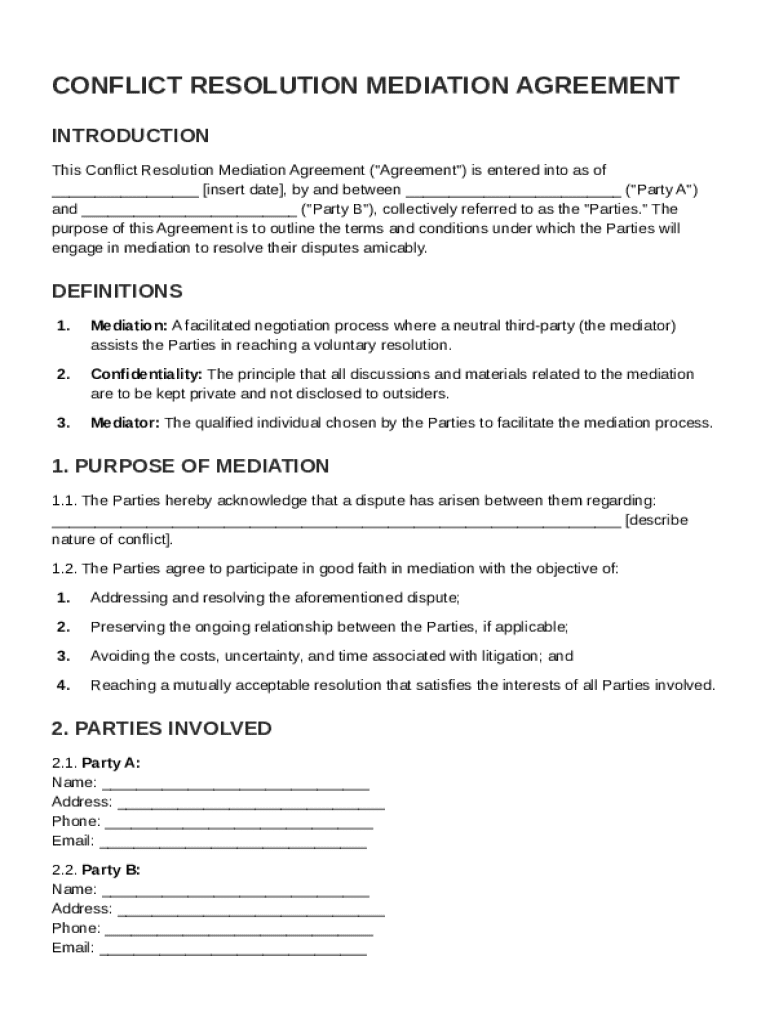







Definition and Meaning
A Conflict Resolution Mediation Agreement Template serves as a framework to help two parties—often referred to as Party A and Party B—resolve disputes amicably through structured mediation. This agreement delineates the primary concepts involved in mediation, including the mediator's role, confidentiality obligations, and participation directives for all parties involved. By formalizing the mediation process in writing, the document aids in ensuring both parties adhere to agreed-upon rules and terms. The template is grounded on principles of good faith and emphasizes the confidentiality of communication during mediation.
Core Elements
- Mediation Role: Outline of what mediation entails and how it differs from litigation or arbitration.
- Confidentiality: Ensures that all discussions within mediation remain private.
- Mediator Involvement: Details the responsibilities and impartiality required of the mediator during the process.
Key Elements of the Conflict Resolution Mediation Agreement Template
The Conflict Resolution Mediation Agreement Template encompasses specific components vital for generating a comprehensive dispute resolution strategy. The primary sections of this template include:
Mediation Process
- Initiation: Detailing how mediation begins and the obligations of each party.
- Selection of Mediator: Elaborating on how to choose an impartial mediator acceptable to both parties.
- Session Conduct: Guidelines for how mediation sessions are managed, focusing on fairness and interaction.
Documentation and Resolution
- Agreement Documentation: Procedures for documenting any resolutions reached during mediation.
- Resolution Terms: Clear articulation of any agreements derived from the mediation process.
- Cost Allocation: Explanation of how costs related to mediation will be handled between the parties involved.
Steps to Complete the Conflict Resolution Mediation Agreement Template
Completing the Conflict Resolution Mediation Agreement Template involves several thorough and structured steps:
- Identification of Parties: Clearly state the names and roles of Party A and Party B at the outset of the document.
- Agreement on Mediation Terms: Both parties must agree on specific terms, including confidentiality clauses and mediator authority.
- Mediator Selection: Choose a mutually acceptable mediator and document their agreement to remain impartial.
- Drafting Process: Jointly draft the terms of mediation, emphasizing agreed outcomes and any during-mediation conduct rules.
- Signing: All parties, including the mediator, must sign the completed agreement to confirm consent and readiness.
Examples
- Business Disputes: Often, businesses use this template to amicably resolve conflicts regarding contractual terms without resorting to legal proceedings.
- Family Mediation: Families experiencing internal disagreements, such as inheritance disputes, also find this template beneficial in creating an equitable solution.
Important Terms Related to Conflict Resolution Mediation Agreement Template
A Conflict Resolution Mediation Agreement Template includes several crucial terms that define its scope and function:
Fundamental Terms
- Mediation: A voluntary, non-binding process guided by a neutral third party.
- Confidentiality: Protection of shared information during mediation sessions, binding all parties from disclosure.
- Good Faith Participation: An obligation for all parties to genuinely engage in negotiations.
Supplementary Concepts
- Neutrality: The mediator's lack of bias or interest in the conflict's outcome.
- Enforceability: While the process is non-binding, the documented resolution terms can be made legally binding through separate agreements.
Legal Use of the Conflict Resolution Mediation Agreement Template
Understanding the legal implications of using the Conflict Resolution Mediation Agreement Template is vital to harness its full potential:
Legal Standing
- Voluntary Agreement: The template emphasizes that participation in mediation is a voluntary choice of the involved parties.
- Binding Elements: Post-mediation agreements can be made binding if documented separately and signed by all parties.
Governing Law
- Jurisdictional Considerations: The mediation proceedings and subsequent agreements may be influenced by state law, which should be explicitly mentioned within the template to ensure compliance.
Who Typically Uses the Conflict Resolution Mediation Agreement Template
The Conflict Resolution Mediation Agreement Template is utilized by a diverse range of individuals and organizations seeking structured conflict resolution:


Common Users
- Businesses: Companies engaging in contractual, employment, or partnership disputes.
- Nonprofits: Organizations addressing internal policy disagreements or collaboration issues.
- Families: Those resolving disputes regarding familial issues such as wealth management or caregiving arrangements.

Application Scenarios
- Community Conflicts: Occasionally utilized by local governments to mediate resident disputes.
- Educational Institutions: Schools implement this template to address conflicts among faculty or between students and administration.
State-Specific Rules for the Conflict Resolution Mediation Agreement Template
The application of the Conflict Resolution Mediation Agreement Template can vary significantly across different states, each potentially imposing unique requirements:
State Variations
- Mediation Statutes: Certain states may require specific language or provisions to be included in mediation agreements.
- Filing and Documentation: States may have different rules regarding how documentation from mediation is filed or recorded for legal purposes.
By understanding these state-specific distinctions, users can adequately prepare to adhere to local laws and maximize the efficacy of their mediation efforts.
Examples of Using the Conflict Resolution Mediation Agreement Template
Real-world examples highlight the utility and adaptability of the Conflict Resolution Mediation Agreement Template across various scenarios:
Business Conflict
- Partnership Discrepancy: A scenario where two partners use the template to delineate mutual interests and outline shared business goals, fostering improved cooperation.
Family Issues
- Inheritance Settlement: Addressing complex emotions and financial considerations, a family may use the template to agree on asset distribution harmoniously.
These examples illustrate the template's capability to facilitate a mutually beneficial outcome across various contexts.




