






Definition & Purpose of the Conflict Resolution Agreement Template
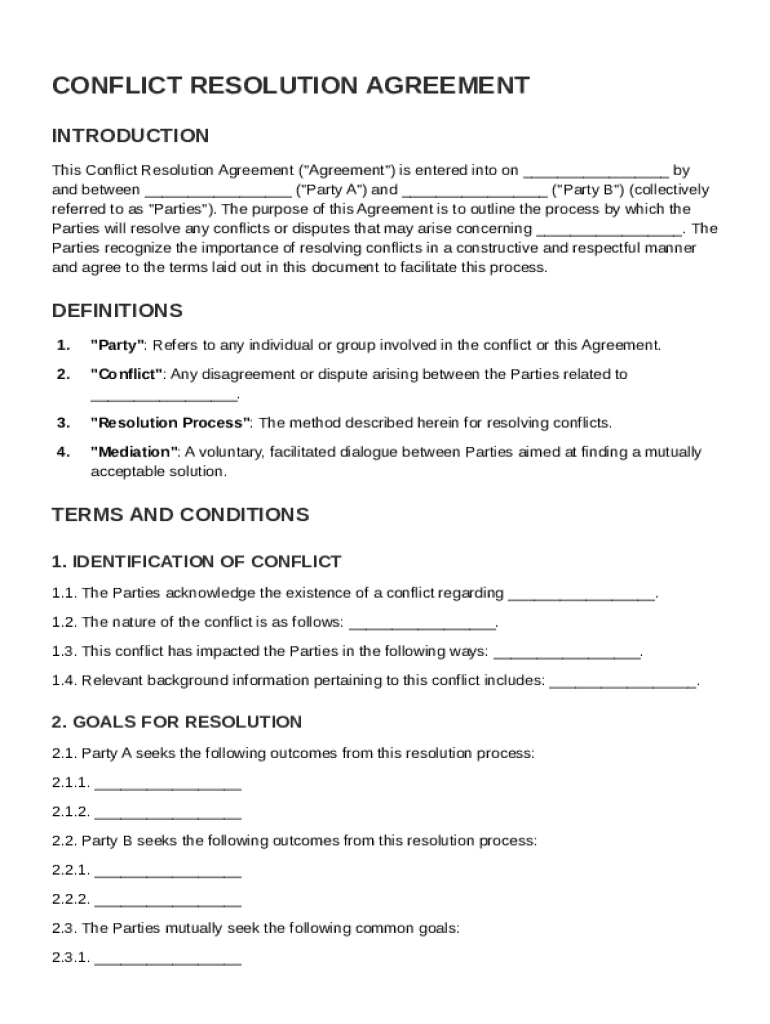
The Conflict Resolution Agreement Template is a formal document designed to facilitate the resolution of disputes between two parties, typically referred to as Party A and Party B. It outlines the structured process for addressing conflicts, emphasizing methods such as informal discussions, mediation, and binding arbitration as necessary steps for reaching an amicable solution. Terms are clearly defined within the document to avoid ambiguity, and roles and responsibilities for each party are established to guide the resolution process. The template also includes timelines for resolution, confidentiality provisions to ensure the privacy of involved parties, and a mutual release of claims once the conflict is resolved successfully.
How to Use the Conflict Resolution Agreement Template
To effectively use the Conflict Resolution Agreement Template, begin by identifying the parties involved in the dispute. Each party should review the template to understand the processes outlined for resolving their conflict. It is essential to customize sections that pertain to specific roles, terms, and responsibilities relevant to the parties' unique circumstances. During the process, informal discussions should be attempted first. If these do not yield a resolution, mediation might be engaged, followed by arbitration if needed. Each step should be documented in the agreement to maintain a clear record and timeline of actions taken. Finally, ensure all modifications are agreed upon by both parties, and finalize by having the document signed and dated by each party involved.
Key Elements of the Conflict Resolution Agreement Template
The template consists of several crucial elements that contribute to its effectiveness. First, it includes detailed definitions of key terms used throughout the document, ensuring all parties have a mutual understanding of the language and processes described. It contains a section on roles and responsibilities, which delineates what each party is expected to do throughout the resolution process. Confidentiality clauses are inserted to safeguard sensitive information, and timelines are specified to ensure the process progresses without unnecessary delays. Also crucial are sections on binding arbitration and mutual release of claims, both of which are integral in finalizing any agreements reached.
Steps to Complete the Conflict Resolution Agreement Template
- Identify the Parties: Clearly specify Party A and Party B, ensuring names and contact information are accurately recorded.
- Define the Dispute: State the nature of the conflict and pertinent details that need addressing.
- Outline Resolution Methods: Detail informal discussions, mediation, and arbitration processes, including conditions triggering escalation to the next step.
- Establish Timelines: Set realistic timelines for each resolution phase to maintain momentum and accountability.
- Insert Confidentiality Clause: Ensure a clause is included to protect shared information during and after the resolution.
- Mutual Release of Claims: Define the conditions under which parties will relinquish all claims upon resolution.
- Sign and Date: Both parties should sign and date the document to signify agreement and commitment to the resolution process.
Legal Use of the Conflict Resolution Agreement Template
The template is governed by the laws of a specified state, ensuring that its use aligns with regional legal standards. It provides a legally binding framework for resolving disputes, offering a structured approach that can be enforceable in court if needed. Parties using this template should consult with legal counsel to adapt the agreement to comply with state-specific statutes and ensure that it provides adequate protection and enforceability under local jurisdiction.
State-Specific Rules for the Conflict Resolution Agreement Template
Legislation affecting the enforceability and execution of conflict resolution agreements may vary by state. Key elements like confidentiality provisions, the role of mediators or arbitrators, and the binding nature of arbitration decisions can differ. It is essential for users to familiarize themselves with and incorporate any state-specific requirements. Legal advice from a local attorney might be required to ensure the agreement adheres to all relevant laws and offers the protection intended.
Important Terms Related to the Conflict Resolution Agreement Template
Understanding the terminology used in the Conflict Resolution Agreement is vital for effective execution. Definitions cover terms such as “mediation,” which refers to a facilitated negotiation with a neutral third-party, and “arbitration,” which is a binding dispute resolution process resulting in a decision enforceable by law. Other key terms include “confidentiality,” safeguarding all communications between parties, and “mutual release of claims,” meaning all parties agree to relinquish further claims upon resolving the conflict. These terms, among others, delineate the framework and procedures outlined within the document, underscoring the importance of a mutual understanding for effective resolution.
Examples of Using the Conflict Resolution Agreement Template
This template is applicable in various real-world scenarios. For example, it can be used in business disputes between partners over contractual obligations or clarifying responsibilities. In community settings, neighbors might employ the template to resolve conflicts over shared spaces or resources. Workplace conflicts, where disputes arise over work conditions or inter-personal relationships, may also see effective resolution through this structured approach. In each instance, the systematic process outlined in the template provides a clear path to resolving issues constructively and legally.