



01. Edit your form online
Type text, add images, blackout confidential details, add comments, highlights and more.

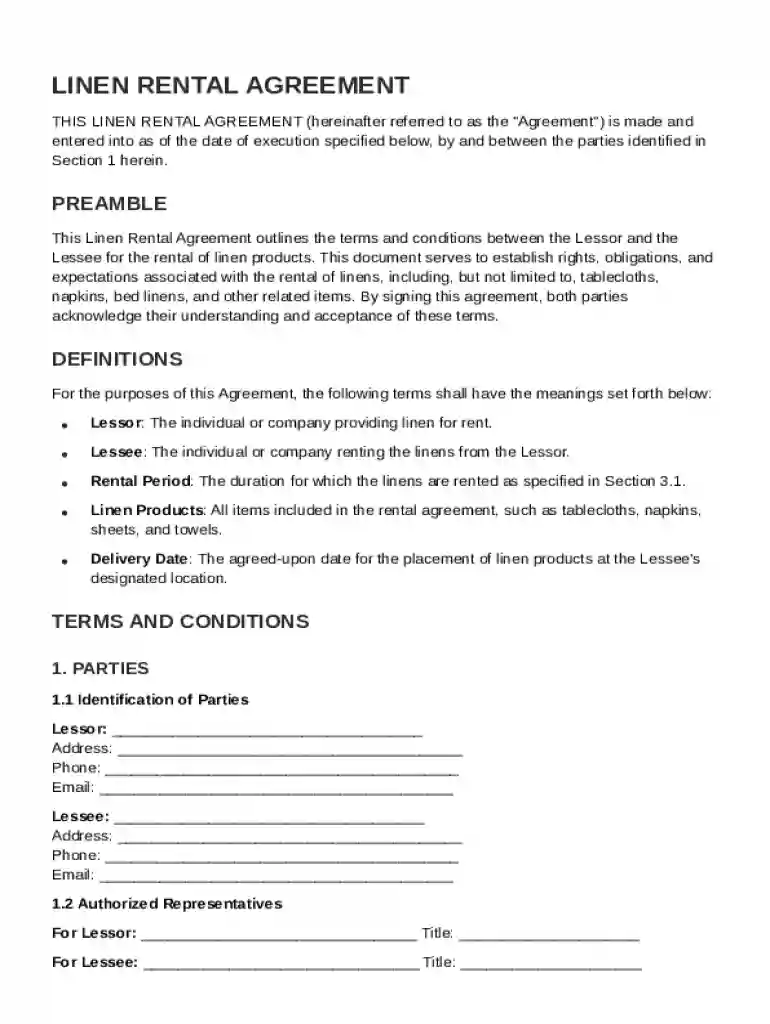
Type text, add images, blackout confidential details, add comments, highlights and more.

Draw your signature, type it, upload its image, or use your mobile device as a signature pad.

Send it via email, link, or fax. You can also download it, export it or print it out.
The Linen Rental Contract Template is a legally binding agreement between a Lessor—typically a linen rental company—and a Lessee, the individual or business renting the linen products. The contract outlines the terms under which linen products will be rented, ensuring both parties clearly understand their rights and obligations. This agreement includes key terms and definitions, rental period specifications, payment details, delivery and return procedures, responsibilities for damages, indemnification clauses, termination conditions, governing law, and miscellaneous provisions. Each element aims to establish a comprehensive framework that safeguards the interests of both the Lessor and the Lessee.
Identify Parties: Clearly specify the names and contact details of the Lessor and Lessee. Ensure all parties to the contract are accurately documented to avoid future disputes.
Define Rental Period: State the commencement and expiration dates of the rental period. This section should also cover provisions for extending the rental duration if necessary.
Outline Payment Terms: Detail the payment structure, including the total rental fee, any security deposits required, and the timeline for payments. Clearly defined payment terms prevent misunderstandings about when and how payments should be made.
Set Delivery and Return Conditions: Include specific instructions on the logistics of delivering the linens to the Lessee and returning them to the Lessor after use. This section should address handling procedures and any associated costs.
Responsibility for Damages: Establish the conditions under which the Lessee is responsible for damages to the rented linens. This clause is vital for determining liability and compensation if products are returned in unsatisfactory condition.
Signatures and Dates: Both parties must sign and date the agreement, acknowledging their acceptance of all terms and conditions. This final step transforms the document into a legally enforceable contract.
This template serves as a contractual safeguard for both Lessors and Lessees, ensuring legal protection through clearly outlined obligations and rights. Adhering to the ESIGN Act, the agreement may be signed electronically, providing the same legal standing as a paper contract. Both parties are encouraged to seek legal advice to comprehend fully their responsibilities and liabilities under the agreement's terms.
DocHub offers extensive support for editing and managing contracts like the Linen Rental Contract Template. The platform accepts various file formats, ensuring compatibility with documents that may originate from software like Microsoft Word, Google Docs, or directly as a PDF. DocHub's integration with Google Workspace simplifies the process of importing and exporting files, promoting efficient workflow management.
In a real-world scenario, a hotel may use the Linen Rental Contract Template to procure linens for a large event, such as a wedding, ensuring accountability for the condition and return of the linens. Another example is a restaurant that rents linens for a temporary outdoor seating arrangement, using the contract to manage all aspects of the linen rental, from delivery to return.
While this template is designed for use in the United States, contract laws can vary from state to state. It's crucial to understand any specific state requirements that may impact the use of a linen rental contract, including particular consumer protection laws or regulatory requirements. Both Lessors and Lessees should ensure the template meets their state's legal standards before executing the contract.
At DocHub, your data security is our priority. We follow HIPAA, SOC2, GDPR, and other standards, so you can work on your documents with confidence.




This letter shall be our Agreement regarding the Linen Rental and Laundry Services described below (Services) The initial term of this contract is twelve (12
This module focuses on the legal aspects of renting and common problem areas: rental agreements, security deposits, notices, and evictions.


