






Definition & Meaning
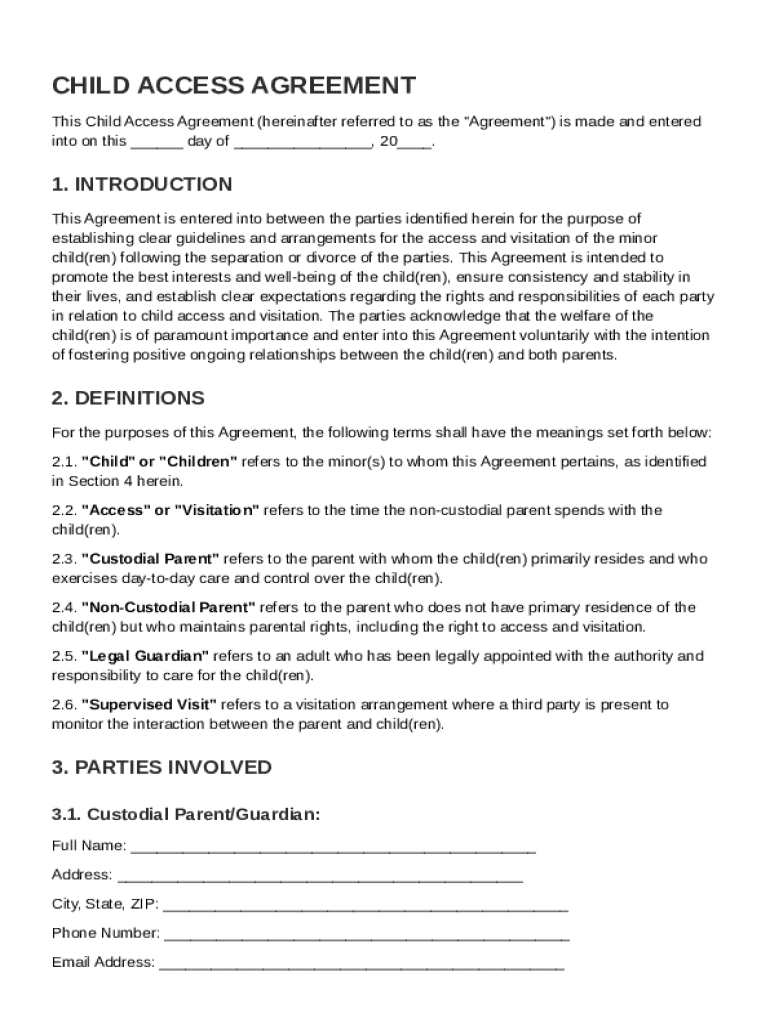
A Child Access Agreement Template serves as a structured document that outlines the specific terms and conditions for the visitation and access to children following the separation or divorce of their parents. This template is designed to prioritize the best interests of the child, ensuring that both custodial and non-custodial parents have clearly defined roles and responsibilities. The agreement aims to facilitate positive relationships between the child and both parents while establishing practical schedules and procedures that minimize conflicts.
Primary Ornaments of the Child Access Agreement
- Visitation Schedules: Clearly defined times and dates when children will spend time with non-custodial parents.
- Communication Guidelines: Instructions on how and when parents can communicate with their children when not physically together.
- Dispute Resolution: Processes for resolving disagreements regarding the terms of the agreement, often involving mediation or counseling.
How to Use the Child Access Agreement Template
Utilizing a Child Access Agreement Template involves careful consideration of the parent's and child's needs followed by the accurate completion of specific fields. Parents should customize the template to reflect their unique circumstances and concerns. This involves consulting with a legal professional when necessary to ensure that all legal obligations and rights are addressed.
Steps to Customize the Template
- Consultation: Meet with legal or mediation professionals to understand the necessary components specific to your situation.
- Template Customization: Modify the template to fit your family's requirements, including adjusting visitation times and adding specific communication rules.
- Review and Edit: Assess the document thoroughly for completeness and accuracy, involving feedback from legal experts if needed.
Steps to Complete the Child Access Agreement Template
Completing a Child Access Agreement Template involves several steps to ensure that all relevant aspects are addressed. Here's a breakdown of the essential steps:
- Gather Information: Collect all necessary details about the child's schedule, school hours, and extracurricular activities.
- Define Access Terms: Clearly outline the visitation rights, including regular schedules, holidays, and special occasions.
- Establish Communication Rules: Set parameters for how and when each parent can communicate with the child during visits.
- Add Conditions for Changes: Include terms for potential adjustments to the agreement when circumstances change.
- Signatures and Approval: Once finalized, both parties need to sign the document to make it legally binding.
Key Elements of the Child Access Agreement Template
This template includes several critical components designed to provide comprehensive coverage of child visitation and related responsibilities. Each element plays a vital role in the overall structure and utility of the agreement.
Core Components
- Supervised Visitation Provisions: Guidelines for cases where visits need to be monitored to ensure the child's safety.
- Transportation Arrangements: Details about who is responsible for dropping off and picking up the child.
- Medical and Educational Decisions: Provisions regarding how decisions about the child's healthcare and schooling will be made.
Important Terms Related to the Child Access Agreement Template
The template encompasses several important terms that parents and legal practitioners should be aware of. Understanding these terms ensures clarity and precision in the agreement.
- Custodial Parent: The parent with whom the child lives most of the time.
- Non-Custodial Parent: The parent who has visitation rights but with whom the child does not live full-time.
- Mediation: A process involving a neutral third party to assist in resolving disputes.
State-Specific Rules for the Child Access Agreement Template
Given the legal nature of Child Access Agreements, understanding state-specific rules is crucial. Each U.S. state has unique regulations that may impact the format or required content of the template.
Examples of State Variations
- Visitation Standards: Some states have minimum visitation standards to ensure fair access to both parents.
- Amendment Processes: The procedure for altering the agreement can differ significantly based on state legislation.
Who Typically Uses the Child Access Agreement Template
This template is widely used by divorced or separated parents who need a formalized document to outline child visitation arrangements. It is also utilized by legal practitioners advising on family law matters, ensuring that arrangements are legally compliant and tailored to the client’s needs.


Professionals Involved
- Family Lawyers: Help draft and review the document to ensure it meets legal requirements.
- Mediators: Assist in negotiating terms between parents to create a mutually agreeable solution.
Examples of Using the Child Access Agreement Template
Real-world scenarios where a Child Access Agreement Template has proven beneficial can provide insights and lessons for others in similar situations. These examples highlight the template's flexibility and utility.
Real-World Applications
- High Conflict Cases: Structured agreements have effectively reduced misunderstandings and conflicts in contentious custody cases.
- Flexible Arrangements: The template allows for modifications, accommodating changes in parent schedules or unexpected events affecting visitation plans.