




01. Edit your form online
Type text, add images, blackout confidential details, add comments, highlights and more.

Type text, add images, blackout confidential details, add comments, highlights and more.

Draw your signature, type it, upload its image, or use your mobile device as a signature pad.

Send it via email, link, or fax. You can also download it, export it or print it out.
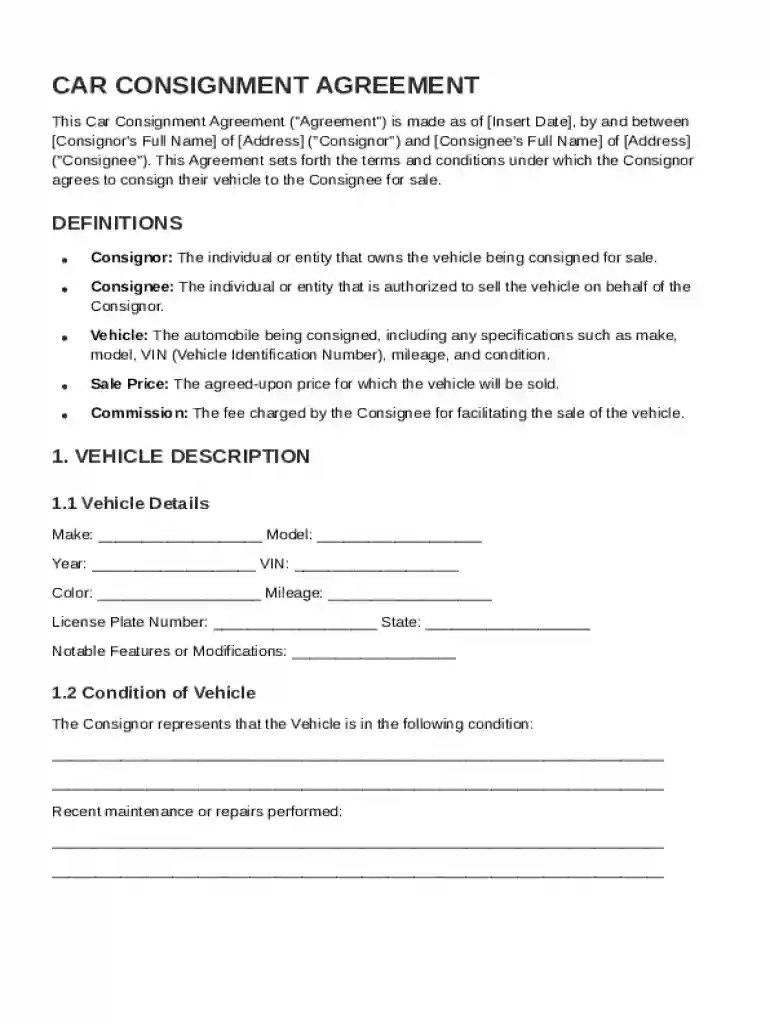
A Car Consignment Agreement is a legally binding document that outlines the terms between two parties: the Consignor, who owns the vehicle, and the Consignee, who is authorized to sell the vehicle on behalf of the Consignor. This agreement specifies the responsibilities of each party, including how the sale process is conducted, the handling of the vehicle, obligations regarding maintenance, and the commission structure. A clear understanding of this document is essential to protect both parties' interests throughout the consignment process.
This template is predominantly utilized by individual vehicle owners looking to sell their cars through professional dealerships or consignment agents. Dealerships leverage this agreement to formalize their relationships with sellers and ensure that the terms of consignment are clear and legally enforceable. This agreement is also frequently used by car collectors who manage multiple vehicle sales, allowing streamlined administration of sales processes.


To be legally enforceable, the agreement must comply with applicable state laws where the consignment takes place. This includes adhering to any required disclosures about the vehicle's condition and ensuring that all parties have the capacity and authority to enter into the agreement. Compliance with privacy laws, especially when handling sensitive information like financial details, is also crucial. Legal advice can ensure the agreement adheres to all relevant legal standards.
States may have specific regulations governing vehicle consignment, including registration requirements for dealers and consignees. It is essential to consult state laws to ensure compliance with any sales reporting obligations, disclosure requirements, and tax regulations that may impact the consignment process. For instance, states like California have detailed regulations about consignment used car sales that need to be addressed in the agreement.
The Car Consignment Agreement Template can be accessed and modified using various document editing software compatible with DocHub, such as Microsoft Word or Google Docs. Additionally, digital completion and signing can be facilitated using electronic signature tools integrated within software systems that support the ESIGN Act, ensuring that your document retains its legal validity when signed digitally.
Understanding the differences in consignment laws across states is essential for creating an agreement that complies with local regulations. Some states may mandate disclosures about a vehicle's prior accidents, while others might require specific standards for the consignment sale. Thus, adapting the agreement to reflect these state-specific rules ensures legality and enforcement across different jurisdictions.
Real-world scenarios can help illustrate the practical use of this agreement. For example, a car collector in New York might use this template to consign a rare vehicle through a prestigious dealership. Alternatively, an individual in Texas selling their car could employ the agreement to ensure transparency and security when working with a consignment service, guaranteeing that all terms, including price and commission, are documented and agreed upon.
At DocHub, your data security is our priority. We follow HIPAA, SOC2, GDPR, and other standards, so you can work on your documents with confidence.



Jul 3, 2026 Uploads scanned copies of Form 21, Form 22, insurance, PAN, Aadhaar, and address proof. Pays the Vahan registration fee + HSRP fee + smart cardRead more
Part 2. Effectiveness of Security Agreement; Attachment of Security Interest; Rights of Parties to Security Agreement. [Subpart 1. Effectiveness and Attachment].Read more
The consignment agreement must explain who is responsible for damage or misuse to the vehicle, and the permitted uses the consignee may make. Then, beforeRead more


