Definition & Meaning
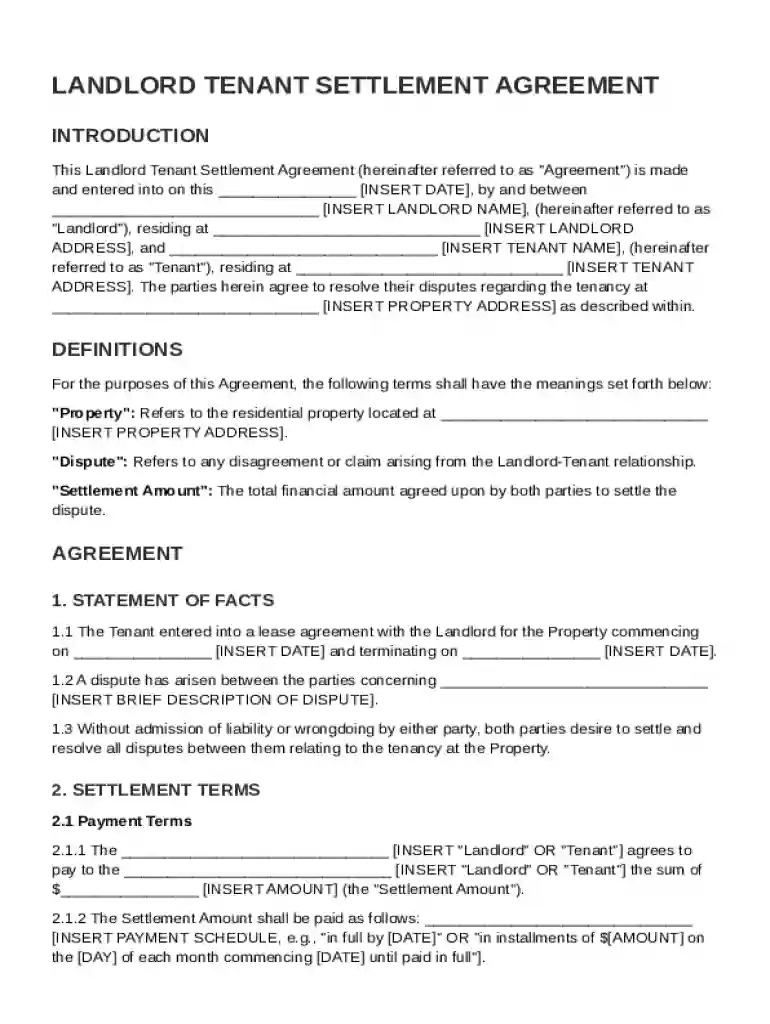
The Landlord Tenant Settlement Agreement Template is a legally binding document designed to outline the terms for resolving disputes between landlords and tenants concerning a specific property. It is typically used to settle issues such as unpaid rent, property damage, or lease violations without resorting to legal proceedings. Within the agreement, both parties agree on settlement terms, which may include financial compensation or specific actions to be taken, such as repairs or moving out by a specified date. It aims to facilitate an amicable resolution, providing a mutual release of claims and often includes confidentiality clauses to protect both parties' privacy.
Key Elements of the Landlord Tenant Settlement Agreement Template
Understanding the key elements of the Landlord Tenant Settlement Agreement Template is crucial for its effective use:
- Parties Involved: Clearly identifies the landlord and the tenant, including their full legal names and contact information.
- Property Details: Describes the rental property address and any relevant lease details.
- Settlement Terms: Specifies the agreed-upon terms for resolving the dispute, including any monetary compensation, actions to be taken by either party, and timelines.
- Mutual Release of Claims: Ensures both parties waive the right to pursue any further claims related to the dispute.
- Confidentiality Clause: Specifies whether the terms of the agreement are to be kept confidential and to what extent.
- Governing Law: Determines which state laws will apply to the agreement.
- Signatures: Requires the signatures of both parties to indicate their acceptance of the terms.
Steps to Complete the Landlord Tenant Settlement Agreement Template
Filling out a Landlord Tenant Settlement Agreement Template involves several steps to ensure all necessary details are accurately captured and agreed upon:
- Gather Information: Collect all relevant details about the dispute, including lease agreements, correspondence, and any relevant financial records.
- Draft the Agreement: Use the template to start drafting the agreement, ensuring all the particulars of the dispute resolution are included.
- Review Key Elements: Make sure each section, such as settlement terms, confidentiality, and governing laws, is completed and agreed upon by both parties.
- Consult Legal Advice: Before signing, consider consulting with a legal professional to review the document for completeness and legal compliance.
- Signature Collection: Obtain signatures from both parties involved, and keep a copy for each as well as a backup stored securely.
Important Terms Related to Landlord Tenant Settlement Agreement Template
Several terms are essential for understanding this form:
- Arbitration: A method of dispute resolution sometimes referenced in the agreement, where an impartial third party decides the outcome.
- Mediation: An alternative to arbitration, involving a negotiator to help both parties reach a settlement.
- Breach of Lease: Refers to any actions by the tenant or landlord that violate the terms of the original lease agreement.
- Indemnification: A provision that may require one party to compensate the other for certain costs related to the dispute.
Legal Use of the Landlord Tenant Settlement Agreement Template
When employing the Landlord Tenant Settlement Agreement Template, it's important to adhere to legal standards to ensure enforceability:
- Compliance with State Laws: Ensure the agreement conforms to the specific landlord-tenant laws applicable in the property’s state.
- Voluntary Consent: Both parties must enter the agreement voluntarily, without coercion or undue pressure.
- Consideration: Ensure that there is an exchange of value, such as a cash settlement or agreement to vacate, included in the agreement.
- Capacity: Confirm that both parties have the legal capacity to sign the agreement, i.e., they are of legal age and sound mind.
State-Specific Rules for the Landlord Tenant Settlement Agreement Template
The specifics of a Landlord Tenant Settlement Agreement Template can vary significantly depending on state laws:
- Security Deposit Regulations: Some states have specific stipulations on how security deposits should be handled within settlements.
- Notice Requirements: Different states require varying notice periods that must be adhered to before an agreement is finalized.
- Dispute Procedures: State laws often dictate the procedures to resolve disputes outside of court, specifying when and how a settlement agreement can be used.
- Statutory Compliance: Ensuring the agreement complies with any state-specific statutory requirements is critical for its enforceability.
Examples of Using the Landlord Tenant Settlement Agreement Template
Real-world applications of the Landlord Tenant Settlement Agreement Template illustrate its practical use:
- Resolution of Rent Arrears: A tenant and landlord agree on a payment plan for overdue rent, outlined clearly in the agreement to avoid future disputes.
- Damage Repair Agreement: In cases where the tenant has caused property damage, the template may specify the tenant’s responsibility for repairs or compensation.
- Lease Termination: When both parties agree to end the lease early, the template can formalize the arrangement, detailing move-out dates and any final obligations.
Why Should You Use a Landlord Tenant Settlement Agreement Template?
Utilizing a Landlord Tenant Settlement Agreement Template offers various benefits:
- Clarity and Formality: Provides clear documentation of agreed-upon terms, reducing the potential for misunderstandings.
- Legal Protection: By clearly outlining each party’s responsibilities, the agreement offers legal protection if disputes arise later.
- Cost-Effectiveness: Settling disputes with a template is often more affordable than pursuing legal action in court.
- Efficiency: Templates streamline the resolution process, allowing parties to reach an agreement faster.