






Definition and Meaning
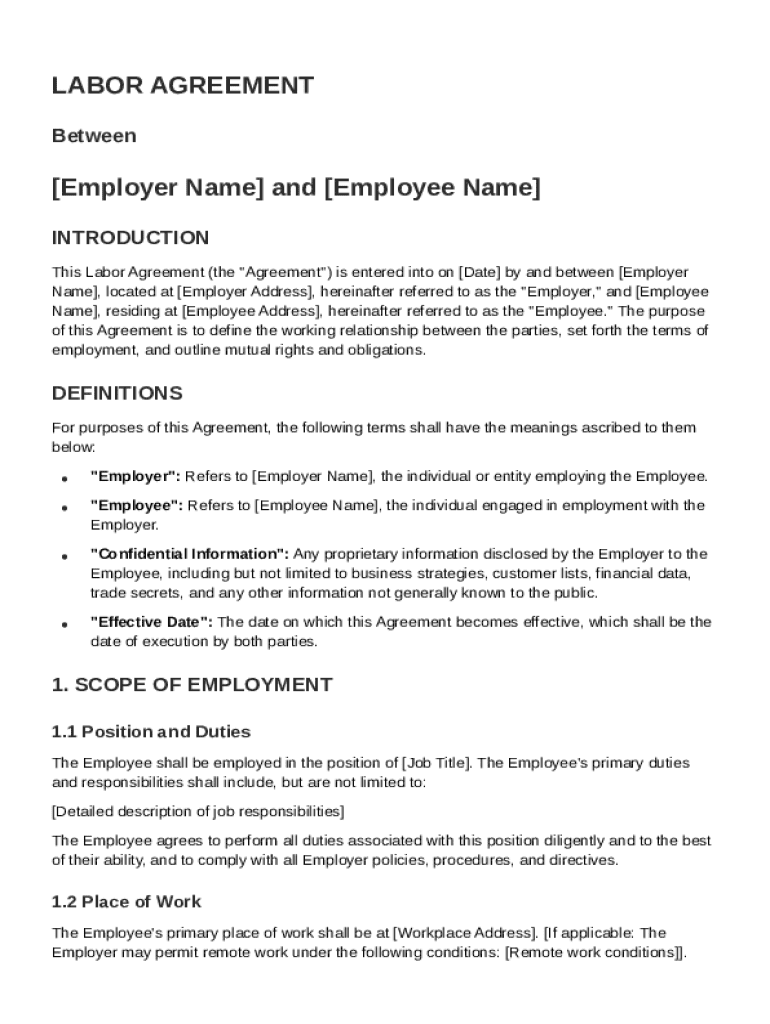
A "Labor Agreement Template" is a standardized document designed to outline the terms and conditions of employment between an employer and an employee. It serves as a formal written understanding that includes essential components such as job responsibilities, compensation, benefits, work schedules, confidentiality obligations, termination conditions, and dispute resolution procedures. By providing a structured framework, this template helps ensure mutual understanding and agreement on rights and obligations within the working relationship.
This template is crucial for creating transparent and legally compliant agreements. It acts as a reference point for resolving disputes and ensures clarity from the outset. Employers can customize the template to match specific roles and industries, making it a versatile tool for various employment arrangements.
Key Elements of the Labor Agreement Template
An effective Labor Agreement Template typically includes several core components that structure the employment relationship comprehensively:
-
Job Responsibilities: Clearly defines the duties and tasks expected from the employee. This section helps prevent misunderstandings about job roles.
-
Compensation: Details salary, bonuses, or other forms of remuneration. It may specify payment schedules and any additional compensation-related terms like overtime.
-
Benefits: Outlines employee entitlements like health insurance, retirement plans, paid leave, and other perks that are part of the employment package.
-
Work Schedule: Specifies the expected work hours, days, and locations. This section can also address flexibility options, remote work policies, and overtime expectations.
-
Confidentiality Agreements: Establishes the responsibility to protect sensitive company information. It ensures that trade secrets, proprietary data, and confidential materials remain secure.
-
Termination Conditions: Defines the conditions under which either party can end the employment relationship, including necessary notice periods and acceptable reasons for termination.
-
Dispute Resolution Procedures: Provides mechanisms for addressing grievances and disputes, such as mediation or arbitration, to avoid litigation.
Each element can be tailored to fit the specific requirements of the employer or industry, allowing for a degree of customization that meets individual organizational needs.
Steps to Complete the Labor Agreement Template
To effectively use a Labor Agreement Template, follow these structured steps:
-
Review the Template: Start by thoroughly reading the entire template to understand its structure and language.
-
Customize Key Sections: Modify areas such as job responsibilities, compensation, and benefits to accurately reflect the specific terms agreed upon.
-
Include Specific Legal Provisions: Depending on the state or industry, certain legal stipulations must be adhered to, such as adherence to state labor laws or industry regulations.
-
Validate Confidentiality Clauses: Ensure that any confidentiality agreements meet the necessary legal standards and adequately protect business interests.
-
Consult Legal Experts: It is advisable to have a legal professional review the document to ensure compliance and prevent potential legal issues.
-
Discuss with Employee: Engage in open discussions with the prospective employee to clarify and agree upon each term within the document.
-
Finalize and Sign: Once all parties are in agreement, finalize the document with signatures from both the employer and employee, keeping a copy for records.
-
Distribute Signed Copies: Ensure that both parties retain a signed copy for future reference and verification.
By following these steps, employers can ensure that the labor agreement is both comprehensive and legally sound.
State-Specific Rules for the Labor Agreement Template
Labor laws can vary significantly across different states, impacting how employment agreements are drafted and enforced. Here are some key considerations when tailoring a Labor Agreement Template to state-specific requirements:
-
Wage and Hour Laws: States may have varying minimum wage rates and overtime rules that need to be incorporated into the compensation section of the agreement.
-
At-Will Employment: While many states follow at-will employment policies, some require specific language or additional disclosures in labor agreements.
-
Non-Compete Clauses: The enforceability of non-compete clauses can differ, affecting how they are drafted in various states.
-
Employee Benefits: State laws might mandate additional benefits like family leave or health insurance provisions.
-
Immigration and Work Authorization: Requirements for verifying employment eligibility may vary, necessitating compliance with state regulations.
Employers should consult with legal professionals who have expertise in state employment laws to ensure that the labor agreement respects local legislative requirements and protects their interests.
Legal Use of the Labor Agreement Template
Labor agreements are legally binding contracts that must comply with federal and state employment laws. The following legal considerations are essential when using a Labor Agreement Template:
-
Employment Laws Compliance: Ensure that all terms adhere to the Fair Labor Standards Act (FLSA) and relevant state employment statutes.
-
Non-Discrimination Clauses: Include language that complies with the Equal Employment Opportunity Commission (EEOC) guidelines to prevent discrimination based on race, gender, age, or other protected categories.
-
Data Protection and Privacy: Incorporate clauses that comply with data protection laws, particularly if dealing with employee personal data.
-
Legal Review: Regularly update and review labor agreements to comply with changing legal standards and new legislative requirements.
Employers must be diligent in adhering to these legal use considerations to ensure the labor agreement is enforceable and provides adequate protection for both parties involved.
Examples of Using the Labor Agreement Template
Various practical applications demonstrate the utility of a Labor Agreement Template across different business contexts:
-
Onboarding New Employees: Use the template as part of the hiring package to set clear expectations and foster a transparent working relationship from day one.
-
Freelancer and Contractor Arrangements: Although primarily designed for traditional employment, the template can be adapted for freelance or contractor agreements with suitable modifications.
-
Merger and Acquisition Scenarios: When companies merge or are acquired, this template helps standardize employment terms for transitioning employees.
-
Temporary Employment: Adjust the template to suit short-term hires, ensuring all relevant terms are captured.
-
Start-Up Environments: Start-ups can use the template to efficiently establish uniform policies and agreements compliant with legal standards.
These examples illustrate how the template can be used flexibly across different scenarios, providing consistency and clarity in employment relationships.
Who Typically Uses the Labor Agreement Template
The Labor Agreement Template is a crucial tool for a wide range of users who need to formalize employment relationships:
-
Small and Medium Enterprises (SMEs): Often use the template as a cost-effective way to ensure compliance and protect their interests without extensive legal resources.
-
Human Resources Departments: They utilize the template to create standardized employment contracts and streamline onboarding processes.
-
Legal Advisors: They can customize and review agreements for clients, ensuring that all legal considerations are met.
-
Business Owners and Executives: By using this template, they can quickly establish uniform employment practices across different branches or departments.
-
Start-Up Founders: They use the template to efficiently manage hiring processes as they scale their businesses.
These users rely on the Labor Agreement Template to safeguard their interests while maintaining clear and lawful employment practices.


Important Terms Related to the Labor Agreement Template
Understanding key terms associated with a Labor Agreement Template is vital for effective application and compliance:
-
Probationary Period: The initial period during which a new employee is assessed for suitability to the role.
-
Collective Bargaining Agreement: Refers to the negotiated contract between employers and a group of employees aimed at establishing terms of employment.
-
Non-Disclosure Agreement (NDA): A legally binding contract that prevents parties from sharing confidential information.
-
Severance Package: Compensation provided to an employee upon termination, which may include additional benefits.
-
Intellectual Property Ownership: Terms that define who owns any intellectual creations made by the employee during their tenure.
By familiarizing themselves with these terms, parties involved in drafting or signing a labor agreement can better understand the obligations and rights associated with the employment relationship.