






Definition and Purpose of the Internal Secondment Agreement Template
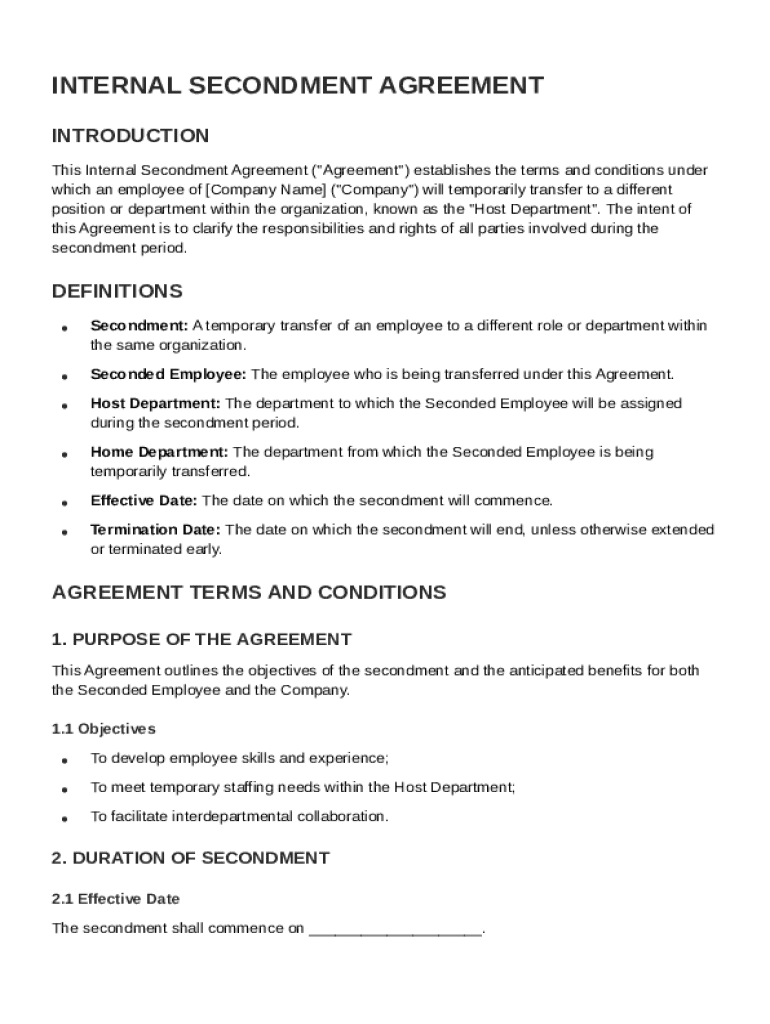
The Internal Secondment Agreement Template is a pivotal document used to formalize the temporary assignment of an employee to another position or department within the same organization. It serves to lay down clear terms and conditions that govern this temporary transfer, delineating the responsibilities and expectations of both the employer and the employee. This template ensures clarity by specifying roles, responsibilities, compensation, and the duration of the secondment. By outlining these essential components, the agreement helps to avoid misunderstandings and provides a legal framework that supports both parties throughout the period of secondment.
Key Components of the Agreement
- Position Details: Specifies the new role or department to which the employee will be seconded, including any changes in job title or duties.
- Duration of Secondment: Outlines the start date and the expected end date of the secondment, ensuring both parties have a clear understanding of the timeframe.
- Compensation and Benefits: Details any adjustments in salary, bonuses, or benefits that apply during the secondment period.
- Termination Conditions: Provides conditions under which the secondment agreement may be terminated prematurely by either party.
How to Use the Internal Secondment Agreement Template
Organizations can streamline their internal transfer processes by utilizing the Internal Secondment Agreement Template. To effectively employ this template, begin by identifying the employee who will be seconded, ensuring that both their current and proposed roles are clearly defined. It’s essential to tailor core sections of the template to reflect specifics of the secondment, such as contractual terms and employment conditions. Clearly delineate any changes in the employee’s reporting structure and prescribed duties.
Steps for Customizing the Template
- Identify the Participants: Clearly indicate the details of involved parties, namely the employee and the departments.
- Customize Role Details: Adapt the section on job roles to reflect precise responsibilities during the secondment.
- Adjust Compensation Clauses: Modify details on salary, benefits, and any additional compensation applicable during the temporary role.
- Review Legal Clauses: Verify that confidentiality and termination clauses align with organizational policies and legal standards.
Legal Use and Implications
The Internal Secondment Agreement holds significant legal weight, as it binds both the employer and the employee to agreed-upon terms. Users must ensure the document complies with employment laws to avert potential legal disputes. It details confidentiality obligations and provides mechanisms for dispute resolution, which are vital for safeguarding corporate information and providing remedies should disagreements arise.
Confidentiality Provisions
- Data Protection: Commitment to maintaining confidentiality of sensitive information obtained during the secondment.
- Non-Disclosure Agreements (NDAs): May require separate NDAs to reinforce confidentiality during and after the secondment.
Who Typically Uses the Internal Secondment Agreement Template
The template is primarily used by human resource departments within large organizations to facilitate internal personnel transfers. It's heavily employed in sectors where employee mobility within the company is frequent, such as in multinational corporations. Managers seeking to bridge skills gaps or for developmental assignments also use this template to fulfill strategic workforce planning goals.


Typical Users
- Human Resources Professionals: For orchestrating internal mandates and staff mobility.
- Department Managers: When temporarily reallocating talent for project needs or developmental purposes.
- Legal Teams: To ensure compliance and adherence to regulatory frameworks during the drafting process.
Key Elements to Consider When Completing the Agreement
Completing the Internal Secondment Agreement Template necessitates attention to several critical elements to ensure its efficacy. These include detailed descriptions of responsibilities, duration, and any requisite approvals needed for deviations from standard organizational practices.
Essential Considerations
- Precision in Role Definition: The more detailed the role definition, the easier it will be to manage expectations.
- Clarity in Compensation Adjustments: Clear articulation of any salary change avoids confusion and ensures employee satisfaction.
- Inclusive Termination Clauses: Must cover various scenarios under which both parties can end the agreement amicably.
State-Specific Regulations
While the core elements of an Internal Secondment Agreement are generally uniform, there can be variations based on state-specific employment laws. For instance, some states may have legislated requirements around notification periods or calculation of compensatory adjustments. Organizations must consult legal counsel to ensure the template is compliant with both federal and state employment laws before application.
Variations by State
- Notification Requirements: Some states might demand longer notification periods ahead of transfers.
- Wage Adjustments: Jurisdictions may differ on rules governing temporary wage changes during a secondment.
In compiling this information for potential users, the Internal Secondment Agreement Template emerges as both a vital and versatile tool for effective internal mobility within organizations. Its application ensures employees are seamlessly integrated into new divisions while maintaining clarity and legal compliance throughout their secondment period.