
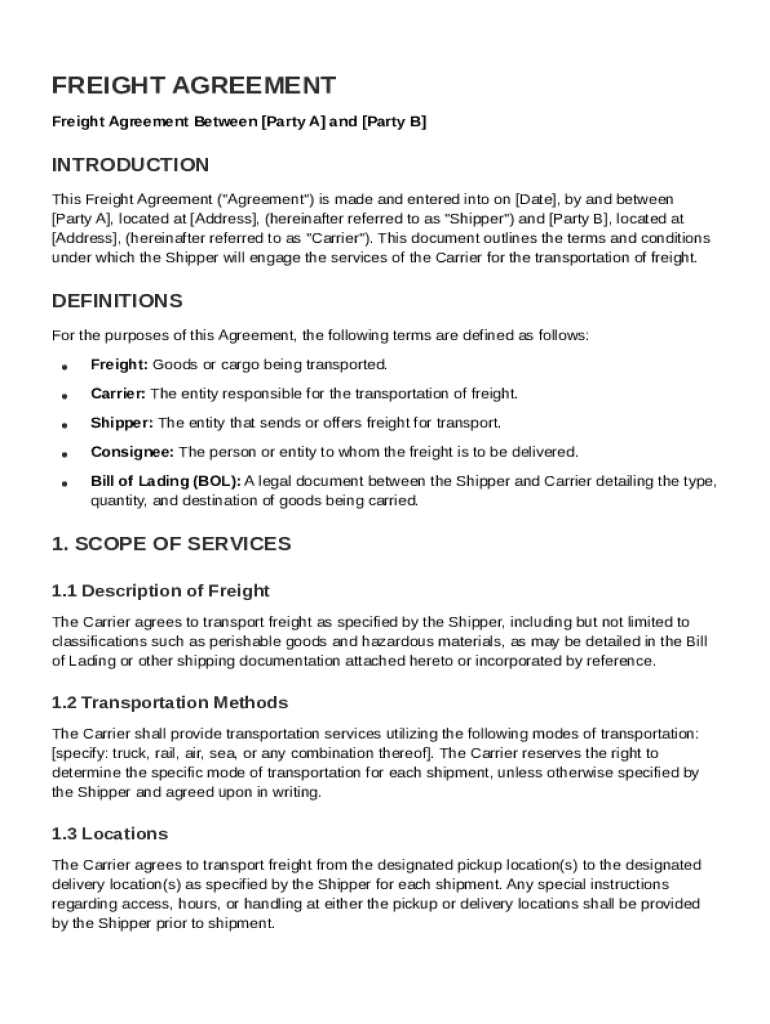







Definition & Meaning
The Freight Agreement Template is a pivotal document that formalizes the relationship between a shipper and a carrier, outlining the terms, conditions, and responsibilities involved in the transportation of freight. It encapsulates the expectations of both parties, ensuring transparency and accountability throughout the logistics process. This document is instrumental for businesses in managing their supply chain effectively, as it sets the framework for packaging requirements, transportation methods, payment terms, and liability provisions.
Key Elements of the Freight Agreement Template
Understanding the crucial components of a Freight Agreement Template is essential for both shippers and carriers to ensure comprehensive coverage of all operational aspects. Some of the key elements include:
- Parties Involved: Clearly identifies the shipper and carrier, providing relevant business details.
- Transportation Details: Specifies the type of freight, modes of transport, and delivery timelines.
- Packaging and Handling: Outlines packaging norms and special handling requirements to protect the cargo during transit.
- Payment Terms: Details the rates, billing cycle, and payment methods, ensuring financial transactions are clear and transparent.
- Liability Clause: Defines the extent of responsibilities and liabilities of each party in case of damage, loss, or delay.
- Dispute Resolution: Establishes procedures for resolving conflicts, including mediation or arbitration clauses.
Steps to Complete the Freight Agreement Template
Completing the Freight Agreement Template necessitates attention to detail to ensure all stipulations are well-defined and mutually agreed upon. The process involves several steps:
- Preparation: Gather all necessary business information and relevant records of past agreements.
- Customization: Tailor the template to reflect the specific terms and conditions relevant to the shipment.
- Agreement Review: Consult with legal advisors to examine the compliance of the agreement with current regulations.
- Draft Finalization: Make necessary revisions based on feedback and finalize the draft.
- Signing Process: Facilitate signatures electronically for all parties involved, ensuring legal recognition and validity.
Who Typically Uses the Freight Agreement Template
The Freight Agreement Template is primarily used by businesses engaged in the shipping and transportation of goods. Some typical users include:
- Manufacturers: Companies producing goods that need to be distributed to various locations.
- Logistics Providers: Third-party logistics companies coordinating transportation and delivery services.
- Retailers: Businesses sourcing products from suppliers and needing to manage inbound freight efficiently.
- Importers & Exporters: Entities involved in international trade requiring clear terms for cross-border shipments.


Legal Use of the Freight Agreement Template
The legal enforceability of a Freight Agreement Template depends on its compliance with both federal and state regulations. Shippers and carriers must:
- Adhere to Regulations: Ensure the agreement aligns with transportation laws, including transport safety standards and environmental compliance.
- Include Clear Terms: Use unambiguous language to outline rights and duties, minimizing the potential for legal disputes.
- Obtain Proper Signatures: Capture legally binding electronic signatures from authorized representatives of both parties.
Important Terms Related to Freight Agreement Template
A nuanced understanding of specific terms is vital for interpreting the Freight Agreement Template effectively. Key terms include:
- Freight Charges: Costs associated with the transportation of goods, typically calculated based on weight, distance, and shipment type.
- Bill of Lading: A legal document issued by a carrier to acknowledge receipt of cargo for shipment.
- Demurrage: Fees applied when freight containers are detained beyond the agreed timeframe at the port or terminal.
- Force Majeure: Clause relieving parties from obligations due to extraordinary events or circumstances beyond their control.
Benefits of Using the Freight Agreement Template
Utilizing a Freight Agreement Template offers several advantages, ensuring more efficient and legally secure operations:
- Clarity and Precision: Reduces the likelihood of misunderstandings by clearly articulating all terms and obligations.
- Risk Mitigation: Protects against unexpected liabilities through detailed provisions and insurance requirements.
- Operational Efficiency: Streamlines documentation processes and eases the management of transportation logistics.
- Legal Assurance: Provides a robust framework validated by electronic signatures, thereby upholding the agreement's legal enforceability.
State-Specific Rules for the Freight Agreement Template
While many principles of freight agreements are consistent across the United States, certain elements may vary by state due to local regulations and statutes. Considerations include:
- State-Specific Tariffs: Different states may apply unique tariffs or fees impacting freight costs.
- Regulatory Compliance: Acknowledging and aligning with state-specific environmental and safety transport standards.
- Intrastate vs. Interstate Freight: Understanding different requirements based on whether freight is transported intrastate or across state lines.




