




01. Edit your form online
Type text, add images, blackout confidential details, add comments, highlights and more.

Type text, add images, blackout confidential details, add comments, highlights and more.

Draw your signature, type it, upload its image, or use your mobile device as a signature pad.

Send it via email, link, or fax. You can also download it, export it or print it out.
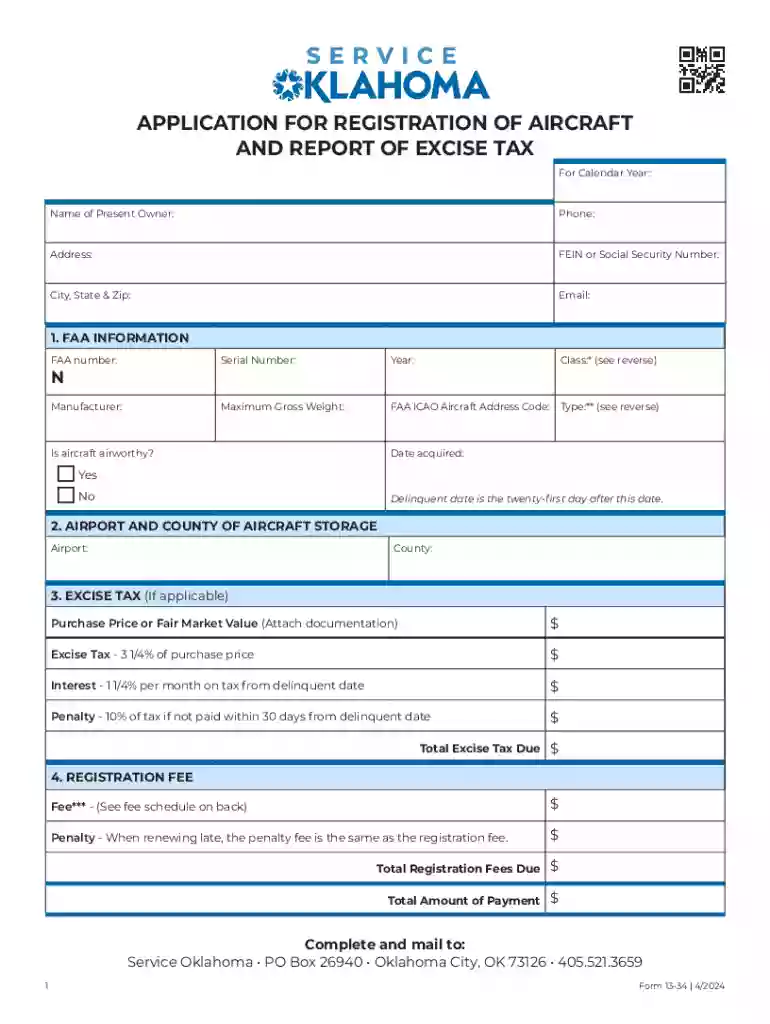
The "Application for Registration of Aircraft and Report of Excise Tax" is a crucial form used within the United States to satisfy both the legal requirements for registering an aircraft and reporting related excise taxes. This document serves two primary functions: providing essential information about the aircraft and ensuring that any applicable taxes are properly reported and paid. Such taxes are often based on either the purchase price or the fair market value of the aircraft. Registration, on the other hand, is necessary for the aircraft to be legally recognized and allowed to operate within the state.
Understanding this form's purpose is critical for aircraft owners to meet state requirements and avoid penalties associated with delayed registration and tax reporting.
To begin the registration and excise tax process, you need to obtain the specific form relevant to your state, as the requirements can vary. The form is typically available for download from state aviation department websites or can be collected in person from their offices.
Ensure you obtain the most current version of the form to avoid compliance issues. Some states may also offer an online submission option, making the process more convenient.
Completing this form involves several detailed steps, ensuring that all required information is accurately provided.
Once completed, the form and accompanying documents guide the legal registration and reporting process.
Utilizing this form correctly helps maintain legal compliance under state aviation laws, preventing fines or restrictions on aircraft operation.
Understanding the specific sections and fields of this form is critical in ensuring you fill it out correctly.
Certain documents are mandatory to successfully complete and submit this form, ensuring both registration and tax obligations are met.
These documents support the information provided within the form, helping validate both ownership and tax declarations.
Failing to submit the "Application for Registration of Aircraft and Report of Excise Tax" can result in significant penalties.
Timely submission and adherence to all outlined requirements are key to avoiding these penalties and ensuring continued aircraft operation.
While the general purpose of this form is consistent across the United States, specific rules and requirements can vary by state.
Consulting the specific aviation department of the state in question can clarify any unique requirements and ensure compliance.
We've got more versions of the Application for Registration of Aircraft and Report of Excise Tax form. Select the right Application for Registration of Aircraft and Report of Excise Tax version from the list and start editing it straight away!
At DocHub, your data security is our priority. We follow HIPAA, SOC2, GDPR, and other standards, so you can work on your documents with confidence.
APPLICATION FOR REGISTRATION OF AIRCRAFT. AND REPORT OF EXCISE TAX. For Calendar Year: Name of Present Owner: Phone: Address: FEIN or Social Security NumberRead more
(1) The aircraft was acquired during the period of time that the dealer held a valid license; (2) The aircraft has been listed on the aircraft dealer report asRead more


