






Understanding the Buyer Agreement Template
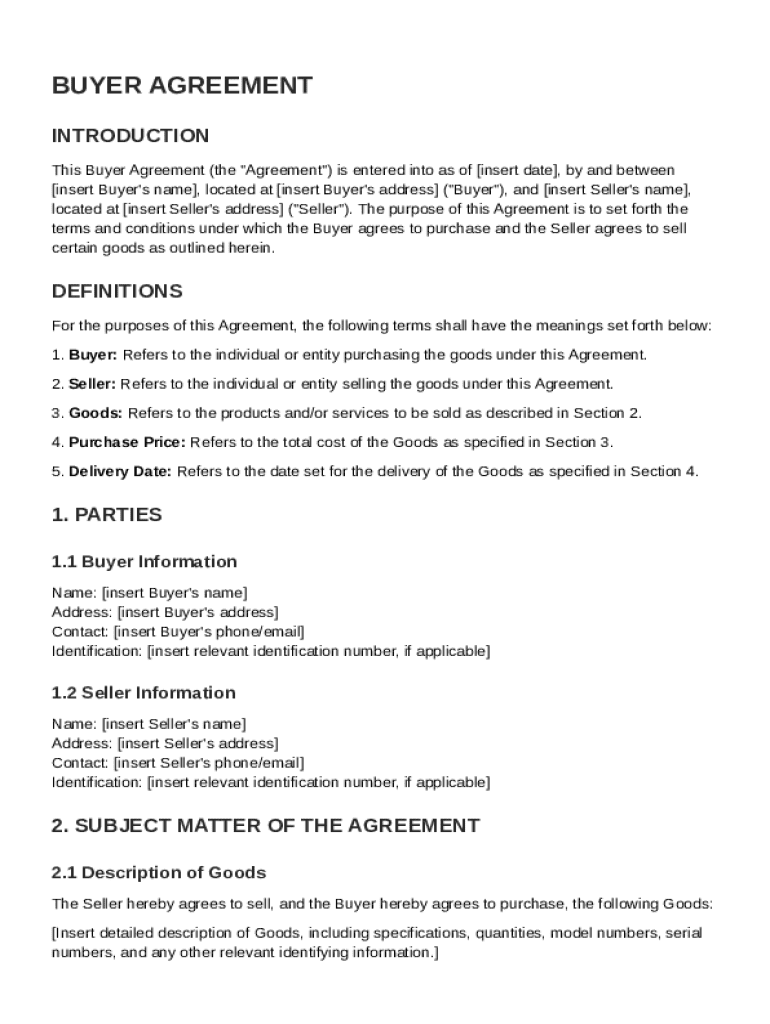
The Buyer Agreement Template is a foundational document in any transaction process. This legally binding contract outlines specific terms and conditions agreed upon between the buyer and seller during the purchase of goods or services. Typically, it includes detailed descriptions of the involved parties, the items or services being transacted, payment expectations, and delivery terms. Moreover, the agreement often encompasses clauses related to warranties, responsibilities for indemnification, governance under relevant laws, and other miscellaneous provisions, ensuring clarity and protection for both entities involved.
Essential Terms in Buyer Agreement Template
Several critical terms within the Buyer Agreement Template dictate the agreement's execution and interpretation. These include:
- Purchase Price: Specifies the agreed monetary value exchanged for goods or services.
- Delivery Conditions: Outlines the logistics regarding how and when the buyer will receive the purchased items.
- Warranties: Details any promises or assurances about the condition or nature of the goods and what remedial actions will be taken if terms are violated.
- Indemnification Clauses: Protects parties by delineating liability and compensation in case of losses or damages related to the transaction.
Understanding these terms ensures that parties fulfill their obligations and minimize potential disputes.
Steps to Complete the Buyer Agreement Template
Filling out the Buyer Agreement Template involves several key steps to ensure completeness and accuracy:
-
Identification of Parties: Clearly state the names and contact details of all parties involved in the transaction.
-
Description of Goods or Services: Provide detailed specifications of the items or services, including quality, quantity, and any identifiable features.
-
Payment Terms: Define the total purchase price, any deposits, installment plans, and acceptable payment methods.
-
Delivery Protocols: Clarify the delivery timeline, methods, and any related expenses or obligations.
-
Review and Adjust Clauses: Ensure that clauses related to warranties, indemnification, and compliance with laws are accurate and agreeable.
Completing each section with precision is crucial for upholding the integrity of the agreement.
Legal Applications of the Buyer Agreement Template
The Buyer Agreement Template serves multiple legal purposes beyond merely establishing transaction terms. It provides a documented framework that can be referenced in legal proceedings if disputes arise. Moreover, it helps in demonstrating compliance with applicable laws and regulations. When drafted correctly, this document supports both parties in advocating for their rights while offering evidence of mutual consent to specified terms. In U.S.-centric contexts, ensuring compliance with state laws is essential for enforceability.
Key Elements of the Buyer Agreement Template
A well-constructed Buyer Agreement Template contains several pivotal elements:
- Definitions and Interpretations: Clearly articulated meanings ensure mutual understanding of terminology and provisions.
- Obligations and Responsibilities: Detailing the duties each party is contractually bound to fulfill.
- Conditions and Representations: Stating any prerequisites that must be satisfied for the agreement to remain valid.
- Dispute Resolution Process: Outlining mechanisms for addressing disagreements or breaches efficiently.
- Miscellaneous Provisions: Covering varied topics like termination conditions and amendment protocols.
Each element functions harmoniously to create a comprehensive, enforceable document.
Different Types of Buyer Agreements
While the core concept remains consistent, Buyer Agreements can vary based on the nature of goods or services being sold. For instance:
- Real Estate Buyer Agreements: Tailored for property transactions, inclusive of property inspections and financing conditions.
- Business Sale Agreements: Specific to comprehensive transfers of business assets, detailing severance of ownership, intellectual property, and warranties.
- Consumer Goods Contracts: Simplified agreements for retail or online purchases, focusing on return policies and consumer protections.
Awareness of different templates ensures selection of the most applicable form for a transaction.
How to Use the Buyer Agreement Template
To effectively use the Buyer Agreement Template, follow these guidelines:
-
Customization: Adapt the template’s standard terms to fit specific transactional details and party preferences.
-
Legal Consultation: Engage a legal professional to scrutinize the document, ensuring all terms are legally sound and beneficial.
-
Review and Negotiate: Encourage open discussions between parties to confirm mutual understanding and acceptance of terms.
-
Signatures and Record Keeping: Obtain signatures from authorized representatives and store copies securely for future reference.
These steps establish a robust framework for executing a seamless and safeguarded transaction.
State-Specific Variations in Buyer Agreements
Buyer Agreement Templates must often reflect variations dictated by state-specific laws. For instance, some states may require additional disclosures regarding environmental factors or compliance with local safety regulations. Other differences include mandatory language for certain clauses or peculiarity in governing laws. Understanding these nuances is critical for ensuring legal enforceability and aligning with jurisdictional requirements.
Digital vs. Paper Version of Buyer Agreement Template
The evolution of technology has paved the way for digital Buyer Agreement Templates, which offer several advantages over paper versions:
- Accessibility: Electronic documents can be easily accessed and shared among relevant parties, facilitating smoother transaction processes.
- Efficiency: Digital forms can streamline the completion and signing process through platforms like DocHub, reducing delays.
- Security: With secure encryption, digital versions can offer enhanced protection against unauthorized access compared to physical storage.
However, paper versions may still be preferred in scenarios where digital means are restricted or not feasible. Understanding both formats ensures optimal usage in varying situations.