






Definition and Meaning of Brand Agreement Template
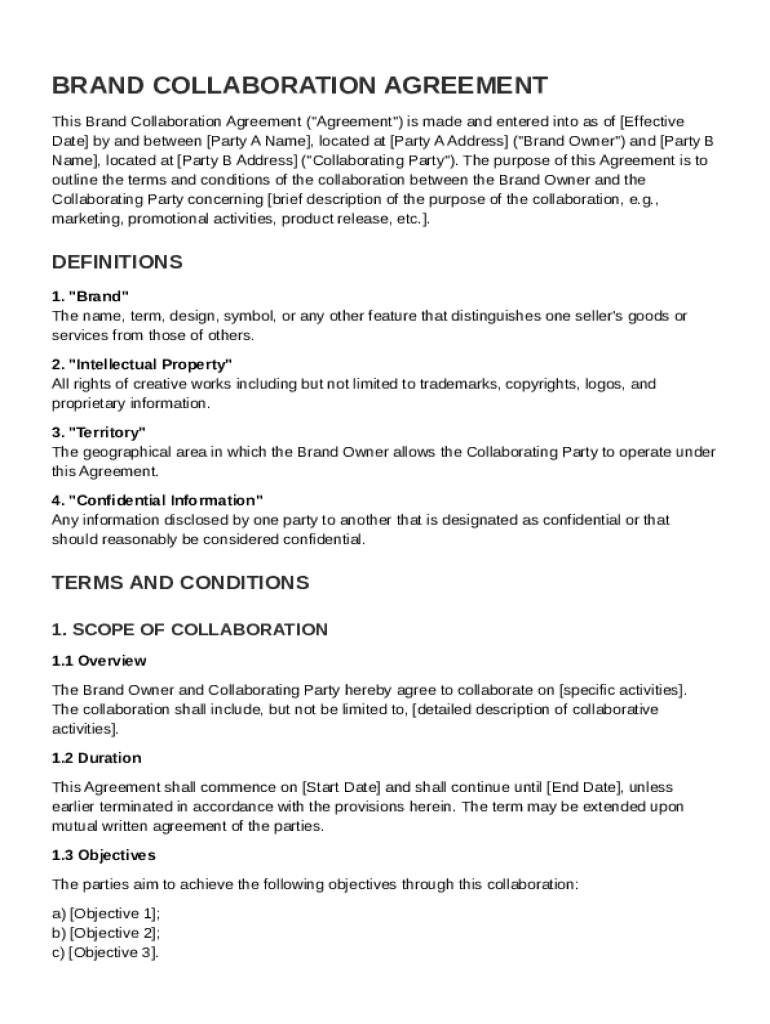
The Brand Agreement Template serves as a formal document that defines the terms and conditions of collaboration between two parties, typically a brand owner and another entity involved in a marketing or promotional partnership. This template outlines essential components such as the roles and responsibilities of each party, financial arrangements, marketing strategies, and ways to handle termination and dispute resolution. By using a standardized agreement, parties can ensure a mutual understanding of their collaboration objectives, effectively protect intellectual property rights, and safeguard confidential information. This ensures clarity and alignment on shared goals and expectations while mitigating potential risks associated with brand partnerships.
How to Use the Brand Agreement Template
When leveraging a Brand Agreement Template, it’s crucial to carefully follow structured steps to ensure accurate completion. Begin by reviewing the entire document to familiarize yourself with its sections and language. This includes sections on definitions, rights, responsibilities, and policies. Next, customize the template by adding specific details unique to the partnership, such as the names of the parties involved, the scope of the collaboration, and any financial terms. Ensure all parties agree on included obligations and benefits and any contingencies for different situations. Finally, once all sections are filled out and agreed upon, both parties should review the document to confirm accuracy before signing. The last step is to securely store the signed agreement for future reference.
Steps to Complete the Brand Agreement Template
-
Gather Necessary Information: Collect all relevant data such as branding guidelines, project timelines, budget details, and contact information of all parties involved.
-
Customize the Template: Tailor the generic parts of the template to include specific details about your agreement, focusing on scope, timelines, responsibilities, and deliverables.
-
Review Legal Terms: Carefully examine sections on intellectual property rights, confidentiality, and dispute resolution to ensure they meet your requirements.
-
Seek Legal Advice: Consider consulting with a legal professional to ensure all terms are legally sound and protect your interests.
-
Negotiate with the Other Party: Discuss any necessary amendments with the other party to align both sides’ needs and expectations before finalizing the terms.
-
Finalize and Sign: Once both parties are satisfied, sign the document to formalize the agreement.
-
Store Securely: Keep the completed document in a secure, accessible location for future reference and compliance purposes.
Key Elements of the Brand Agreement Template
The Brand Agreement Template is composed of several key sections that collectively establish the framework for a successful collaboration:
-
Parties Involved: Clearly identifies the Brand Owner and Collaborating Party, establishing the legal entities entering the agreement.
-
Purpose and Scope: Details the objectives and extent of the collaboration, including specific campaigns or projects and their anticipated outcomes.
-
Responsibilities and Obligations: Outlines the duties each party is expected to fulfill within the partnership to ensure objectives are met efficiently.
-
Financial Terms: Specifies payment structures, including how and when payments are to be made, reimbursement policies, and any performance-related incentives.
-
Intellectual Property Rights: Protects the brand's assets by detailing usage rights, ownership, and boundaries for using proprietary content.
-
Confidentiality Provisions: Establishes protocols for handling sensitive information shared during the partnership to prevent unauthorized disclosure.
-
Termination and Dispute Resolution: Provides a framework for ending the agreement, covering reasons for termination and procedures for addressing conflicts.
Why Use the Brand Agreement Template
Using a Brand Agreement Template is vital for establishing a legally binding and clear framework for brand collaborations. It provides several advantages:
- Legal Clarity: Ensures all parties understand their rights, responsibilities, and the legal nuances of the collaboration.
- Risk Mitigation: Protects against potential legal disputes by clearly outlining terms such as intellectual property rights and confidentiality.
- Efficiency: Streamlines the process of creating an agreement, saving time on drafting from scratch.
- Professionalism: Presents a comprehensive document that reflects professionalism and preparedness.
- Standardization: Offers a consistent and comprehensive way to document partnerships, facilitating smoother negotiations and adjustments.
Who Typically Uses the Brand Agreement Template
The Brand Agreement Template is typically used by a variety of professionals and organizations involved in brand partnerships and collaborations. This includes:
-
Marketing Agencies: Agencies that participate in co-branding or marketing campaigns often use this template to formalize arrangements with clients or partners.
-
Brand Managers: Responsible for maintaining brand image and integrity, brand managers utilize these agreements to outline terms with external collaborators, such as influencers or content creators.
-
Legal Teams: Corporate lawyers who draft or review contracts for brands employ these templates to ensure legal compliance and safeguard client interests.
-
Startups and Entrepreneurs: Small businesses or startups looking to expand their reach through strategic partnerships might rely on templates to document terms with more established entities.
-
Corporate Partnerships: Companies that engage in joint ventures use this template to clarify shared goals, responsibilities, and benefits in written form.


Important Terms Related to Brand Agreement Template
Navigating a Brand Agreement Template requires understanding several critical terms, including:
-
Brand: The trademarked identity or image associated with a company or organization.
-
Intellectual Property: Works or inventions that result from creativity, such as designs and logos, protected by law from unauthorized use.
-
Confidential Information: Sensitive data not to be disclosed without permission, often including business strategies and proprietary techniques.
-
Collaboration Scope: The extent and limitations of a partnership, detailing specific areas of cooperation and activities.
-
Termination Rights: Conditions under which the agreement can be legally ended by either party.
-
Marketing Strategies: The planned actions or campaigns designed to promote the brand in the marketplace.
-
Dispute Resolution Process: The agreed method for settling conflicts, which might include mediation or arbitration.
Legal Use of the Brand Agreement Template
The Brand Agreement Template carries significant legal weight, offering a structured approach to documenting collaboration terms between parties. To ensure its effective legal application:
-
Accuracy: Verify that every clause accurately reflects the parties' intentions and understandings.
-
Compliance: Check that the template complies with relevant laws and industry standards within the state of operation.
-
Signatures: Make sure that authorized representatives from all parties sign the agreement to make it valid.
-
Modifications: Clearly outline any modifications or amendments to the template, obtaining mutual consent for changes.
-
Legal Review: Have the document reviewed by legal counsel to reaffirm compliance with statutory requirements and to safeguard against potential legal liabilities.