




01. Edit your form online
Type text, add images, blackout confidential details, add comments, highlights and more.

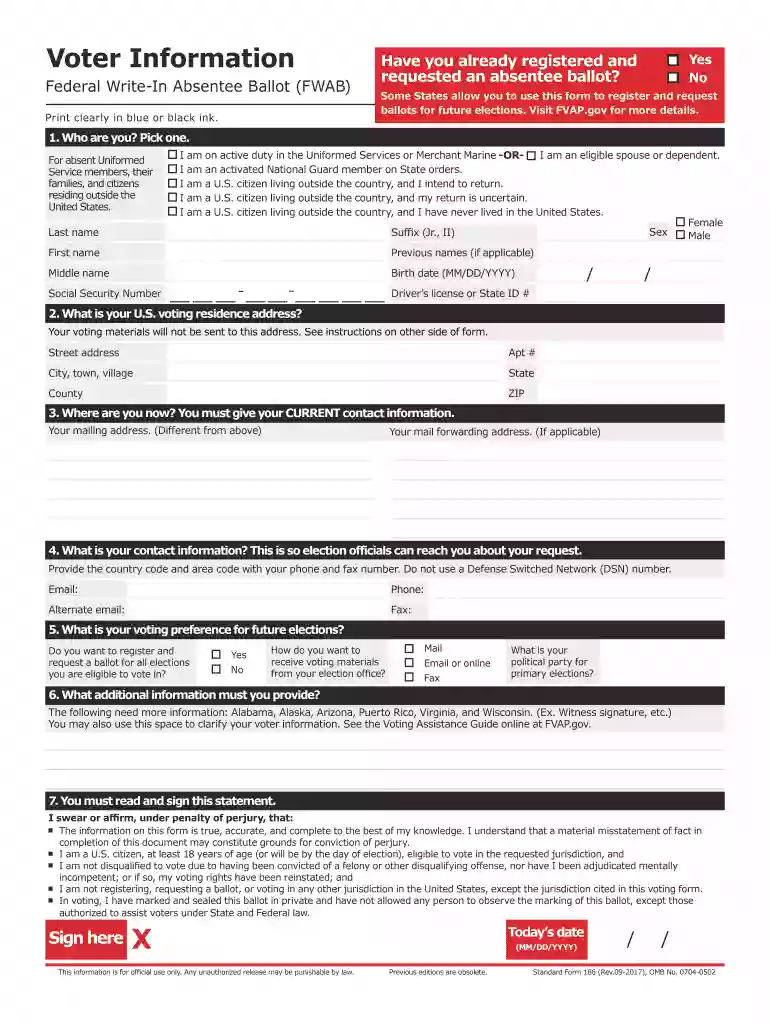
Type text, add images, blackout confidential details, add comments, highlights and more.

Draw your signature, type it, upload its image, or use your mobile device as a signature pad.

Send it via email, link, or fax. You can also download it, export it or print it out.
Military and overseas voters have the unique opportunity to submit their votes even while stationed away from home. This form serves as a guide for U.S. military members and their spouses on how they can exercise their right to vote while deployed or living overseas. It ensures they understand the different voting methods available, deadlines, and procedures specific to their needs. This is particularly important given the constraints of military life, which can make traditional voting methods challenging.
Voting is a fundamental democratic right and plays a crucial role in decision-making at national levels. For military members and spouses living away from their resident states, absentee voting permits them to have their voices heard. Despite being overseas or on active duty, they can influence policies and representatives that directly impact them, ensuring their interests are well-represented in government. Participation also underscores their commitment to civic duties.


Different states may have varying guidelines on registration deadlines, the use of electronic submissions, and specific forms. For example, while some states allow electronic submission of ballots, others require paper submissions. It's essential for military members and their spouses to consult their state election websites for up-to-date information to avoid any procedural pitfalls that could disenfranchise them.
Failure to comply with the guidelines for absentee voting can result in your vote not being counted. It's imperative to follow all instructions meticulously, as discrepancies may lead to complications. Ensure compliance with both federal and state absentee voting laws to protect the integrity of your vote and fulfill civic responsibilities effectively.
Imagine a service member stationed in Germany. They can request their home state absentee ballot well in advance, fill it out, and use expedited mail services to ensure it meets U.S. election deadlines. Similarly, an overseas military spouse in Japan might use the FWAB to vote when their requested ballot does not arrive on time, ensuring their vote counts despite logistical challenges.
For a seamless voting experience:
These practical steps and understanding of the process will ensure military members and their spouses can exercise their voting rights effectively, reflecting their interests in governance decisions.
We've got more versions of the Military members and spouses: There's still time to vote by form. Select the right Military members and spouses: There's still time to vote by version from the list and start editing it straight away!
At DocHub, your data security is our priority. We follow HIPAA, SOC2, GDPR, and other standards, so you can work on your documents with confidence.
Only 36% of Active Duty Spouse Respondents vote in every election (most spouses vote in presidential, elections, but not necessarily in state or local elections)Read more
For the General Election, its best to send in the FPCA by August 1. For the general election, you should receive your ballot by early October. Vote and send


