
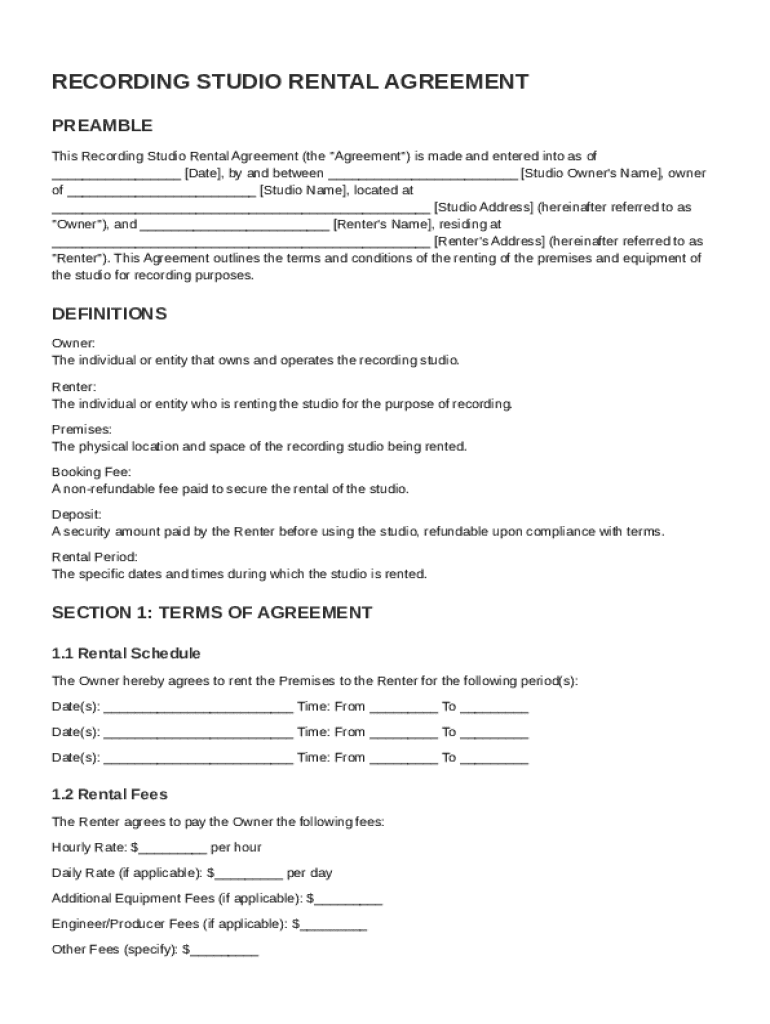







Key Elements of the Recording Studio Rental Agreement Template
The Recording Studio Rental Agreement Template contains essential components that define the use and responsibilities of both the studio owner and the renter. These key elements ensure clarity and set expectations for all parties involved.
-
Parties Involved: Identifies the studio owner and the renter. It clearly outlines the roles and responsibilities of each party within the rental agreement context.
-
Rental Fees and Payment Terms: Specifies the exact amount due for renting the studio space, including deadlines for payments, accepted payment methods, and any late fee policies.
-
Permitted Use of Studio: Details the intended activities allowed within the studio, ensuring the renter understands what can and cannot be done according to the agreement.
Steps to Complete the Recording Studio Rental Agreement Template
Completing a Recording Studio Rental Agreement Template involves several key steps to ensure accuracy and legality.
-
Identify Parties: Begin by clearly stating the full legal names of the studio owner and the renter, along with their contact information.
-
Outline Rental Term: Specify both the start and end dates of the rental period, including options for renewal if applicable.
-
Detail Payment Information: Include the rental fees, payment schedule, and method of payment to prevent future disputes.
-
Define Studio Use: Clearly state the permitted and prohibited activities within the studio to maintain the space’s condition and purpose.
-
Review & Sign: Both parties should thoroughly review the agreement for accuracy, sign, and date the document to formalize it.
Legal Use of the Recording Studio Rental Agreement Template
The legal framework of a Recording Studio Rental Agreement is crucial for protecting the interests of all parties and ensuring compliance with relevant laws.
-
Governing Law: The agreement should specify which state’s laws govern the contract, affecting interpretation and enforcement.
-
Indemnification Clauses: Protects the owner from liabilities arising from the renter’s use of the studio, detailing responsibilities for damages or incidents.
Important Terms Related to the Recording Studio Rental Agreement Template
Understanding key terminology within the agreement ensures all parties are informed and reduces misunderstandings.
-
Indemnification: A commitment to compensate for any harm or loss, protecting the studio owner from unauthorized actions by the renter.
-
Amendments: Any changes to the initial agreement must be mutually agreed upon in writing to be effective.
How to Use the Recording Studio Rental Agreement Template
Utilizing the template effectively involves understanding its structure and tailoring it to specific rental arrangements.
-
Customization: Modify the template to reflect the specific terms agreed upon by both parties, such as unique equipment use or rental duration.
-
Consultation with Legal Experts: Ensures the agreement adheres to current laws and adequately protects stakeholders.
Who Typically Uses the Recording Studio Rental Agreement Template
Various individuals and entities make use of this agreement to formalize their rental arrangements.
-
Musicians and Bands: Often rent studio space for recording sessions, needing formal agreements to outline usage terms.
-
Independent Producers: Require a clear contract to secure studio time for various production projects.


Examples of Using the Recording Studio Rental Agreement Template
Real-world scenarios illustrate how this template assists various users.
-
Musician Recording Sessions: A band may use the agreement to rent a studio for two weeks, ensuring time and resources are allocated specifically for their project.
-
Film Production Needs: A production company might rent a studio for editing and overdubbing, with the agreement delineating studio operations and scheduling.
State-Specific Rules for the Recording Studio Rental Agreement Template
State laws may impose unique requirements or provisions on the agreement, necessitating customization.
-
Zoning Laws: Some states have zoning laws affecting the allowable use of commercial properties such as recording studios.
-
Noise Ordinances: Ensure compliance with local sound regulations, which may directly affect studio operating hours and permissible activities.
By adhering to these detailed guidelines and utilizing comprehensive considerations, both renters and studio owners can achieve a more secure and mutually beneficial rental experience.




