Definition & Meaning
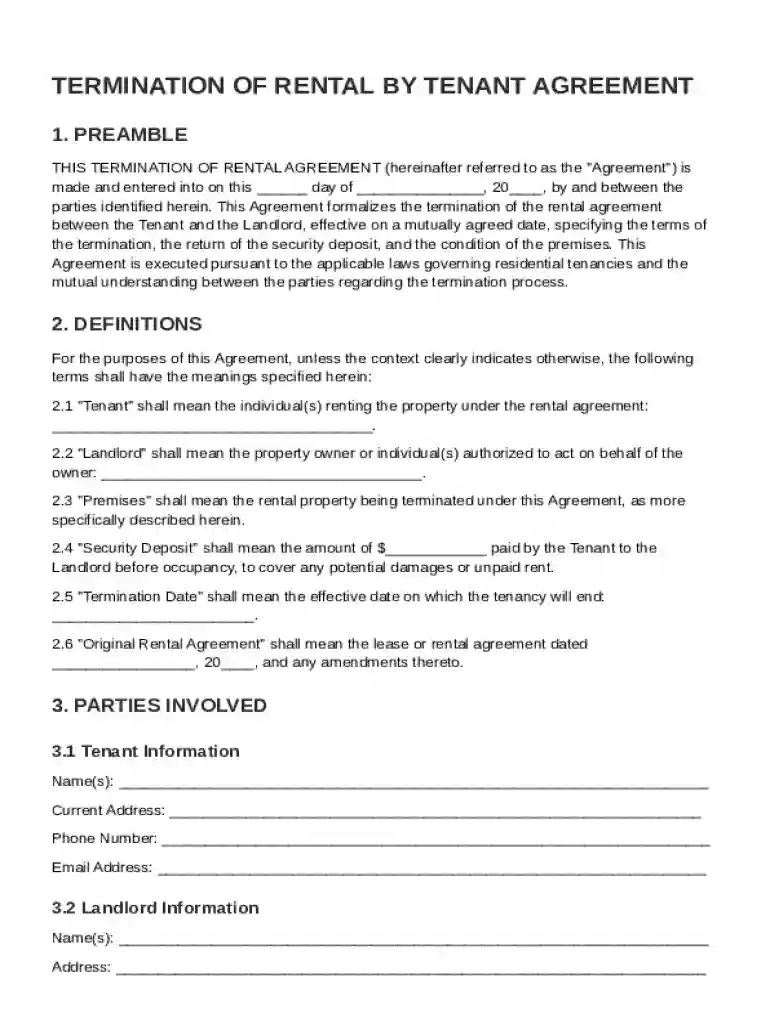
The Termination of Rental by Tenant Agreement Template is a formal document utilized to officially notify the landlord of a tenant’s intention to terminate their rental agreement. It includes critical information such as the tenant’s and landlord’s details, the property address, and the effective date of termination. This form ensures that both parties comprehend and agree to the terms under which the rental agreement is being concluded, safeguarding their legal rights and responsibilities.
- Elements typically included:
- Tenant and landlord information
- Property address
- Notice period
- Final payment details
- Condition of the property requirements
- Security deposit handling
- Effective termination date
Understanding these components is essential for correctly completing and utilizing the template, ensuring compliance with legal standards and minimizing potential disputes between the parties involved.
How to Use the Termination of Rental by Tenant Agreement Template
Using this template involves several critical steps to ensure legal compliance and proper communication with the landlord.
- Download the Template: Access and download the template from a trusted source such as DocHub.
- Fill Out Required Information:
- Tenant and landlord names and contact details
- Rental property address
- Date notice is delivered and proposed termination date
- Include Necessary Clauses: Ensure clauses regarding property condition, final rent payments, security deposit returns, and indemnification are clear and agreed upon.
- Sign and Deliver: Both tenant and landlord should sign the agreement. Provide copies to all parties involved, maintaining a shared understanding and official record of the agreement terms.
Correctly executing these steps ensures the termination is recognized legally and formally by all parties involved.
Key Elements of the Termination of Rental by Tenant Agreement Template
Several key elements form the backbone of this agreement, each significant for different reasons.
- Notice Requirements: Specifies how much notice the tenant must give before vacating.
- Final Rent Payments: Details how and when the last rent payments should be made.
- Property Condition: Outlines tenant responsibilities for the property condition upon leaving.
- Security Deposit: Explains how and when the security deposit will be returned or used.
- Governing Law: Indicates which state’s law governs the agreement, which is important for legal enforcement.
By including these elements, the agreement addresses all critical aspects associated with ending a rental agreement.
Steps to Complete the Termination of Rental by Tenant Agreement Template
Finalizing this agreement requires attention to detail and adherence to a structured process.
- Gather Information: Collect all necessary details related to the rental agreement and parties involved.
- Fill in Details: Input all gathered information into the relevant sections of the template.
- Review Terms: Ensure all terms are clear, agreed upon by both parties, and compliant with legal requirements.
- Sign the Agreement: Obtain signatures from both tenant and landlord to validate the agreement.
- Distribute Copies: Provide official copies of the signed agreement to all parties for their records.
Adhering to these steps guarantees the form is completed accurately and professionally.
Legal Use of the Termination of Rental by Tenant Agreement Template
This template serves a crucial role in the legal landscape of rental agreements. It provides a documented, legally recognized method for ending a rental agreement, helping to avoid potential disputes.
- Complies with Legal Standards: Ensures compliance with state laws and regulations regarding tenancy termination.
- Protects Rights: Safeguards both tenant and landlord rights and outlines clearly defined obligations.
- Mitigates Disputes: Reduces the potential for misunderstandings and legal challenges by creating a written record.
Understanding the legal usage of this form is essential to effectively and equitably terminating a tenancy.
Important Terms Related to Termination of Rental by Tenant Agreement Template
Several terms within the template are significant for both tenants and landlords.
- Notice Period: The minimum amount of time that must be given by the tenant to the landlord before ending the agreement.
- Security Deposit: The amount of money held by the landlord initially deposited by the tenant, subject to return post-termination.
- Indemnification: A clause that may protect one party from certain legal liabilities or losses incurred by terminating the agreement.
Familiarity with these terms ensures both parties have a mutual understanding and expectation of the agreement.
State-by-State Differences
Rental agreement laws can vary significantly across different states, affecting the application of this template.
- Notice Requirements: Vary widely, with some states requiring longer notice periods.
- Security Deposit Laws: Different regulations surrounding how deposits can be held, used, and returned.
- Eviction Procedures: States have different protocols for handling eviction processes, affecting tenants potentially leaving without proper notice.
Understanding state-specific requirements ensures the agreement aligns with local laws, thus maintaining its legal validity and enforceability.
Examples of Using the Termination of Rental by Tenant Agreement Template
Practical scenarios illustrate the utility and necessity of this form.
- Early Lease Termination: A tenant needs to relocate due to job changes and uses the template to formally notify the landlord, specifying the notice period and proposed termination date.
- Ending Without Dispute: Both parties wish to end the agreement amicably and use the template to outline the condition of the property upon departure and the return of the security deposit.
- Legally Binding Communication: A tenant needs to provide proof of termination for legal purposes, fulfilling state requirements and creating an official, signed document through this template.
These examples demonstrate the template's application in real-world contexts, providing clarity and resolution in various termination scenarios.