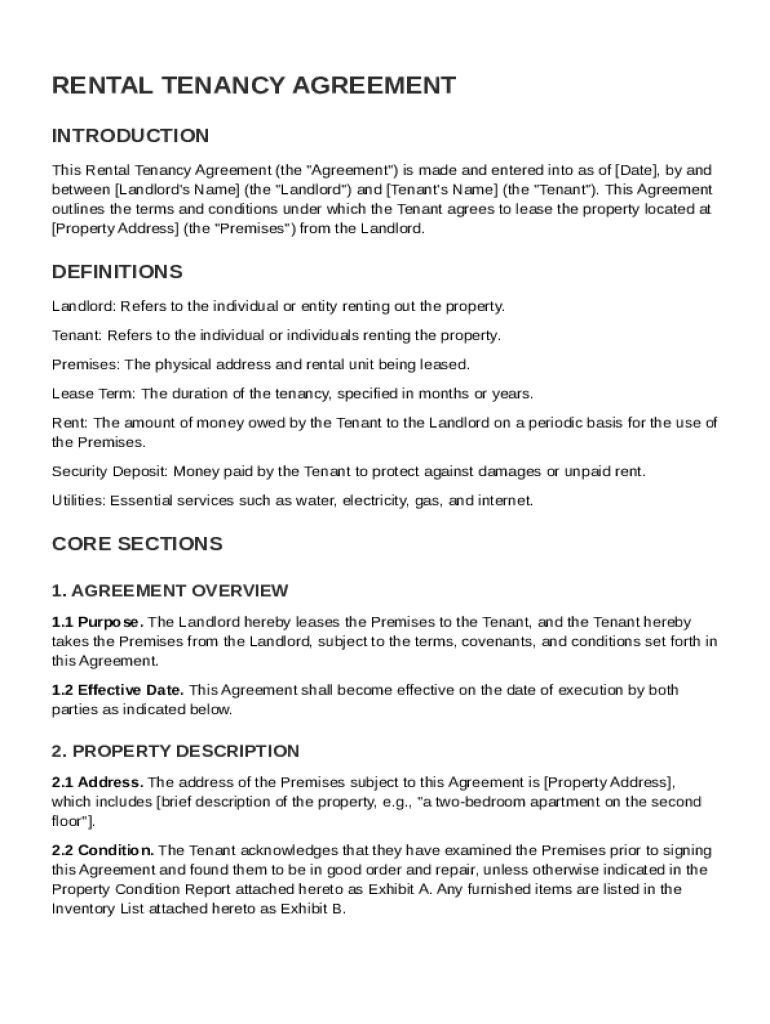







Definition and Meaning
A Rental Tenancy Agreement Template is a comprehensive document outlining the contractual arrangement between a landlord and tenant regarding the leasing of property. Serving not only as a legal contract but also as a guideline, this template covers key areas such as lease duration, payment responsibilities, and maintenance obligations. The document is vital for clearly defining the rights and responsibilities of both parties, reducing disputes, and safeguarding legal interests during the tenancy.
How to Use the Rental Tenancy Agreement Template
Utilizing a Rental Tenancy Agreement Template involves several structured steps:
- Select the Appropriate Template: Based on the specifics of the rental transaction.
- Fill Out Basic Property Details: Include the address and any unique identifiers pertinent to the property.
- Add Lease Terms: Specify the lease duration, including start and end dates.
- Outline Financial Obligations: Detail rental payment amounts, due dates, and any security deposits.
- Define Property Use and Restrictions: Address allowable uses, restrictions, and rules, such as pet policies or smoking prohibitions.
- Review and Finalize: Ensure both parties review the document for accuracy before signing.
This process ensures all crucial elements are documented, providing a clear, mutual understanding between parties.
Steps to Complete the Rental Tenancy Agreement Template
Finishing the template involves detailed input from both the landlord and tenant:
-
Gather Necessary Information:
- Property address and details
- Landlord and tenant identities
- Contact information for both parties
-
Fill Lease Information:
- Determine lease term length and renewal options
- Establish monthly rent and payment methods
-
Specify Responsibilities:
- Clarify maintenance duties
- Define who pays for utilities
-
Include Legal Clauses:
- Add terms defining breach of contract
- Detail notice periods for termination
-
Finalize Signatures:
- Both parties sign and date the agreement
- Store securely for future reference
Completing these steps ensures a legally sound, mutual agreement aligned with all legal requirements.
Important Terms Related to Rental Tenancy Agreement Template
Familiarity with specific terminology enhances understanding of the agreement:
- Lease Term: The duration that the tenant is allowed to rent the property.
- Security Deposit: A sum of money held by the landlord as protection against damages.
- Maintenance Responsibilities: Obligations related to property upkeep.
- Premises Use: Guidelines on how the tenant can utilize the property.
- Rent Arrears: Rent payments that are overdue.
Understanding these terms aids in comprehending the document's provisions.
Key Elements of the Rental Tenancy Agreement Template
A well-structured Rental Tenancy Agreement typically includes:
- Identities of Parties: Full disclosure of landlord and tenant names and contact information.
- Description of Premises: Detailed information about the property being leased.
- Financial Obligations: Comprehensive details about rent, deposits, and payment schedules.
- Usage Policies: Rules governing tenant behavior and property usage.
- Termination Conditions: Conditions under which the lease can be terminated by either party.
These elements are pivotal to establishing a secure rental relationship.
Legal Use of the Rental Tenancy Agreement Template
In the United States, a Rental Tenancy Agreement Template must comply with local, state, and federal laws. Ensure it:
- Meets State Regulations: Align with specific state laws regarding rental agreements.
- Defines Legal Recourse: Offers recourse for issues like unpaid rent or property damage.
- Adheres to Fair Housing Laws: Complies with non-discrimination policies.
- Incorporates Tenant Rights: Enshrines rights such as quiet enjoyment and timely repairs.
Careful crafting of the agreement ensures legal compliance and protection for both parties.
Who Typically Uses the Rental Tenancy Agreement Template
The template is essential for various stakeholders involved in property leasing:
- Landlords: For formalizing agreements with tenants, ensuring legal protection.
- Property Managers: To standardize documents across multiple properties.
- Tenants: To understand obligations and rights during the lease term.
- Real Estate Professionals: Assists in efficiently managing client agreements.
Each player benefits uniquely from its structured content, facilitating transparent interactions.


State-Specific Rules for the Rental Tenancy Agreement Template
Rental agreements must reflect regional legal nuances:
- California: Laws require specific disclosures about habitability and safety.
- New York: Rent control provisions may apply, affecting standard rental terms.
- Texas: Clarity on maintenance responsibilities are crucial per state laws.
- Florida: Notice requirements for lease termination can differ.
Understanding these distinctions ensures the agreement is correctly drafted for compliance in different locales.