






Definition & Meaning
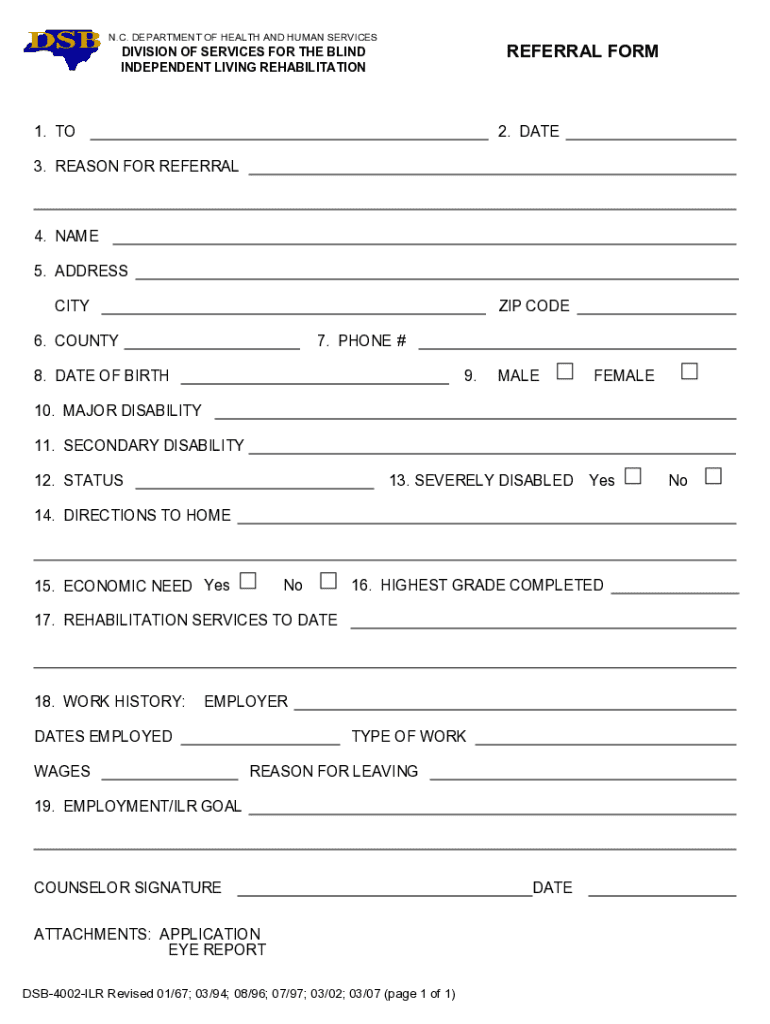
A referral form is a structured document used to gather essential information about an individual to refer them to a specific service or program. In the context of the North Carolina Department of Health and Human Services, this form is utilized by the Division of Services for the Blind's Independent Living Rehabilitation program. The form collects data such as personal details, disabilities, economic status, and rehabilitation goals. The primary objective of the referral form is to facilitate the exchange of relevant information between service providers, ensuring the individual receives suitable support and services tailored to their needs. An accurate and well-completed referral form acts as a communication bridge, relaying critical data efficiently and securely.
Steps to Complete the Referral Form
Completing the referral form entails a series of systematic steps to ensure accuracy and comprehensiveness:
-
Gather Required Information: Collect personal information, including the individual's name, contact details, and date of birth. Ensure that all sections related to disabilities and economic needs are thoroughly completed.
-
Detail Economic Needs: Provide specific information about the individual's financial situation, which may include income level and available financial resources, to assess any economic assistance requirements.
-
Document Disabilities: Accurately describe any disabilities, which may require attachment of medical reports or assessments, to determine the appropriate support services needed.
-
Specify Rehabilitation Goals: Clearly outline the individual's rehabilitation goals, including milestones and desired outcomes, to align with the program's offerings.
-
Review for Completeness: Before submission, check that all sections are filled and that supporting documents are attached, ensuring no part of the form is incomplete or overlooked.
Important Terms Related to Referral Form
Understanding the terminology associated with referral forms can enhance comprehension and accuracy during completion:
- Referee: The individual or entity making the referral.
- Referrant: The individual being referred to the program or service.
- Assessment: Evaluation process to determine the individual's needs based on information provided.
- Eligibility Criteria: Specific requirements that the individual must meet to qualify for the program.
- Confidentiality: Measures to protect the individual's privacy and sensitive information contained within the form.
Key Elements of the Referral Form
The referral form comprises various critical elements that must be addressed comprehensively:
- Contact Information: Includes phone numbers and email addresses for effective communication.
- Program Criteria: Outlines the qualifications needed for the individual to be eligible for the referral.
- Supporting Documentation: May include medical reports, income statements, and other relevant records.
- Signatures: Required from both the referee and the referrant, confirming the form's authenticity and consent for information sharing.
State-Specific Rules for the Referral Form
State-specific regulations impact the processing and acceptance of referral forms:
- Compliance with State Laws: Understanding local laws in North Carolina related to health services and personal data collection ensures proper adherence during form completion.
- Regional Program Variations: Differences may exist in service availability and eligibility criteria based on the individual's residence within North Carolina.
Who Typically Uses the Referral Form
Referral forms serve a wide range of entities and individuals:
- Healthcare Providers: To refer patients to specialized health services or rehabilitation programs.
- Social Workers: To connect clients with appropriate state or non-profit services.
- Educational Institutions: For students requiring special programs or financial aid based on their needs.
- Community Organizations: To facilitate access to local assistance programs.


Examples of Using the Referral Form
Real-world scenarios highlight the application of referral forms:
- Blind Individual Seeking Rehabilitation: A social worker uses the referral form to enroll a visually impaired person into an independent living skills program.
- Low-income Family Requesting Assistance: A health clinic refers a family to economic support programs through the form, detailing their financial needs and medical conditions.
- Student with Disabilities: An educational counselor uses the form to apply for academic accommodations and support services.
Form Submission Methods (Online / Mail / In-Person)
Submission methods can vary, offering flexibility and accessibility:
- Online Submission: Many forms can be submitted digitally through secure platforms, such as DocHub, promoting efficiency and reducing processing time.
- Mail Submission: Paper copies can be mailed to the appropriate department address for those who prefer traditional methods.
- In-Person Submission: Direct handover at designated locations, ensuring personal interaction and immediate feedback if required.