






Definition & Meaning
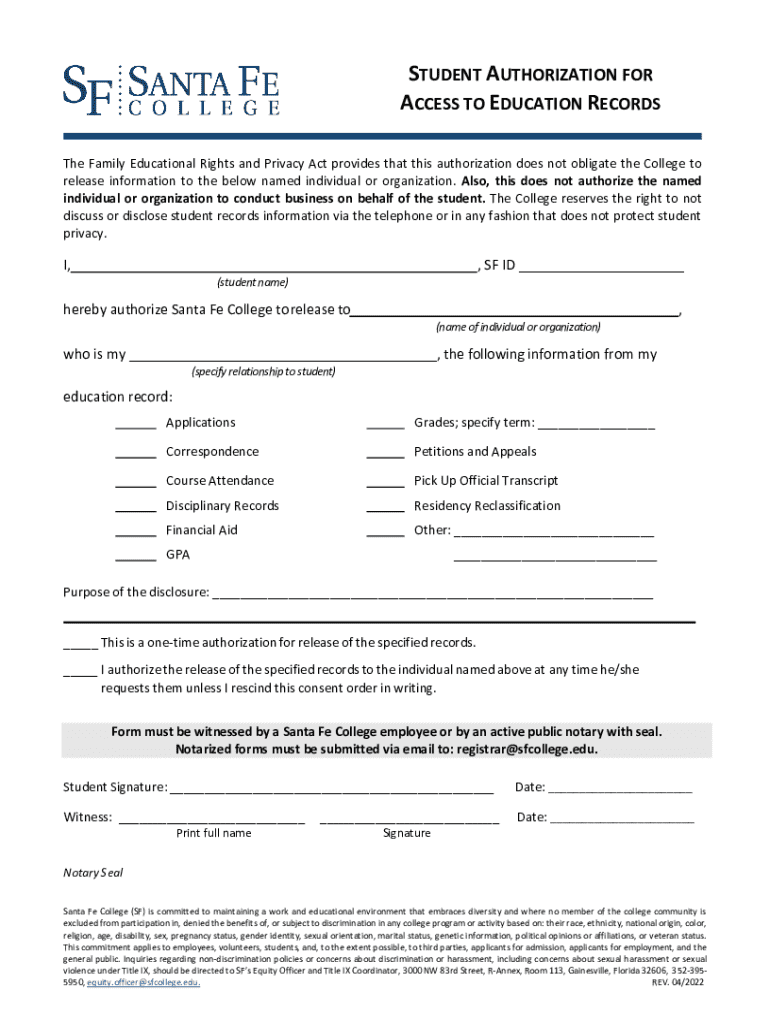
The "Authorization to Release Information on Financial Aid" is a critical document allowing students to grant permission for specific individuals or organizations to access their financial aid records. This form is often used by educational institutions to ensure that information related to a student's financial aid can be shared with parents, guardians, or other designated parties. Understanding the significance of this document lies in its role in maintaining the confidentiality and privacy of student's financial information while facilitating communication between the student and authorized parties.
Core Purpose
- Confidentiality Protection: The form safeguards sensitive financial aid information by ensuring that only authorized individuals can access it.
- Streamlined Communication: By using this form, students can facilitate information exchange between financial aid offices and designated individuals or organizations, reducing the need for separate requests.
- Legal Compliance: The form complies with privacy laws, such as FERPA, ensuring that divulging student's financial aid information aligns with legal standards.
Use in Common Scenarios
- Parental Access: Often used by students to allow parents or guardians access to their financial aid records.
- Third-party Organizations: May be used to authorize financial aid access for scholarship organizations, educational consultants, or financial advisors.
How to Use the Authorization to Release Information on Financial Aid
Using the "Authorization to Release Information on Financial Aid" involves several key steps to ensure proper execution and compliance. It is critical for students to understand each step to grant access accurately without compromising their rights or the security of their data.
Step-by-Step Process
- Identify the Authorized Parties: Determine who will be granted access to the financial aid information, such as parents, guardians, or financial advisors.
- Complete the Form: Fill out all required sections of the form, including personal identification details and information about the parties being authorized.
- Specify Disclosure Details: Clearly detail what specific financial aid information can be disclosed and the purpose for which it is disclosed.
- Consent & Sign: The student must consent to the terms and sign the form, acknowledging understanding and agreement.
- Submit the Form: Submit the completed form to the appropriate office, usually the financial aid department of the educational institution.
Common Errors to Avoid
- Incomplete Information: Ensure all required fields are properly filled.
- Unauthorized Parties: Verify that all designated parties are appropriately authorized to receive the financial aid information.
- Lack of Signature: A missing signature can render the form ineffective.
Steps to Complete the Authorization to Release Information on Financial Aid
Successfully completing the form requires attention to detail and adherence to instructions provided by the educational institution.
Detailed Procedure
- Gather Required Information: Collect all necessary information, including student ID and contact details for the authorized parties.
- Fill Out the Personal Information: Accurately enter the student's personal information along with the educational institution's details.
- Designate Authorized Recipients: Clearly list the names and contact information of individuals or organizations you authorize.
- Define Limits of Information Release: Specify the type of financial aid information to be released, e.g., scholarship details, loan amounts.
- Provide Purpose for Disclosure: Outline the reasons for disclosure to justify the need for information sharing.
- Review and Sign the Form: Double-check the form for accuracy, sign it, and obtain signatures from authorized parties if required.
- Submit and Confirm Receipt: After submission, confirm the institution has received and processed the form.
Key Elements of the Authorization to Release Information on Financial Aid
Understanding the key components of the form ensures complete and accurate completion for effective use.
Essential Components
- Personal Identification: Includes the student's full name, student ID, and contact details.
- Authorized Participants: Names and roles of individuals or entities granted access.
- Information Scope: Specifies what financial aid information can be disclosed.
- Purpose of Disclosure: The rationale for sharing the information, keeping in mind privacy laws and regulations.
- Effective Dates: Duration for which the authorization will remain valid.
- Student Signature: Required to validate the authorization and indicate consent.
Importance of Each Element
- Personal Identification: Ensures the correct student's records are accessed.
- Authorized Participants: Guarantees only specified individuals receive the information.
- Information Scope: Protects unnecessary data from being disclosed.
- Effective Dates: Defines the timeframe for access and when it should cease.
Who Typically Uses the Authorization to Release Information on Financial Aid
This form is primarily used by students but involves various stakeholders in the educational and financial system.


Common Users
- Students: Primary users who authorize the release of their financial aid information.
- Parents/Guardians: Often granted access to assist with financial planning and support.
- Financial Advisors: May need information for advising students on financial planning and management.
- Educational Institutions: Facilitate the process and ensure compliance with privacy standards.

Use Cases and Scenarios
- Parental Support: Especially important when parents are involved in managing or funding a student's education.
- Scholarship Organizations: Need to verify financial aid status for eligibility purposes.
- Loan Servicers: Require access to manage student loans efficiently.
Legal Use of the Authorization to Release Information on Financial Aid
The form is governed by state and federal regulations that protect student privacy.
Legal Frameworks
- FERPA Compliance: The form aligns with the Family Educational Rights and Privacy Act, enabling information sharing without violating privacy laws.
- Institutional Policies: Each educational institution may have additional policies governing the use of this form to ensure local compliance.
- Data Protection Laws: Ensures the student's data is handled according to national data protection standards.
Regulatory Implications
- Data Breaches: Misuse or unauthorized sharing can result in legal consequences for institutions.
- Consent Withdrawal: Students can revoke authorization, necessitating careful tracking and management by institutions.
- Recordkeeping: Institutions must maintain records of all executed forms to prove compliance if challenged.
State-Specific Rules for the Authorization to Release Information on Financial Aid
State regulations may influence how this form is used and enforced.
Variations by State
- California: Stronger privacy laws may impose additional requirements for disclosure.
- New York: May have stricter consent requirements, emphasizing student autonomy.
- Texas: Could involve specific limits on the types of information allowed for release.
Monitoring Updates
Educational institutions need to stay abreast of changes in state laws to ensure the form and practices remain compliant. Each state may update regulations occasionally, impacting how institutions manage authorization forms.